A 2011 Peugeot 508 Hybrid4 arrived with an intermittent no-start condition where three 5A fuses in the BSM consistently dropped to zero volts. The shop had already replaced the module, which temporarily cured the fault before the exact same voltage drop returned.
The technician recorded that the thermal engine was not being driven. The 2011 Peugeot 508 Hybrid4 features a 2.0 HDi DW10CTED4 engine managed by a Delphi DCM3.5 ECU. The main 125A power feed from the BPGA to the BSM passed a load test using a TOPDON CT100. Power reached the distribution box, but the BSM failed to supply voltage to the three 5A outputs. Manipulating or reconnecting the BSM harness temporarily allowed the car to start. The vehicle also exhibited strange hybrid behavior, occasionally running the thermal engine in 4WD mode but shutting it down immediately when switched to AUTO. A heavy cylinder 3 acyclism correction of -96 ms was recorded, though the technician rightly isolated this from the primary no-start diagnostic.
Connector pin tension and fretting corrosion
Our diagnostic platform analyzed the live data alongside the fault codes, which included P1AD9, P1A79, P0A0F, U1188, U1209, U1388, U1213, P1B11, U12A0, U13A0, and U0167. The engine ranked mechanical tension loss or oxidation on the BSM harness connector pins as the primary suspect, assigning it an 85 percent probability. Since both the original BSM and the replacement part showed the exact same zero-volt reading on the same fuses, the fault was not internal to the module. It lived at the electrical interface.
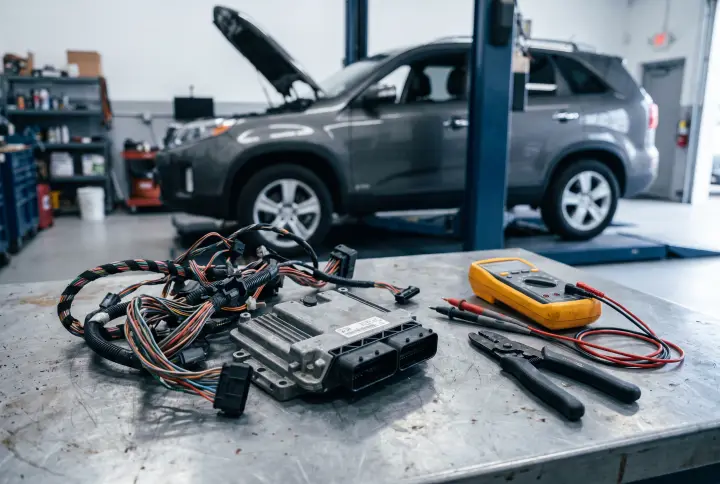
The female terminals in the engine harness connectors, specifically on the gray, brown, and black plugs associated with the relay control and outputs, frequently suffer from lost elastic tension or fretting corrosion. This increased contact resistance prevents the internal engine management relay from closing. The 5A fuses remain unpowered despite the valid 125A main input. Disconnecting and reconnecting the harness physically scrapes away the oxide layer, restoring the circuit for a short time. The platform suggested performing a terminal drag test on every female pin associated with the 5A circuits, alongside a microscopic visual inspection for black or green oxides.
Relay control line interruptions
The second most likely cause, ranked at 65 percent, was a signal drop on the main BSM relay control line. The internal power relay does not close passively. It requires an active wake-up signal from the BSI and a firm ground command pulled by the Delphi DCM3.5 ECU.
An intermittent break in the control wire, often found rubbing under the 12-volt battery tray or along the chassis leg, prevents the relay from engaging. Moving the BSM shifts the adjacent wiring harness, temporarily closing the broken circuit. The recommended diagnostic step is to measure the control voltage directly at the BSM relay coil pin during a no-start event, followed by checking the continuity and resistance of the control wire between the ECU and the BSM while actively manipulating the harness.
Ground resistance and reversible alternator faults
Two further causes explain the complex hybrid symptoms. A parasitic resistance on the chassis ground point for the BSM and ECU ranked at 50 percent probability. Located on the left inner wing under the battery support, this ground is exposed to condensation and acid. Oxidation here allows a normal reading of 12 volts with no load, but the ground potential rises sharply when relays and sensors draw current. A voltage drop test between the BSM ground pin and the negative battery terminal identifies this issue.
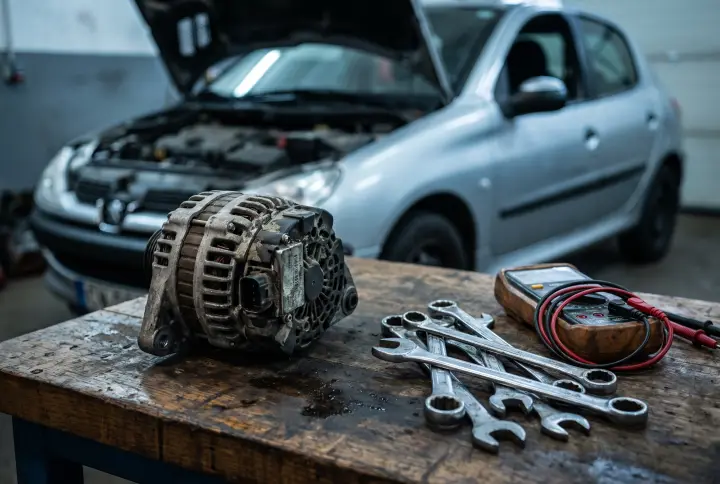
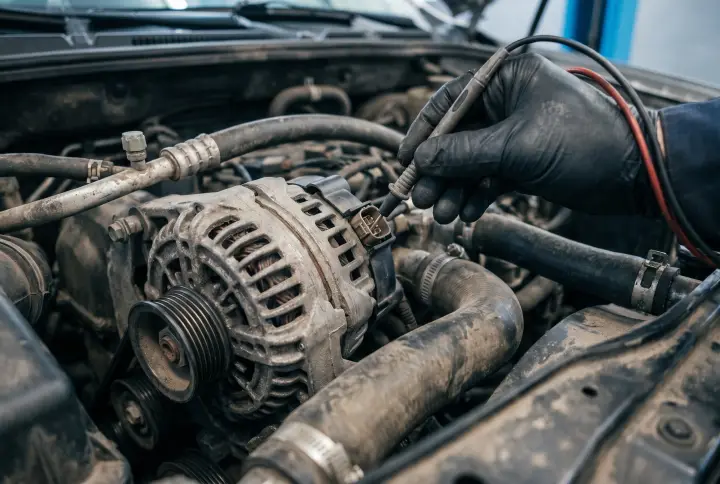
Additionally, the hybrid system codes P1A79, P1AD9, P0A0F, and U0167 point directly to the reversible alternator belt tension, a cause our engine ranked at 40 percent. On the DW10CTED4 hybrid application, the diesel engine is cranked by a high-voltage reversible alternator via the accessory belt. If the belt is loose or the dynamic tensioner binds, the hybrid control unit detects a speed mismatch between the alternator and the crankshaft. The system then issues a software block, preventing authorization and shutting down the thermal engine when transitioning from 4WD to AUTO. Measuring the acoustic tension frequency of the belt confirms this mechanical fault.
Diagnostic takeaways for module replacement
When manipulating a module temporarily cures a fault, the interface is almost always the culprit. Replacing the BSM without verifying the physical integrity of the harness connections often leads to an immediate diagnostic loop. Always conduct a terminal drag test and a loaded voltage drop test on the ground circuits before condemning a power distribution module.