Articles
Data insights
What our own diagnostic data shows about fault codes, makes and the systems that fail.
16 articles
-
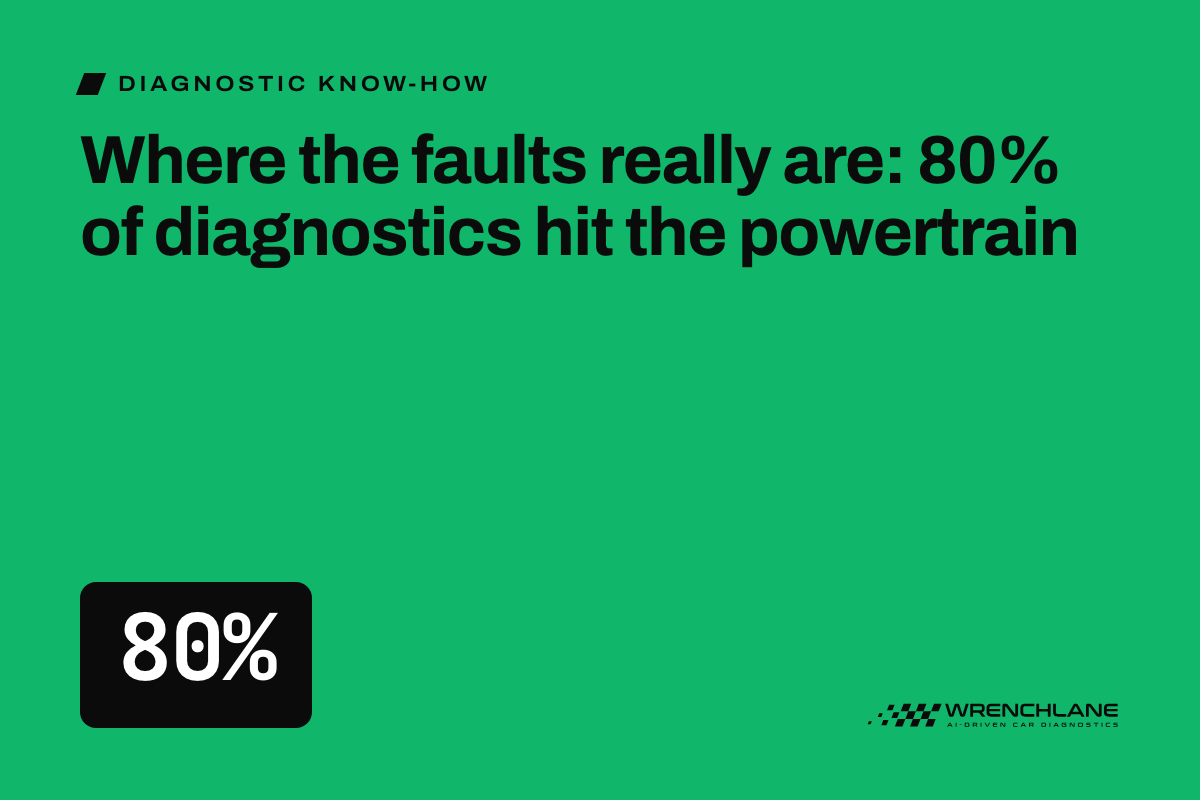
Where the faults really are: 80% of diagnostics hit the powertrain
We analyzed nearly 2,000 vehicle diagnostics. 80% of coded faults point directly to the powertrain, with turbo underboost leading the pack. -
How Technicians Actually Describe Faults
Platform data shows how mechanics actually write fault descriptions. See why diagnostic tools that expect textbook phrasing fail in real workshops. -
What diagnostic code density tells us about vehicle brands
Our platform data reveals massive differences in how vehicle brands report faults. See why Volvo gives failure bytes 77% of the time while Toyota gives none. -
What Unreadable Fault Codes Taught Us About Workshop Software
We analyzed 3564 raw fault code strings to see how real diagnostic input breaks down. Discover why rigid software fails on basic typos and native codes. -
Real Diagnostics Are Rarely One Code
Platform data shows that 31 percent of coded diagnostic sessions contain multiple fault codes. Discover how technicians handle complex multi-code jobs. -
The Fault Codes That Take the Most Ruling Out
We analyzed our platform data to find the fault codes that carry the highest number of candidate causes and stall workshop bays the most. -

Why Fault Codes Travel in Packs
Fault codes rarely happen in isolation. Discover why analyzing whole DTC code sets reveals the true root cause faster than reading codes one at a time. -
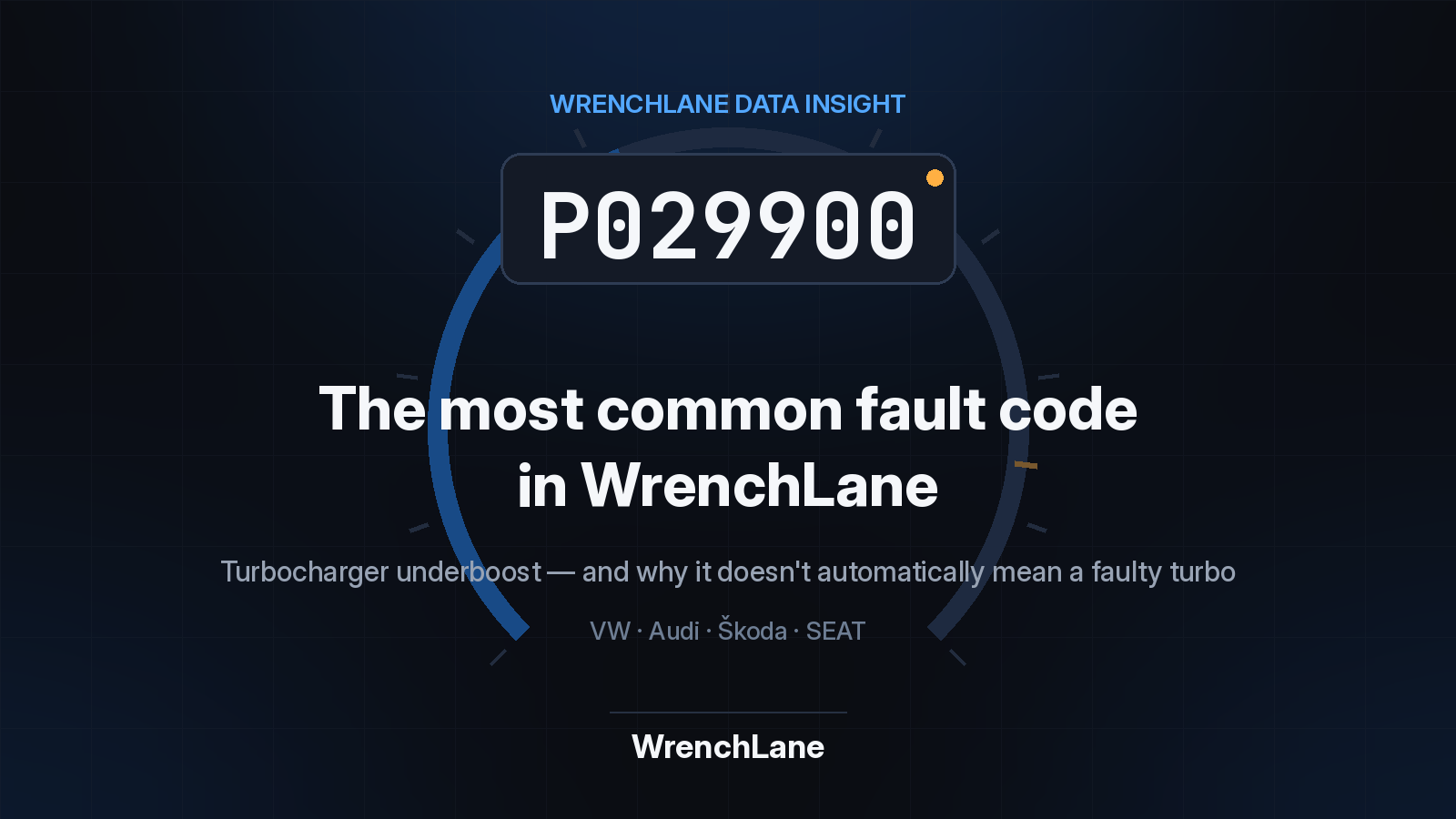
P029900 Is the Most Common Fault Code in WrenchLane – Why Are Turbo-Related Problems So Common in Volkswagen Group Vehicles?
P029900 tops the fault-code statistics in WrenchLane. What the VW Group underboost code means — and why it doesn't automatically mean a faulty turbo. -
Why 35% of fault codes arrive with no description
We analyzed 2957 diagnostics from independent workshops. See why multi-code failures and missing code descriptions require pattern-level diagnosis. -
Why Your Gut Feel on Common Fault Codes is Wrong
Platform data reveals why your shop's gut feel for common fault codes might be wrong. Learn the difference between universal baselines and local anomalies. -
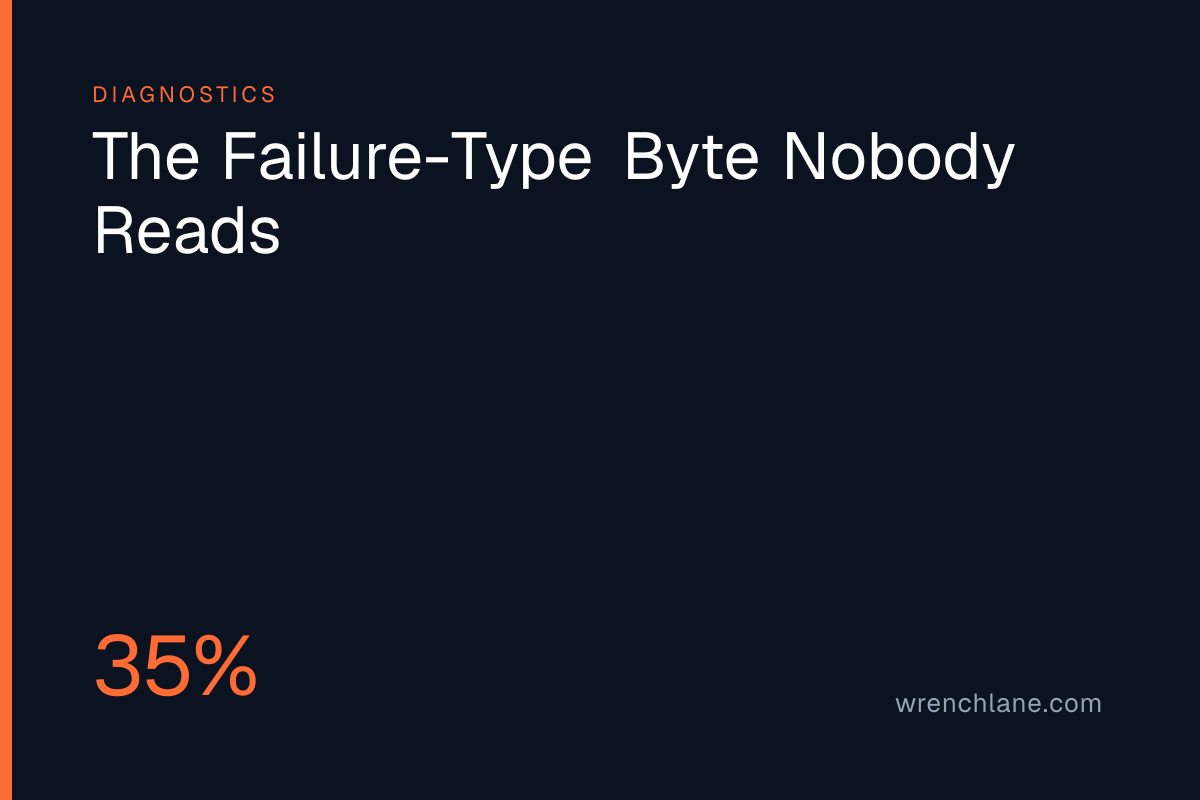
The Failure-Type Byte Nobody Reads
35% of fault codes carry an extra failure-type byte that most lookup tools discard. Learn why this hidden data is critical for accurate workshop diagnostics. -
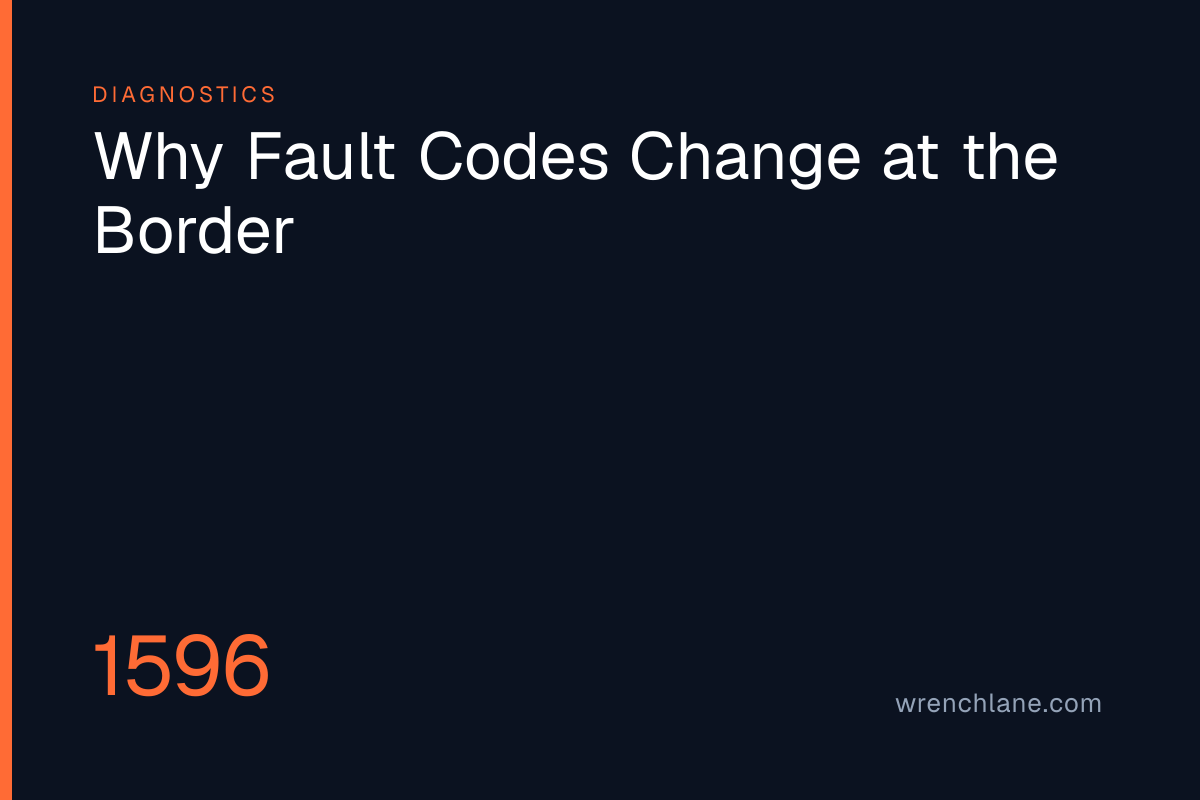
Why Fault Codes Change at the Border
An analysis of 1596 coded diagnostics from the Wrenchlane platform reveals how vehicle fault codes like P0299 and P0420 vary dramatically by country. -
Why the fault codes in your bays are shifting this quarter
Discover how the mix of fault codes in independent workshops is shifting, with turbo and EGR codes fading while O2 sensor faults climb rapidly this quarter. -
When a fault code arrives with no symptom
Workshop data shows 35% of coded diagnostics are submitted without symptoms. See why a single fault code makes mechanics skip writing down the problem. -
Why Fault Descriptions Are Short, Not Textbook
Wrenchlane's own platform data on 1,865 fault write-ups shows most technicians type a short symptom, not a textbook description, and what that means for intake. -
What Actually Fails: 1,362 Coded Diagnostics
Across 1,362 coded diagnostics in our platform data, 79% were powertrain, but a handful of narrow code families carry the repeat work. Here is what to do.