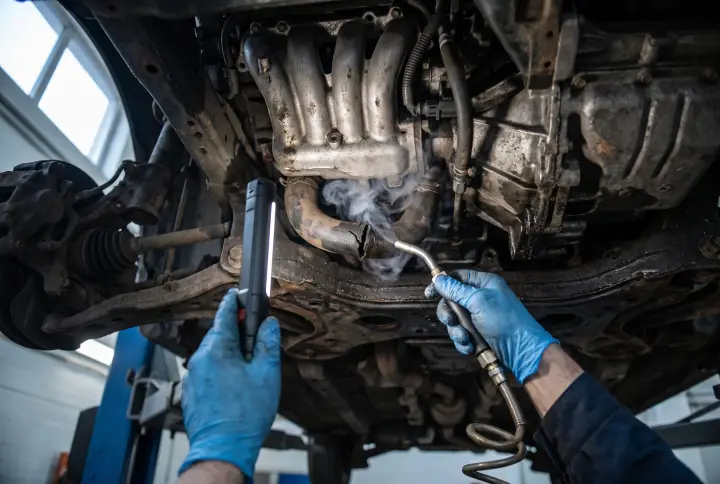
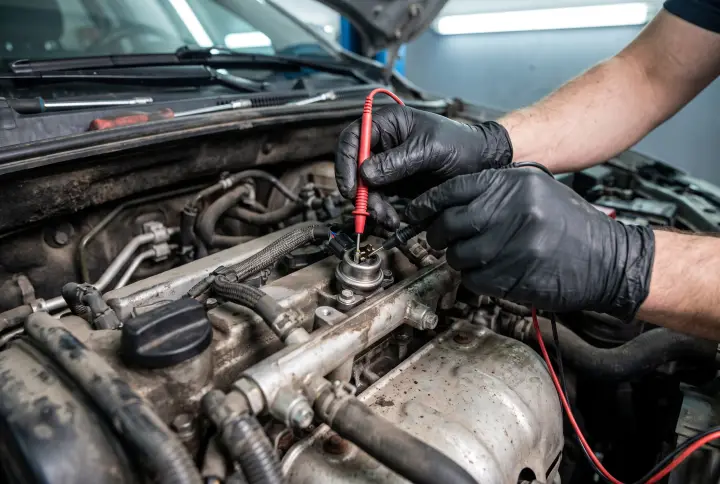
A single P0171 code on a 2016 Opel Zafira often points mechanics straight to a smoke test, but the real issue on the 1.4 Turbo engine usually hides inside the valve cover.
The vehicle arrived with just one fault code and a standard lean condition. Instead of chasing vacuum leaks across the engine bay, our platform ranked the most probable failures based on specific repair data for this engine family.
The Valve Cover PCV Membrane
Our diagnostic engine ranked a ruptured PCV membrane inside the camshaft cover as the most likely cause, at 85 percent probability. On the 1.4 Turbo engine, the membrane is integrated into the valve cover pressure control valve. When this rubber splits, it creates a direct path between ambient air and the crankcase. Unmetered air gets pulled into the intake manifold, causing the engine control module to max out fuel trims, often hitting the positive 25 percent limit, and triggering the P0171 code. The deviation is most obvious at idle when intake vacuum is highest.
To confirm this, technicians can perform a tactile and acoustic check of the ventilation hole on the PCV housing during idle. A simple lift test of the oil filler cap at idle will also reveal excessive crankcase vacuum. Checking live data for short and long term fuel trims at idle compared to 2,500 rpm confirms if the leak is vacuum dependent.
The Hidden Intake Manifold Check Valve
Ranked closely behind at 75 percent probability is a missing or collapsed PCV check valve inside the intake manifold. This is a small orange rubber valve shaped like a mushroom, sitting in a channel between the intake plenum and the PCV pipe. It closes under boost to protect the crankcase and opens under vacuum to ventilate it.
It is extremely common for this tiny valve to detach, disintegrate, or get sucked into the engine. When it fails, boost pressure blows straight into the crankcase, which is exactly what ruptures the valve cover membrane mentioned above. A visual inspection of the orange valve inside the intake port using a borescope or flashlight is essential. You can also run a pressure test through the connection nipple on the intake manifold. If this valve is missing, the intake manifold must be repaired or replaced.
EVAP Purge Valve and MAF Sensor Checks
If the PCV system is intact, the platform flags the EVAP purge valve at 65 percent probability and the Mass Air Flow sensor at 50 percent probability. The EVAP valve, mounted on the intake manifold, frequently wears out or sticks partially open due to mechanical binding. This allows intake vacuum to continuously draw air and vapor from the charcoal canister without command. Unplugging the connector at idle and checking for leaks, or using a hand vacuum pump directly on the port, will verify its condition.
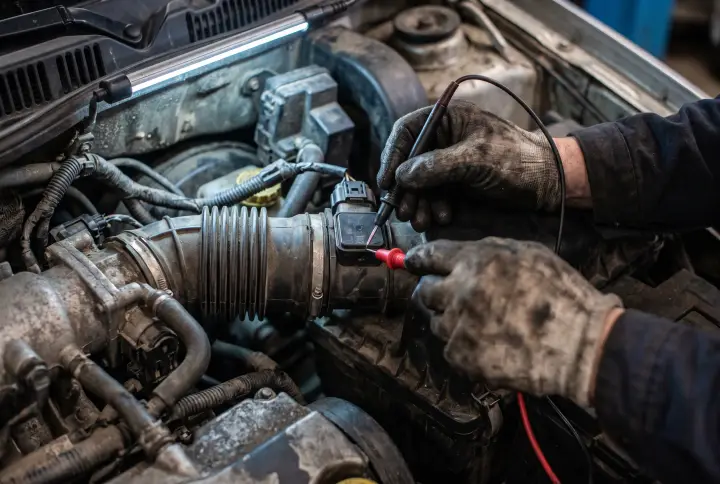
The MAF sensor can also trigger a P0171, but the data profile looks different. If oil mist blows back into the airbox due to the PCV issues, the MAF sensor element gets coated. This thermally isolates the element, causing it to underreport airflow. Unlike a vacuum leak, a dirty MAF will show elevated fuel trims at both idle and higher engine speeds.
Diagnostic Takeaway
When dealing with a P0171 on this vehicle, always inspect the orange intake manifold check valve before replacing a ruptured valve cover. If you fit a new valve cover without checking the manifold valve, the next wide open throttle run will blow the new PCV membrane immediately. Checking the oil cap vacuum and scoping the intake port takes minutes and completely prevents a frustrating comeback.
Reference pages for the codes in this article
- P0171: what we measure for this code across real diagnostics