A 2007 Chevrolet Tahoe rolled in with lean codes on both banks and a brake system fault, despite just having a top-end rebuild. The technician noted a vacuum leak that only surfaced at operating temperature, affecting the engine at both idle and all speeds.
The recent parts list included lifters, valves, rods, and intake manifold gaskets. Along with the global lean codes P017100 and P017400, the vehicle triggered C056171 in the Electronic Brake Control Module.
The Impact of Thermal Expansion on Gaskets
Our diagnostic platform ranked an intake manifold gasket sealing failure at 55 percent probability for this specific combination of codes and recent repairs. On the 5.3L Vortec V8 (LMG), the intake manifold is made of a nylon composite and bolts directly to aluminum cylinder heads. When the engine reaches full operating temperature, differential thermal expansion between the plastic manifold and the metal heads can warp or unseat newly installed gaskets.
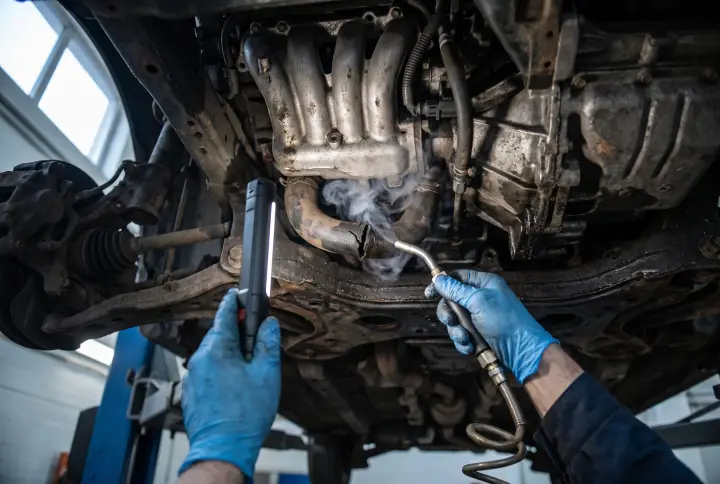
This introduces unmetered ambient air into both banks, driving up fuel trims. The C056171 brake code is a direct downstream effect. The ECM invalidates its engine torque calculations due to the extreme fuel trim corrections, causing the brake module to store the disabled system information fault. The recommended step here is to re-check the intake manifold bolt torque, which requires 44 lb-in on the first pass and 89 lb-in on the final pass, followed by a hot engine intake smoke test.
Plastic Lines Disturbed During Teardown
Because the lifters and valves were recently replaced, several brittle plastic components had to be moved. We ranked a cracked or heat-distorted PCV foul air tube at 25 percent probability. This rigid nylon line runs from the left rear driver-side valve cover to the intake manifold. It often suffers micro-cracks or O-ring distortion during a teardown. While it might seal fine when cold, heat softening and engine vibration cause it to pull unmetered air directly into the common intake plenum.
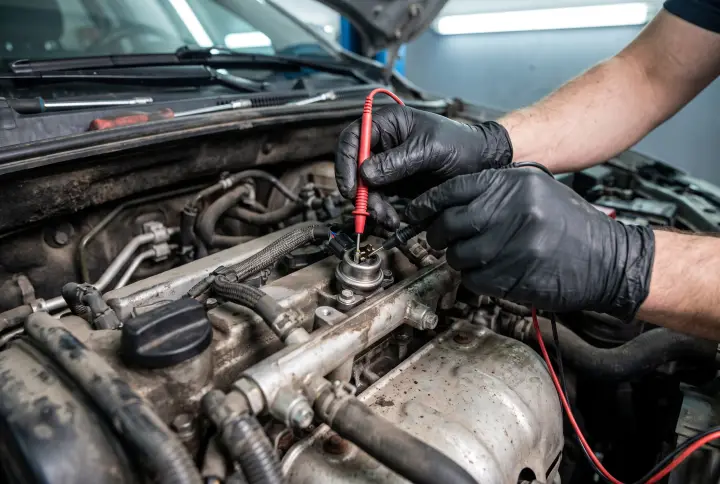
The EVAP purge solenoid, ranked at 10 percent probability, presents a similar thermal vulnerability. Mounted on the front passenger side of the manifold, the internal plunger can stick slightly open after a hot engine bay soak. A technician can isolate both of these by clamping the PCV vacuum line while monitoring live short-term fuel trims, and performing a vacuum holding test on the EVAP solenoid while the engine is hot.
Contradictory Symptoms at High Speeds
The technician specifically noted that the lean condition happened at idle and all speeds. An unmetered vacuum leak typically dilutes the air and fuel charge heavily at idle due to high manifold vacuum, but the effect diminishes significantly at open throttle. If fuel trims remain high at cruise speeds, the diagnostic path must pivot.
Our engine ranked a thermally failing fuel pump at a 6 percent probability, but flagged it with high severity. An in-tank fuel pump motor failing under heat, or a restricted fuel filter, can drop fuel rail pressure below specification as operating temperature rises. This produces the exact same P017100 and P017400 global lean codes on both banks.
What to Check First
When dealing with temperature-dependent lean codes after a major rebuild, trust the operating conditions over the visual assembly. A smoke test on a cold engine will easily miss a warped nylon manifold or a cracked PCV tube. Get the vehicle completely hot before introducing smoke, and test mechanical fuel pressure at the rail under a snap throttle to rule out a thermal pump failure masking itself as a vacuum leak.