A 2013 Mercedes-Benz ML350 arrived with a check engine light and a disconnected set of fault codes combining EVAP gross leaks with a dead oxygen sensor. Our diagnostic platform analyzed the mix of P013700, P219684, P045700, and P045500 to map out the fastest route through two completely separate system failures.
Resolving the gross EVAP leak
The MED17.7 engine control unit flags P045500 for a gross leak and P045700 for a loose or missing fuel cap when it detects an evaporative emission system pressure decay rate exceeding the threshold for a 1 mm leak orifice.
Our data ranked a degraded fuel filler cap assembly as the most likely cause at an 82 percent probability. The elastomeric seal hardens and flattens over time, or the internal ratchet mechanism fails to apply the necessary clamping torque. The quickest verification is a visual inspection of the gasket, followed by a pressure leak-down test using a hand pump and cap adapter.
If the cap passes, the EVAP regenerative purge control valve (Y58/1) is the next logical component to test, which ranked at 58 percent. Carbon dust from the vapor canister can migrate into the valve seat, causing the pintle to stick open or leak vacuum when unpowered. A simple vacuum hold test on the de-energized valve using a hand-held pump will confirm if it seals correctly.
Oil wicking threatens the oxygen sensor circuit
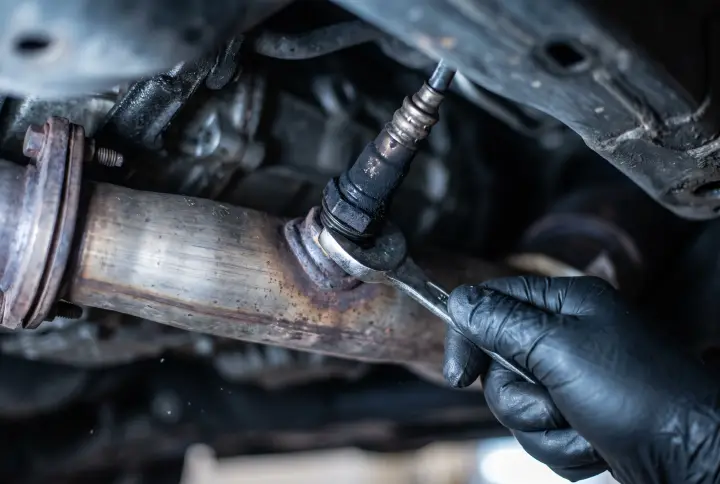
The second set of codes isolated a problem on Bank 1 Sensor 2. Code P013700 indicates the sensor voltage stayed below 0.20 V for more than 20 seconds, while P219684 specifies the signal is stuck below the allowable range (under 0.05 V).
A known vulnerability on the M276 3.5L V6 engine involves oil wicking. Engine oil can migrate from leaking camshaft position sensors (B6) and electro-hydraulic camshaft adjusters (Y49) down the wiring harness, pooling in the oxygen sensor connectors. This liquid intrudes on the connector, fouls the atmospheric reference hole, and bridges signal pins to ground.
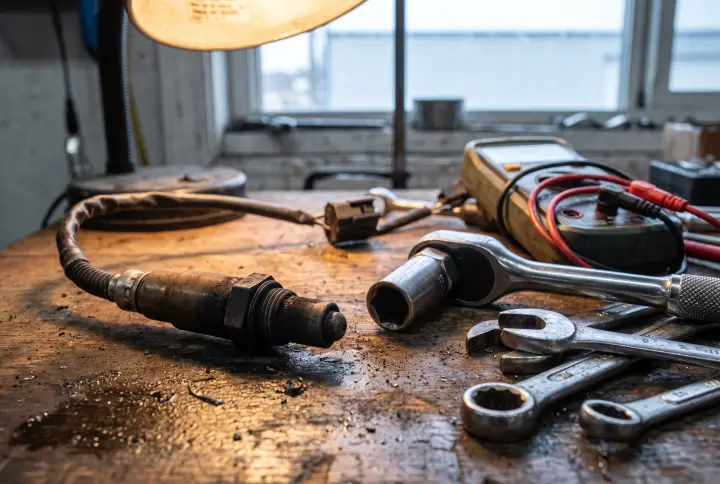
While an internal sensor element failure ranked highly at 78 percent, harness contamination followed closely at 68 percent.
Diagnostic takeaways for the M276 engine
Always separate EVAP and O2 sensor faults into distinct diagnostic paths, as they rarely share a root cause. Check the fuel cap seal first for the gross leak, then inspect the camshaft position sensors for weeping oil before condemning a dead post-catalyst oxygen sensor.