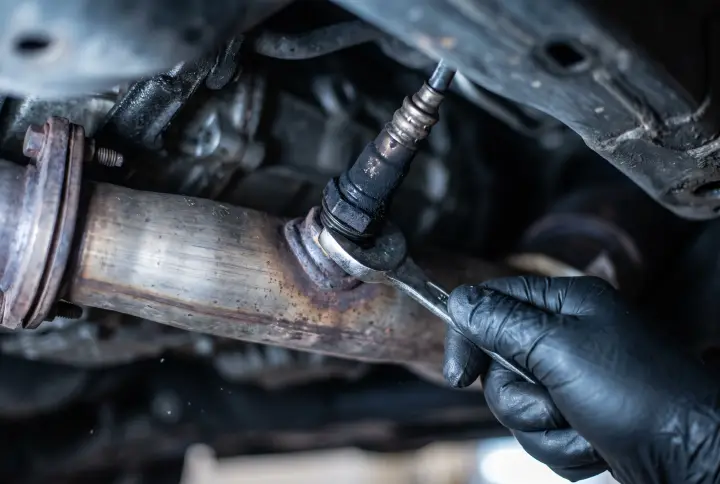
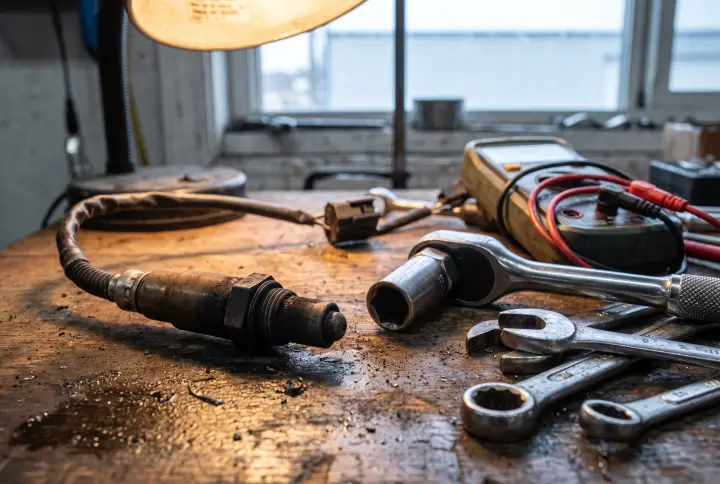
A 2014 Audi A3 III (8V) came into the shop presenting a rough, hesitating idle and logging fault code P219600 for a permanently rich condition. The 1.4 TFSI engine (CPWA code), which runs on both petrol and compressed natural gas (CNG), was misfiring at a standstill while pushing the oxygen sensor into a permanent rich state.
High pressure pump leaks
Our diagnostic platform ranked an internal fuel leak from the high pressure fuel pump as the most probable cause, assigning it an 85 percent likelihood. On the EA211 series engine, the mechanical pump is driven by the camshaft. If the internal seal on the pump piston rod wears out, high pressure petrol leaks directly into the cylinder head and drains down into the crankcase, diluting the engine oil.
At idle, the throttle valve is mostly closed and intake vacuum is at its highest. The positive crankcase ventilation (PCV) system continuously sucks these volatile petrol vapors right into the intake tract. Because this fuel enters uncontrolled, the engine runs extremely rich whether it is currently operating on petrol or CNG. To confirm this, technicians should check the engine oil for a strong fuel odor and test if isolating the PCV line at idle stabilizes the engine.
Leaking gas injectors
The second highly ranked cause involved a leaking CNG injector. The 1.4 TFSI CNG engine features four gas injectors in the intake manifold. When running on petrol, the gas rail still maintains a pressure of 5 to 9 bar from the reducer.
If a methane injector sticks partially open or has a damaged rubber seal, it will constantly leak methane into the intake port parallel to the petrol injection. This simultaneous delivery of two different fuels into a single cylinder creates an extremely rich mixture, triggering the P219600 code and causing misfires on both fuels. Monitoring the gas rail pressure drop while the engine runs solely on petrol is a direct way to isolate this fault.
Ignition system demands
The third major factor is the ignition system. Igniting a compressed natural gas mixture requires a secondary coil voltage that is 20 to 30 percent higher than what petrol requires, due to the higher dielectric strength of methane.
The CPWA engine relies on specific platinum iridium spark plugs with a strict gap of 0.7 to 0.8 mm. Worn electrodes or micro cracks in the individual coil boots can cause the spark to fail at idle. This misfire dumps raw, unburned hydrocarbons onto the oxygen sensor. The sensor reads this as a rich condition, logging P219600. A coil swap test and a careful inspection of the spark plug gaps will quickly rule this out.
Diagnostic takeaway
When diagnosing a rich condition on a bi-fuel TFSI engine, do not replace the oxygen sensor right away. Check the mechanical integrity of the fuel systems first. Pull the dipstick to check for fuel diluted oil, and monitor the gas rail pressure while running on petrol to ensure the two fuel systems are actually staying separated.
Reference pages for the codes in this article
- P2196: what we measure for this code across real diagnostics