A 2009 Volkswagen Passat VI arrived at a workshop with a frustrating intermittent fault, starting and then immediately stalling out. The technician noted that the vehicle would occasionally fire up and die right away, logging a single fault code, P2196, which points to the oxygen sensor signal being stuck rich. When our diagnostic platform processed this specific combination of the P2196 code and the start-and-stall symptom on the 2.0 TDI CBBB engine, it identified four likely paths for the diagnosis.
The Wideband Lambda Sensor Sticking Rich
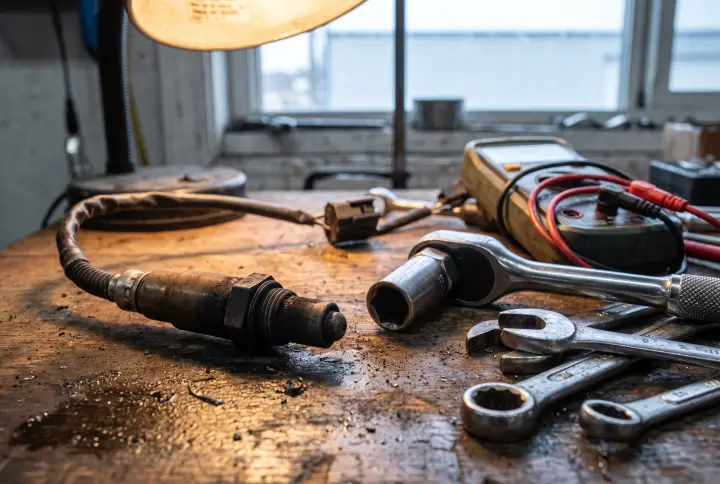
Our data ranked a failing front wideband lambda sensor (G39) as the most probable cause, assigning it a 40 percent likelihood with medium severity. On the 2.0 TDI Common Rail CBBB engine, this sensor sits upstream of the catalytic converter and diesel particulate filter. It monitors residual oxygen to help the engine control module govern injection quantities and manage particulate filter regeneration.
At higher mileages, such as the 300,000 kilometer mark, the ceramic sensing element inside the G39 sensor frequently degrades. The sensor can become heavily fouled with soot, or the internal heating element can lose efficiency. When this happens, the sensor can get stuck broadcasting a rich mixture signal, characterized by high current or voltage. The engine control module reacts to this false rich condition by aggressively pulling back the injected fuel quantity. This sudden reduction in fuel delivery makes it extremely difficult for the engine to maintain a steady idle, often resulting in a stall mere seconds after starting.
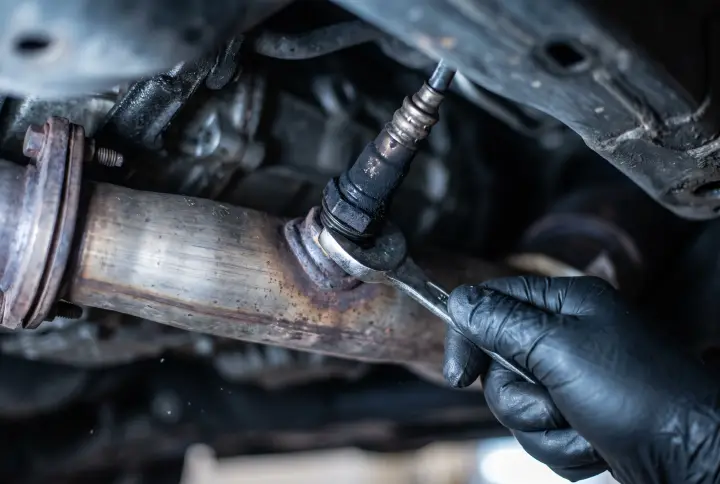
To verify this, technicians should monitor the lambda value along with the pumping voltage and current via live data. The diagnostic path also requires checking the power supply and resistance of the sensor heating circuit. Finally, a visual inspection of the sensor tip is necessary to look for heavy soot deposits or oil fouling.
Rail Pressure Drops from Piezo Injector Wear
The second ranked cause, at a 30 percent likelihood but carrying a high severity warning, involves a leaking or malfunctioning piezo fuel injector. The 2.0 TDI CBBB engine utilizes Bosch piezo injectors, which are susceptible to mechanical and hydraulic wear over their service life. This wear typically manifests as leakage through the internal valve or the nozzle itself.
When an injector leaks, it can dump excessive fuel directly into the cylinder, or it can allow a massive amount of fuel to bypass into the return circuit. If fuel dumps into the cylinder, the mixture becomes genuinely over-rich, causing the lambda sensor to correctly log the P2196 code. However, the stalling symptom is driven by the internal leakage into the return circuit. A large volume of bypass fuel causes a severe and sudden drop in common rail fuel pressure. Without sufficient rail pressure, the engine will start and then immediately die.
Testing for this condition begins with reading the smooth running control (injector correction) values in live data. If those numbers look suspicious, the definitive test is a manual leak-off test using graduated flasks on the injector return lines while cranking the engine or running it at idle.
Boost Leaks Skewing the Air-Fuel Ratio
Ranked third at a 20 percent probability with medium severity is a pressurized air leak. This points to a breach somewhere in the turbocharger plumbing or the intercooler system. Common failure points include a split in the charge air hoses, a cracked intercooler core, or a loose retaining clamp downstream of the turbocharger compressor housing.
When a boost leak occurs, air that has already been measured by the mass airflow sensor escapes the intake tract before it can enter the combustion chamber. The engine control module injects fuel based on the calculated air mass from the sensor, but the actual volume of air reaching the cylinders is much lower. This creates a mixture that is genuinely rich in diesel fuel, triggering the P2196 code. During startup, this severe lack of air can disrupt the air-fuel ratio enough to choke the engine, causing it to stall.
Diagnosing this requires pressurizing the intake tract. Technicians should use a smoke machine or a pressure adapter to force air into the system and look for leaks. A visual inspection of the boost hose connections for oil residue is also a highly effective way to spot a leaking joint.
Exhaust Gas Recirculation Valve Sticking Open
The final primary cause our platform identified, ranked at 18 percent with medium severity, is a stuck open or heavily fouled exhaust gas recirculation valve. As engines like the 2.0 TDI CBBB age, the EGR valve and the intake manifold are highly prone to accumulating thick layers of soot and oil residue.
If this accumulation causes the EGR valve to stick in a partially open or fully open position during engine cranking, a massive volume of exhaust gas is introduced into the intake manifold. This exhaust gas displaces the fresh, oxygen-rich air that the engine needs to start. The severe lack of oxygen forces the lambda sensor to instantly read a rich condition, logging the P2196 fault. More importantly, the engine effectively suffocates on its own exhaust gases, causing it to stall almost immediately after firing.
To test the EGR valve, technicians should use a diagnostic tester to perform an output test, actuating the valve to listen for smooth movement. If the actuation sounds weak or restricted, the valve must be removed for a physical inspection to check for heavy carbon build-up and to confirm if it is failing to close mechanically.
What to Check First
When facing a P2196 code paired with a start-and-stall symptom on this engine family, start by ruling out the fuel system and the EGR. Hook up a diagnostic tester and actuate the EGR valve to ensure it is not stuck open, then check the injector smooth running values and rail pressure on live data during cranking. If those systems are operating correctly, move to verifying the wideband lambda sensor heater circuit and checking the intake tract for unmetered air leaks.
Reference pages for the codes in this article
- P2196: what we measure for this code across real diagnostics