Most mechanics know the feeling. A car comes in with a check engine light. You pull the codes. Three fault codes stare back at you. Which one matters? Where do you start?
For years, this was the game. You'd chase one code, replace a part, clear the light, and hope it stayed off. Sometimes it did. Sometimes the customer came back a week later with the same problem or a new one.
The problem wasn't you. It was the tool. Traditional diagnostic equipment shows you fault codes in isolation. It's like reading individual words from a sentence without understanding what the sentence means.
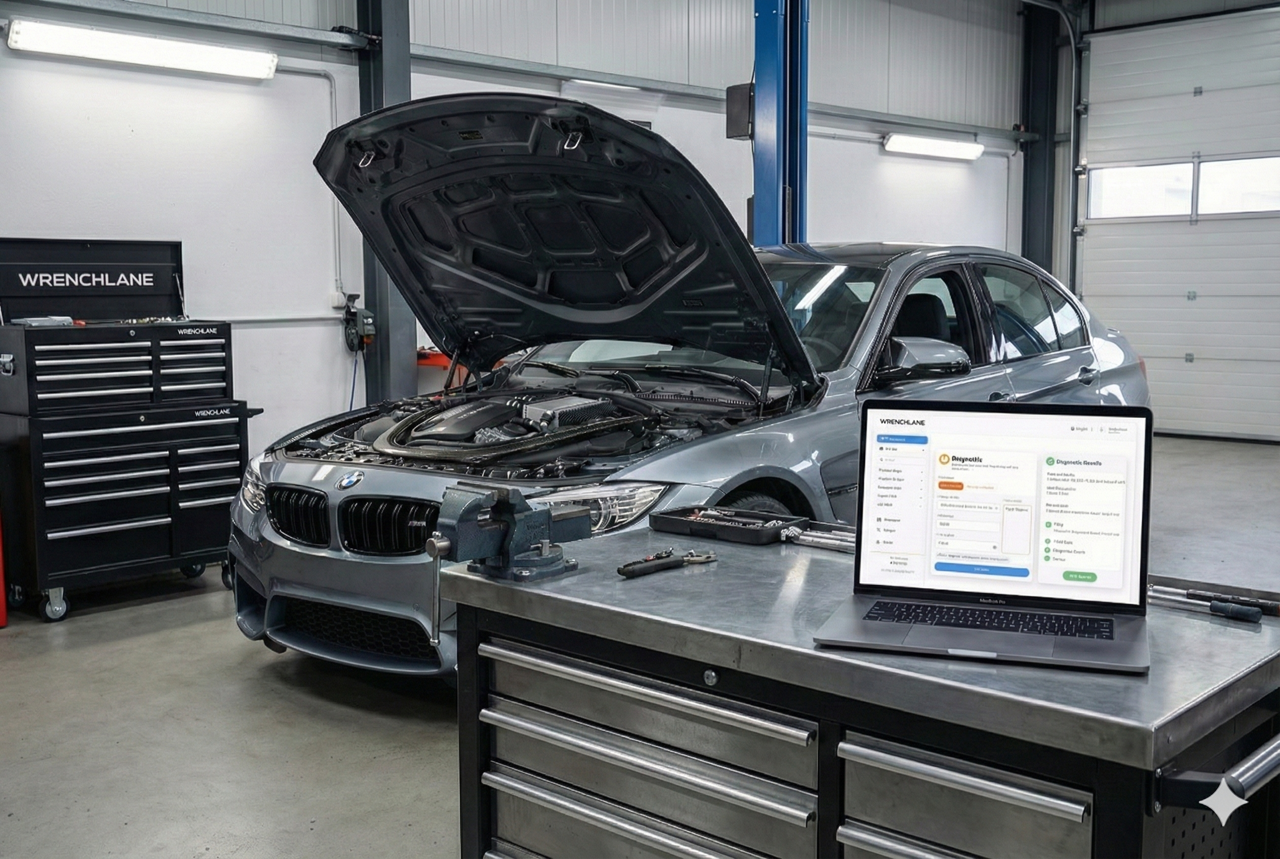
WrenchLane changes this. Instead of showing you a list of codes, it shows you how they connect. It analyzes multiple fault codes together with the symptoms you describe and real repair data from thousands of successful diagnostics. The result is clarity. You see the root cause, not just the error.
Let's walk through how this works in practice.
A customer brings in a 2019 sedan. The check engine light is on. You scan it. P0128 appears: coolant temperature below thermostat regulating temperature. You also see P0300—random misfire detected. Two codes. Two different systems. A traditional tool would list them separately and leave you to figure out the connection.
WrenchLane connects them. It knows that a stuck-open thermostat keeps the engine running cold, which can cause misfires. It also knows that in this model year, this combination of codes points toward the thermostat as the root cause in 87% of real repairs. You don't guess. You know.
You replace the thermostat. The codes clear. The customer drives away. No comeback. No wasted time. No unnecessary parts replaced.
This is what separates good diagnostics from lucky diagnostics. Good diagnostics are repeatable. They're based on logic, not intuition. And they save time.
The mechanics who master this approach fix cars faster, build trust with customers, and spend less time chasing ghosts in the machine. They also make better margins because they're not replacing parts that don't need replacing.
The question isn't whether you can learn to diagnose this way. You probably already do it instinctively. The question is whether your tools support this thinking or work against it.
WrenchLane supports it. It's built for how you actually think and work. It respects your experience and gives you the data to back it up.
If you're tired of guessing, it's worth a look.