A 2020 Ford Transit V arrived with an extended cranking condition after sitting, carrying fault codes P018C and P162F. The combination of a fuel pressure sensor code and a starter motor protection code points directly to a failure to build rail pressure during startup. The technician noted the vehicle was hard to start specifically when it had been parked for a while.
Our diagnostic platform analyzed this exact scenario and ranked the most likely causes based on the relationship between the extended cranking symptom and the specific fault codes.
The fuel pressure control valve
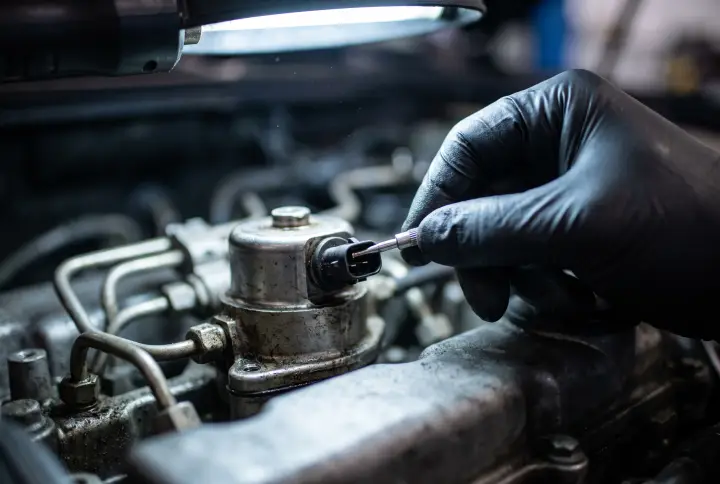
The most probable cause, ranked at 80 percent probability, is a defective or sticking fuel pressure control valve. This component is located on the high-pressure pump or fuel rail and regulates the volume of diesel being compressed. If the valve sticks mechanically or suffers an electrical winding fault, it fails to hold pressure in the common rail when the engine is turned off.
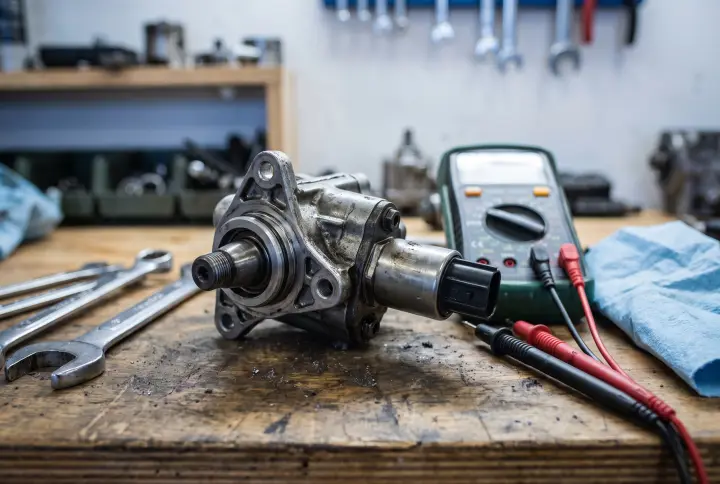
During a subsequent start attempt, the high-pressure pump requires too much time to build the minimum 250 bar (25 MPa) needed for ignition. This extreme cranking cycle triggers P162F for starter motor protection and sets P018C due to the abnormally low fuel pressure signal. Testing involves reading requested versus actual rail pressure with a diagnostic tool or oscilloscope during cranking. Technicians should also measure the resistance of the electromagnetic coil and check the pulse-width modulation signal from the engine control module.
Pressure sensor circuit faults
The second most likely cause at 75 percent is a circuit fault in the fuel pressure sensor itself. Fault code P018C indicates the signal voltage from the fuel pressure sensor has fallen below the lowest permitted threshold, which is typically under 0.2 volts. This usually stems from a short to ground in the signal wire, a break in the 5V reference supply, or an internal failure of the sensor piezoresistive element.
Without a valid pressure signal, the engine control module cannot confirm sufficient rail pressure and delays injector activation. This causes the engine to crank until the time limit is reached, setting P162F. Diagnostic steps include reading the raw signal voltage in live data, measuring the 5V reference and ground at the sensor connector, and inspecting the signal line for chafing.
Air ingress on the 2.0 EcoBlue TDCi
Ranked at 70 percent probability is fuel drain back and air ingress in the low-pressure circuit. This is a frequent issue on the 2.0 EcoBlue TDCi engine when the vehicle is stationary. Leaking quick connectors, a deformed O-ring in the fuel filter housing, or a leaking check valve allows diesel to drain back toward the tank and be replaced by air.
When the driver attempts to start the vehicle, the high-pressure pump must turn over for an extended period to evacuate the air and refill the system. The lack of fuel delays pressure buildup, resulting in the P018C code and the extended start cycle that triggers P162F. Technicians should pressure and vacuum test the low-pressure system, inspect the filter housing seals, and install a transparent fuel hose between the filter and high-pressure pump to watch for air bubbles during a cold start.
In-tank fuel pump performance
The fourth ranked cause at 60 percent is a worn or defective electric fuel pump in the tank. This pump is responsible for delivering diesel at a stable low pressure to the high-pressure pump. If the electric motor wears out, has a poor connection, or has a leaking internal check valve, it cannot prime the circuit immediately when the ignition is switched on after a long rest.
The high-pressure pump is forced to cavitate until fuel arrives, causing a severely delayed pressure increase in the rail. To test this, measure the feed pressure and flow at the fuel filter inlet. It is also necessary to measure the voltage and current draw at the pump connector and verify the function of the check valve when the vehicle is turned off.
Diagnostic priorities
When dealing with P018C and P162F together after the vehicle has been sitting, prioritize testing the mechanical integrity of the fuel supply before replacing electronic components. Check for air bubbles in the low-pressure feed and verify that the fuel pressure control valve can achieve the required 250 bar during cranking.