A 2010 Ford C-Max arrives with a rapidly flashing red immobilizer light, a no-start condition, and a "gearbox fault" message on the dash. The scanner pulls codes P024B, P0500, and P1934, leaving the technician to untangle network errors from a mechanical air bypass fault.
The Dashboard Illusion
Our diagnostic platform ranked cracked solder joints in the instrument cluster (IPC) connector as the primary cause at 85 percent probability. The IPC functions as the central gateway for the High-Speed CAN bus (HS-CAN) and houses the Passive Anti-Theft System (PATS) logic.
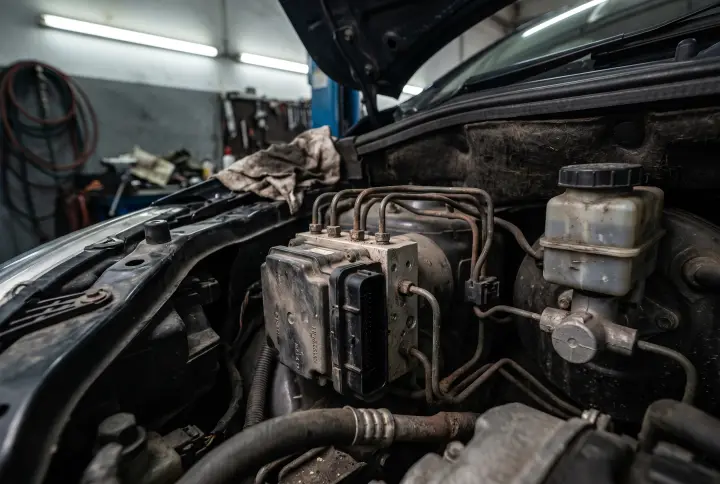
Fatigue cracks often develop on the circuit board at the 32-pin main connector. When these joints fail, communication breaks between the powertrain control module (PCM), the ABS unit, and the instrument cluster. The PATS immobilizer instantly activates, indicated by the fast-flashing red LED. The cluster defaults to displaying a transmission malfunction message because it loses the driveline CAN message. The broken bus communication also prevents the vehicle speed signal from reaching the PCM, triggering codes P0500 and P1934.
Wiring and Voltage Factors
Secondary causes involve the physical network and power supply. A chafed main engine wiring harness ranked at 55 percent probability. On the 1.6 TDCi, the harness routes over the gearbox housing and under the battery tray. Engine movement can wear through the corrugated tubing, shorting the twisted HS-CAN lines to the chassis or each other. This drops the network, blocks the PATS key code transfer, and causes the exact same dash symptoms.
Low system voltage ranked at 45 percent. The electronics in this generation are highly sensitive to voltage drops. A failing battery or a heavily oxidized main ground point will pull voltage below 10.5V during a start attempt, causing microcontrollers and CAN transceivers to lose synchronization.
The Parallel Air Bypass Fault
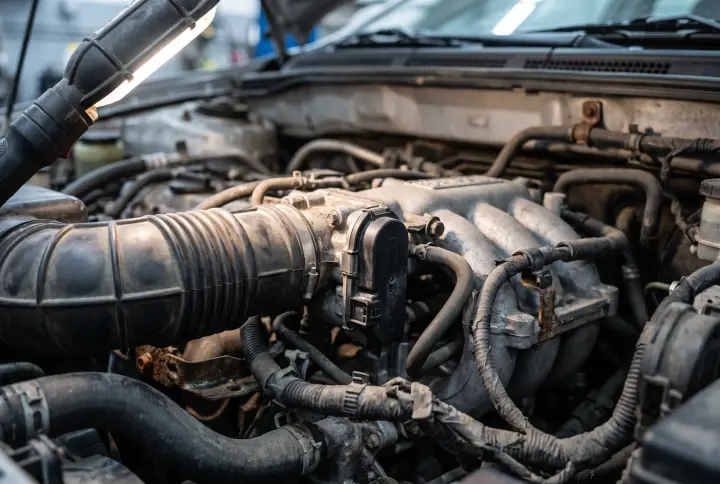
Code P024B points to a charge air cooler bypass control stuck in position, which our engine ranked at 40 percent probability. On the DV6 engine, the plastic double doser housing in front of the intake manifold contains a bypass flap. Soot from the EGR and oil vapor from the crankcase ventilation can cause this flap to stick, or the integrated plastic gear teeth wear out.
This sets P024B and limits engine power or DPF regeneration. Crucially, it does not cause a flashing PATS light or a no-start condition. It is a parallel fault sitting in the background.
Diagnostic Next Steps
The fastest way to confirm the root cause is to perform a tap test on the top of the dashboard while attempting to crank the engine. If the cluster comes alive and the starter engages, the IPC requires removal. The circuit board pins will need inspection under magnification and reflow soldering with leaded solder to restore the network connection.
Reference pages for the codes in this article
- P0500: what we measure for this code across real diagnostics