A 2024 Volkswagen Caddy arrived with an inoperative rear parking aid and a single B107B13 fault code stored. When the rear sensors fail as a group on the SB architecture, the fault usually traces to a shared power or ground splice inside the bumper harness rather than the sensors themselves.
The customer complaint was simply that the rear parking aid was out of function. The B107B13 code indicates an open circuit for the rear parking aid sensors, causing the control module to disable the entire system to prevent false distance readings.
The factory splices in the rear bumper harness
Our platform data ranks a corroded splice or wire break in the rear bumper wiring harness as the most likely cause at 48 percent. On the Volkswagen Caddy (SB), the rear ultrasonic sensors are fed via a common power supply and common ground. These branch out inside the bumper wiring harness through factory sealed splices.
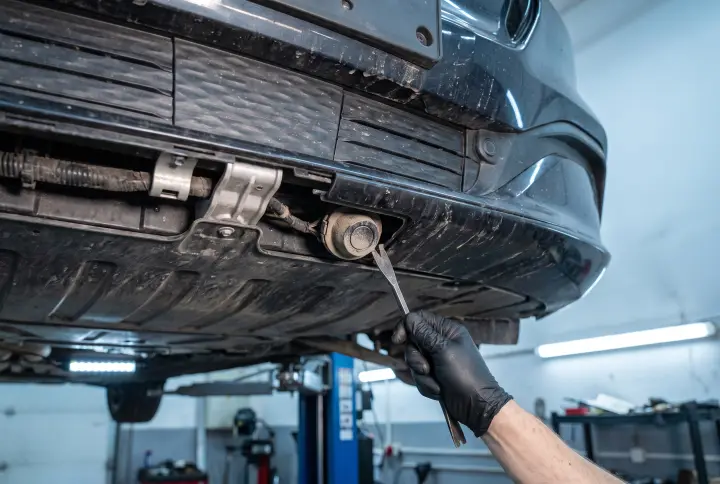
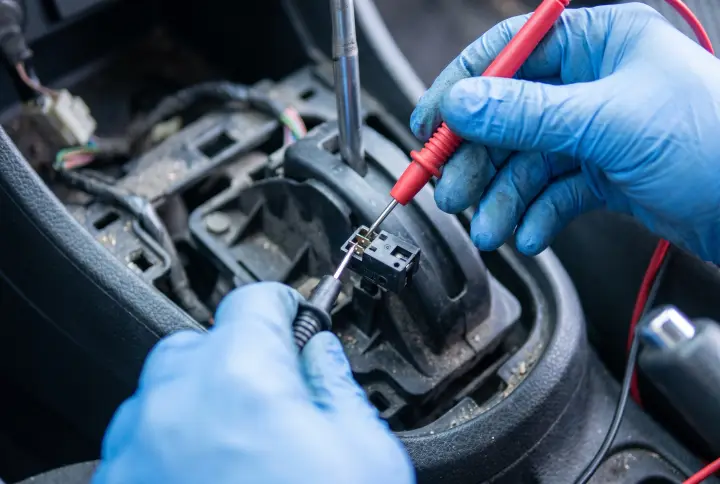
This harness is mounted on the back of the rear bumper where it is continuously exposed to dirt, road salt, and moisture from the rear wheels. If moisture penetrates the shrink tubing or cable insulation, copper corrosion quickly occurs. This erodes the conductor until it breaks. When the common supply or ground splice breaks, all rear sensors lose their voltage reference. The best approach is a voltage measurement at the sensor connectors, continuity checks to chassis ground, and a visual inspection with a tug test of the splices inside the bumper wiring.
Inspecting the main connector for pin push-out
The next highest probability in our data is corrosion or a loose pin in the main connector for the rear bumper, ranked at 26 percent. The bumper harness connects to the main body harness via a multi-pin connector located in the rear wheel arch or underbody area.
Vibration, stone chips, and high pressure washing can force moisture past the seals if the lock is not fully seated or if the seal has dried out. This leads to terminal oxidation or terminal push-out where a pin is forced backward out of its locking position. If the supply, ground, or common communication pin loses contact, an open circuit is registered for the entire sensor group. Technicians should inspect the pins for oxidation, measure voltage before and after the connector, and perform a wiggle test during a resistance measurement.
Ruling out individual sensors and cargo area damage
An internal open circuit in an individual rear ultrasonic sensor ranks at 16 percent. Damage caused by stone chips, micro-cracks in the housing, or water ingress can lead to an internal circuit break. On the MQB-evo architecture, the electrical integrity of the sensor loop is monitored. An internal break in one sensor can prevent the control unit from establishing proper communication. A stethoscope listening test, a swap test between two sensor positions, and live data checks will isolate a failed unit.
Finally, at 7 percent, we see wire breaks or pinch damage in the body wiring harness heading toward the rear. In panel vans, mechanical damage to the wiring harness occurs through chafing against sharp body corners, pinch damage caused by heavy cargo, or penetration by mounting screws for shelving systems.
What to check first
For a B107B13 code on a Caddy van, start by checking the common power and ground at the rear sensors. If power is missing across the board, pull the bumper harness and inspect the factory splices for green copper corrosion before replacing any electronic components.