A 2016 Nissan Qashqai II arrives with poor acceleration under load and two fault codes pointing in different directions: P1453 and P0380. The scanner specifically reports subcodes P1453:92 and P0380:96, and the technician notes the engine runs poorly during acceleration.
How a glow plug fault stops DPF regeneration
The diagnostic platform ranked defective glow plugs as a highly probable cause for this scenario, assigning it an 80% likelihood. Code P0380:96 indicates an internal component failure in the pre-heating circuit. On the 1.5 dCi K9K engine, burned out glow plugs with an open circuit or elevated internal resistance are extremely common. These plugs do more than assist cold starts. The engine control module uses them for active post-glow during DPF regeneration to reach the required exhaust temperatures of 570 to 650 degrees Celsius.
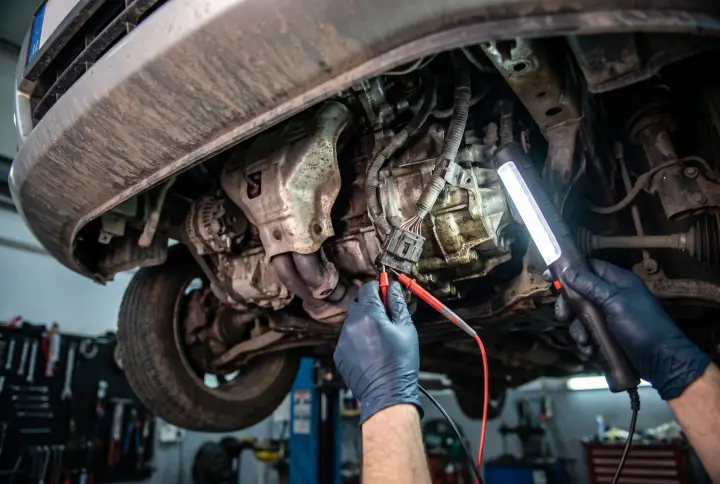
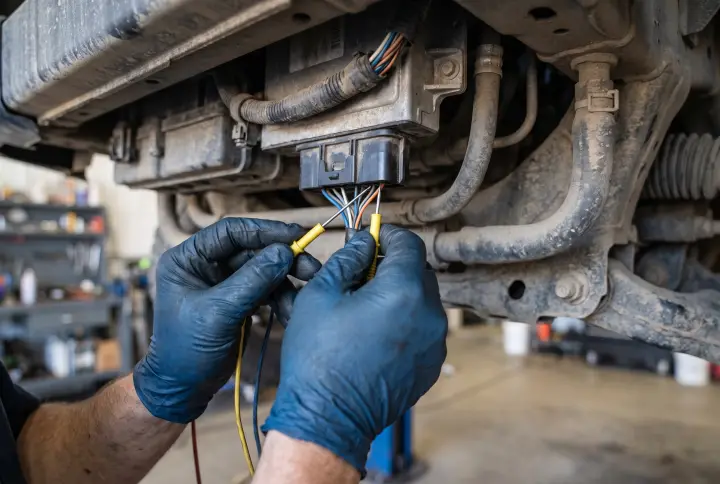
When the module registers P0380, normal regeneration is prevented. The particulate filter accumulates soot, causing backpressure to rise quickly. This creates the conditions that trigger P1453 during highway driving. To verify this, measure the resistance of all four glow plugs against the engine block ground using a multimeter, and check the voltage supply during ignition activation.
The physical failure behind the pressure code
Our platform ranked a cracked or melted pressure hose to the DPF differential pressure sensor as the top cause, at 85% probability. This is the most frequent failure point for P1453:92 on this specific Renault and Nissan platform. The hoses sit behind the engine in a thermally demanding area near the turbocharger and the catalytic converter.
A small leak might go unnoticed during light driving. Under heavy acceleration, exhaust volume and backpressure spike. Pressure bleeds out through the crack, usually located on the front hose connected before the DPF. The sensor registers an implausible pressure compared to the air mass and injected fuel. The engine control module reads this invalid signal and immediately restricts boost pressure to protect the exhaust system. The recommended test is a visual and tactile inspection of both rubber hoses for cracks, burns, and soot deposits, followed by a pressure hold test using a hand pump.
Sensor failures and soot blockages
The analysis also evaluated a defective differential pressure sensor (55% probability) and soot blockages in the metal pipes (45% probability). The sensor measures the pressure drop across the DPF using a piezoresistive membrane. Internal failure or moisture intrusion causes a faulty voltage signal. If the sensor outputs a static pressure or fails to increase linearly under load, the engine control module flags P1453 and cuts torque. Technicians can check this by reading the differential pressure zero-point in live data with the ignition on and the engine off, alongside a multimeter check of the 5V reference.
Alternatively, oil mist and hot soot particles can bake inside the metal pipes connecting the exhaust to the rubber hoses. A solid soot plug stops the pressure wave from reaching the sensor during acceleration. Diagnosing this requires flow-testing and clearing the metal pipe, then reading dynamic differential pressure at 2500 to 3000 rpm with a warm engine.
Diagnostic priority for the K9K engine
This case highlights how an electrical fault in the heating circuit cascades into a mechanical restriction in the exhaust. Always check the physical integrity of the DPF pressure hoses behind the engine before replacing the sensor itself. Following that visual check, measure glow plug resistance to ensure the vehicle can actually perform a regeneration cycle once the pressure leak is resolved.
Reference pages for the codes in this article
- P0380: what we measure for this code across real diagnostics