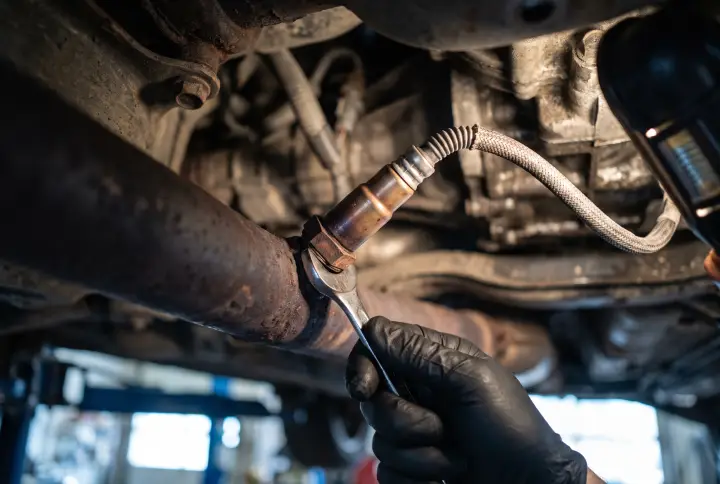
A 2009 Mercedes-Benz C-Class (W204) recently rolled into a shop with a complaint that fits on a sticky note. The technician wrote exactly two words: “EML on”. The scanner pulled a single diagnostic trouble code. P049B.
When you run an independent workshop, these are the jobs that can silently eat your bay time. A single code without a detailed symptom history leaves your technician staring at a scan tool, deciding whether to start throwing parts at the car or spend three hours testing sensors. The code itself points to exhaust gas recirculation flow, but the root cause on this specific platform requires careful navigation.
We fed this exact scenario into the diagnostic platform we build. The engine analyzed the W204, the P049B code, and the underlying technical data to map out the most likely physical failures. The results highlight exactly why diagnosing this engine requires a specific testing path rather than a generic approach.
The Heavy Burden of Carbon Buildup
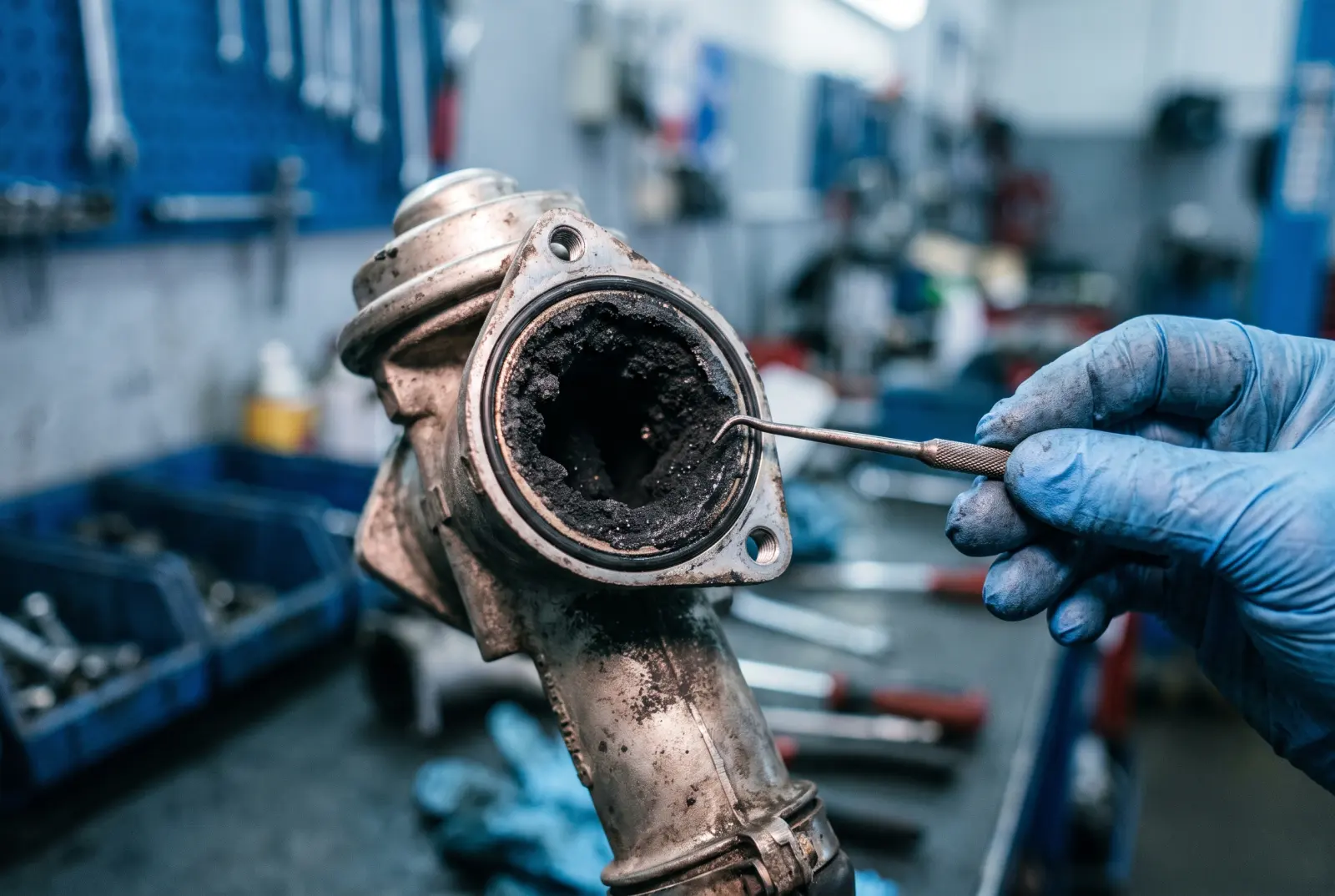
Our platform ranked carbon buildup in the EGR system as the most likely culprit, assigning it a 90 percent probability. This is not a generic assumption about older diesels. Heavy carbon soot deposits are extremely common in the EGR systems of the OM651 engine.
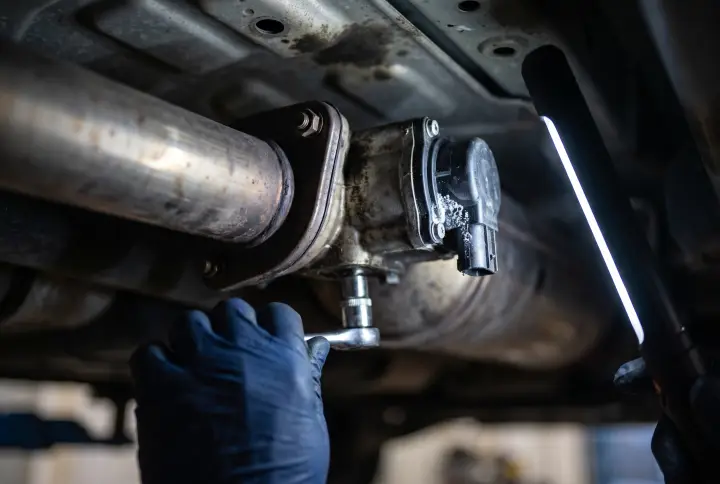
The soot restricts the exhaust gas passages inside the EGR valve, the EGR cooler, and the connecting pipes. When this happens, the physical volume of exhaust gas flowing back into the intake manifold drops. The engine control module detects this insufficient flow and triggers P049B. The customer typically experiences a lack of power and noticeable hesitation.
The data gives us a very specific window for this failure. The OEM source specifically notes that at 79,357 miles, EGR cooler fins are prone to clogging. Knowing that exact threshold changes how a technician approaches the vehicle. Instead of wondering if the cooler might be an issue, they know it is a primary suspect documented by the manufacturer.
Testing for this requires getting eyes on the hardware and monitoring live data. The first recommended step is a direct visual inspection of the EGR valve and the cooler for carbon deposits. The second step is monitoring the mass air flow sensor live data while actively commanding the EGR valve. If the valve opens but the airflow readings do not shift as expected, you have a physical blockage in the passages.
Mechanical Failures Inside Valve B
If the passages are clear, the next highest probability sits at 80 percent. This points to a faulty EGR Valve B.
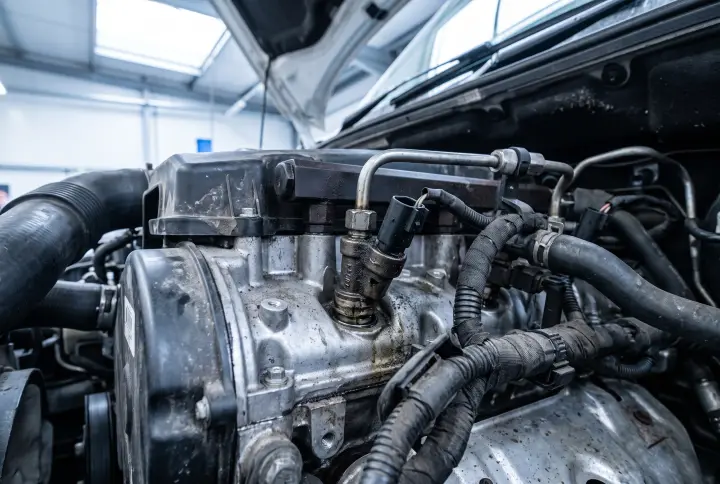
A mechanical or electrical failure inside the valve assembly is fundamentally different from a carbon restriction. The valve might be stuck open, stuck closed, or just moving sluggishly because of internal wear or debris. On the electrical side, the motor, the solenoid, or the internal position sensor can simply fail. If the valve cannot physically reach the commanded position, the exhaust gas flow will never match what the engine control module expects.
The OM651 engine’s EGR valve is a known common failure point. Distinguishing a failed valve from a blocked cooler is critical for protecting your profit margin on the job. Replacing a functional valve because the cooler is actually clogged means the vehicle will bounce right back to your shop as a comeback.
The diagnostic path here relies heavily on the scan tool. The technician needs to run an EGR valve actuation test while watching the live data. If the scan tool commands the valve to move but the physical position reports no change, the next step is manual inspection. Pull the valve and check its physical movement. If the flap is jammed or the internal components are dead, the unit requires replacement.
The Sensor Deception
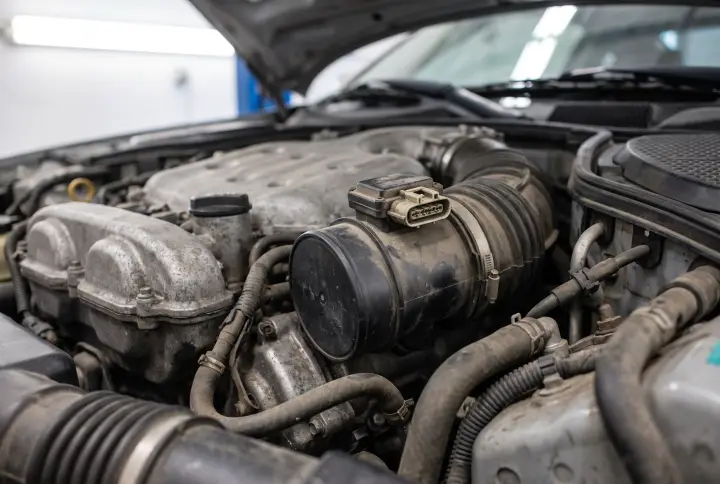
The third most likely cause introduces the reality of modern engine management. Our engine ranked a faulty mass air flow sensor combined with the air temperature sensor at 70 percent.
The engine control module does not actually measure exhaust gas flow directly. It infers that flow by monitoring the mass air flow sensor. When the computer commands the EGR valve to open, it expects to see a corresponding drop in fresh air entering through the intake. If the mass air flow sensor is providing inaccurate readings, the entire calculation falls apart.
For example, if the sensor reads higher than actual airflow when the EGR is commanded open, the computer interprets this as insufficient exhaust flow. It throws the P049B code, even if the EGR valve and the cooler are perfectly healthy. The InfoPro checklist for this specific code on this vehicle directly points to the mass air flow sensor as a primary suspect.
Diagnosing this requires monitoring the mass air flow sensor live data with the engine idling and then with the engine off. The technician is looking for baseline drift or erratic readings. Following that, a physical inspection of the sensor for contamination or damage is necessary to confirm the electrical fault.
Pressure Readings Behind the Filter
The final ranked cause sits at 60 percent probability. This is a faulty pressure sensor located behind the air filter.
Often referred to as a manifold absolute pressure sensor or an ambient intake pressure sensor, this component plays a crucial role in calculating engine load and expected EGR flow. If this sensor drifts out of calibration and provides an incorrect reading, the engine control module misinterprets the actual operating conditions. Just like a bad mass air flow reading, a bad pressure reading leads directly to a P049B code.
This component is also explicitly listed in the InfoPro checklist for P049B. It serves as a reminder that emissions codes are often tripped by intake measurement faults rather than exhaust hardware faults.
The testing path requires monitoring the pressure sensor live data and comparing it to known atmospheric pressure when the engine is off. The technician must also physically check the sensor wiring and the connector for corrosion or backed-out pins. A quick electrical check here can prevent hours of unnecessary teardown on the exhaust side of the engine.
Refining the Diagnostic Process
Jobs like this test a workshop. When a vehicle presents a single emissions code, the path of least resistance is usually the wrong one. Relying on structured probability and specific OEM testing paths stops technicians from guessing. It keeps the vehicle in the bay only as long as necessary, and it ensures the repair actually addresses the root cause. Do you see this same pattern of cooler clogging and sensor deception on the OM651 engines in your shop?