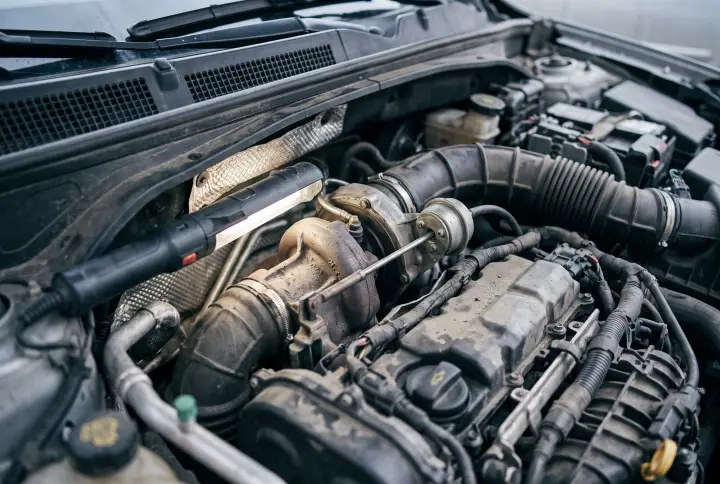
A 2009 Volvo XC60 I rolled into the bay with a single P0299 code and a remarkably brief repair order. The technician had typed exactly one word to describe the problem: "MOTORLAMPA".
The check engine light was on, and the engine control module had registered an underboost condition. P0299 is a code that usually sends technicians straight to the smoke machine. While an air leak is the most mathematically probable fault, the diagnostic platform we build ranked three other mechanical failures that create the exact same symptoms on this specific vehicle. You have to work through the air, vacuum, and fuel systems systematically to find the root cause.
Charge Pressure Leaks in the Intake
Our system ranked a charge air system leak as the most likely culprit at 90 percent, with a medium severity rating. This is the baseline expectation for P0299. Rubber hoses and plastic components within the intake tract become brittle over time due to constant heat cycling and pressure changes.
The hoses positioned after the intercooler are common failure points. The smaller hoses that connect the twin turbo system are also highly susceptible to cracking. When a clamp works loose or a seal fails around a connection point, the generated boost escapes before reaching the intake manifold. The ECM monitors the manifold absolute pressure, sees that the value has fallen below the requested target, and flags the underboost state.
Finding these leaks requires a combination of tests. A standard visual inspection of all charge pipes and connections comes first. A smoke test of the intake system is the standard procedure to reveal cracked plastics or torn rubber. You also need to listen for hissing noises while the engine is under load, as some splits only open up when the system is fully pressurized.
Variable Geometry and Vacuum Control
If the intake system holds pressure, the next most probable failure is a faulty VNT actuator or a sticking variable nozzle turbine mechanism. The platform ranked this at 80 percent. The VNT mechanism on the D5244T16 engine uses vacuum control to adjust the turbo vanes.
A leak in the vacuum lines leading to the turbo control valve, commonly known as the Pierburg valve, will prevent the VNT vanes from moving into the correct geometry to build boost. The valve itself can also fail. Inside the turbocharger, soot accumulation can cause the VNT vanes to stick in an open position. This physically limits the ability of the turbo to spool up efficiently. Furthermore, if the actuator has a cracked internal membrane, it cannot hold vacuum, leaving the VNT mechanism stranded in its default state.
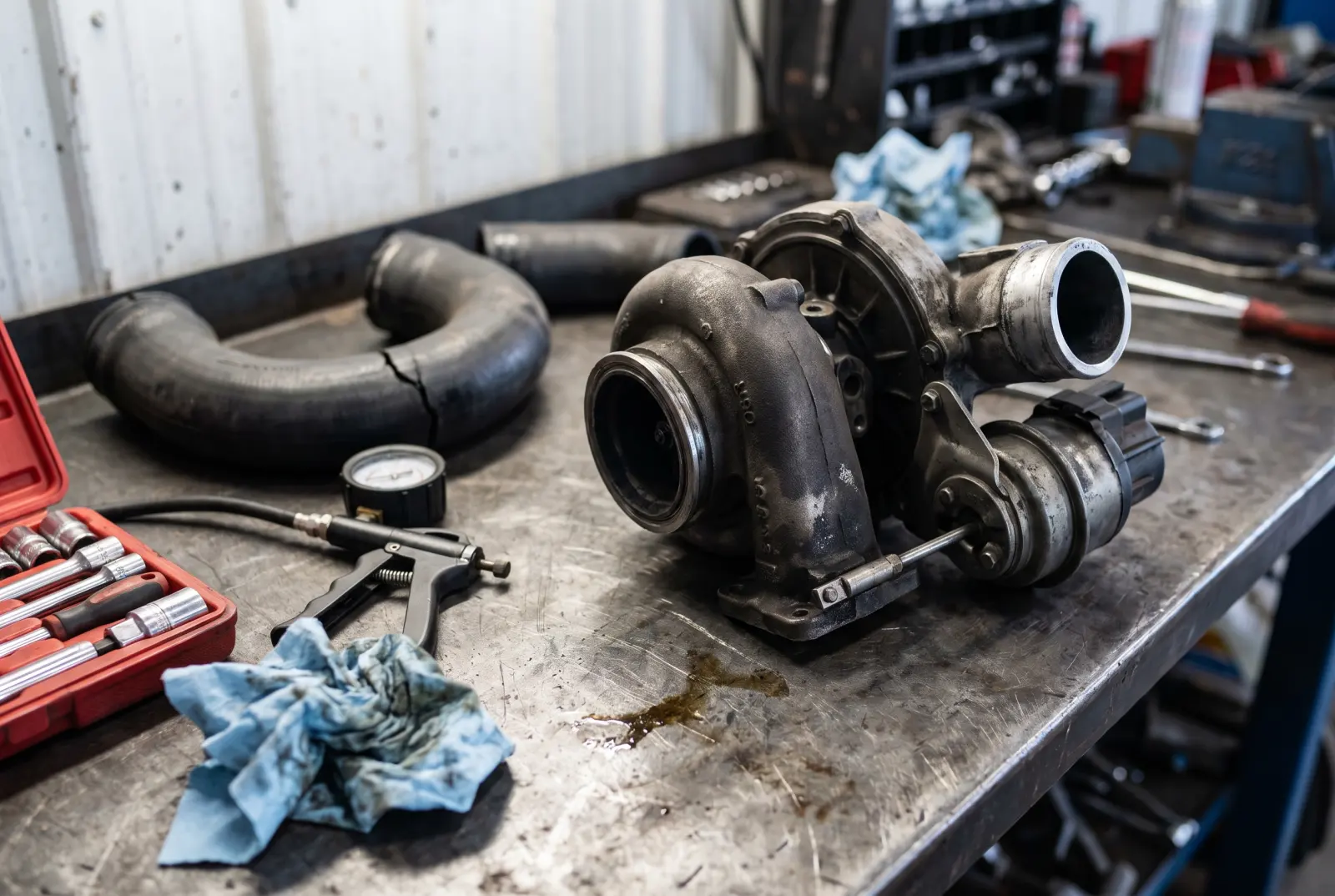
Testing this circuit requires isolating the vacuum supply. You must verify that the Pierburg valve is receiving adequate vacuum from the pump. You can manually test the VNT actuator using a hand-held vacuum pump to see if the rod moves smoothly and if the diaphragm holds steady pressure. Finally, checking the physical movement of the VNT linkage by hand helps confirm whether the internal vanes are binding on soot.
The Fuel Starvation Variable
The most interesting failure path for this code ranked at 70 percent: a clogged fuel filter. This is a documented cause for P0299 on Volvo D5 engines, particularly when the air tract and vacuum systems have been ruled out.
A clogged filter restricts fuel delivery during high engine load. Without enough fuel, combustion energy drops, and the engine cannot produce the necessary volume of exhaust gases to drive the turbine wheel. The turbocharger fails to reach the required shaft speed, and boost pressure falls short of the target. The ECM interprets this purely as an underboost condition, even though the charge air system is completely sealed.
Confirming this requires looking at the maintenance history to check the fuel filter replacement interval. You then need to measure the actual fuel pressure while the engine is under heavy load to see if the supply drops off when demand is highest.
Internal Intercooler Restrictions
Ranked at 65 percent was an internally clogged intercooler. This creates a flow restriction under high RPM and high load situations, causing the underboost fault.
This specific restriction is notoriously difficult to spot with a standard low pressure smoke test because the system is technically sealed to the atmosphere. On these diesel engines, soot from a small, previously undetected diesel particulate filter leak can accumulate inside the intercooler over time. This buildup eventually restricts the internal flow volume.
Diagnosing a clogged intercooler requires a visual inspection for heavy oil or soot deposits. If the equipment is available, you need to perform a pressure test that actually measures flow rate through the core, rather than just static pressure holding. Checking the exhaust backpressure can also provide clues about soot accumulation in the wider system.
Your Diagnostic Approach
Working through a P0299 requires trusting the test results rather than guessing parts. When a vehicle comes in with nothing but "MOTORLAMPA" on the ticket, do you check fuel pressure when the intake passes a smoke test, or do you immediately pull the turbo?
Reference pages for the codes in this article
- P0299, what we measure for this code across real diagnostics