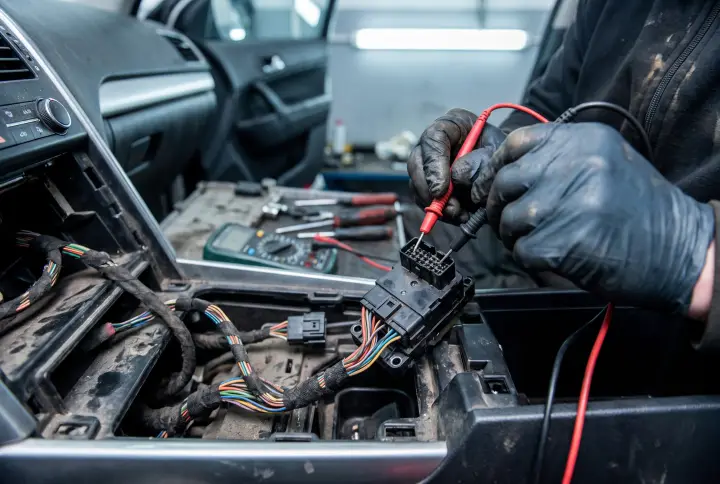
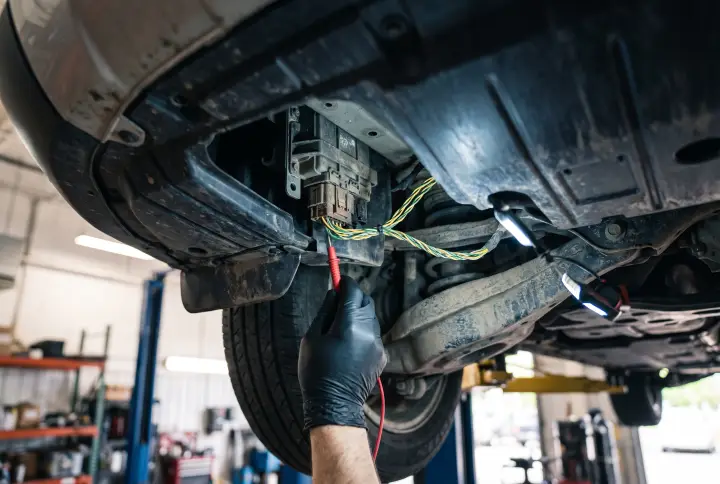
A 2016 SKODA Yeti arrived in the bay with a complaint that the heater was not getting hot, accompanied by a lone B108D fault code. Our diagnostic platform analyzed the symptoms alongside the code to map out the most probable failure points in the climate control system.
The V159 servo motor failure
Our data ranked an internal failure of the right temperature blend flap motor (V159) as the most likely culprit at 85 percent probability. On the PQ35 platform, this electric servo motor regulates the right temperature blend door. It contains a 12V DC bidirectional motor, a plastic reduction gearset, and a 5-kilo-ohm feedback potentiometer. The Climatronic control module (J255) monitors this potentiometer to ensure the flap position matches the demand.
Over time, graphite track wear, carbon dusting, or contact wiper oxidation can cause dead spots or erratic resistance spikes. When the control unit detects missing position feedback or an implausible voltage, it logs DTC B108D and stops driving the flap. This leaves the door locked in full cold or a neutral position. Suggested tests include a live data sweep of the specified versus actual position, a bi-directional actuator output function test, and checking the terminal voltage and 5V reference at the connector.
Basic settings and calibration drift
The second most probable cause, ranked at 60 percent, is a loss of HVAC flap basic settings or calibration drift. The Climatronic module relies on programmed mechanical end-stop adaptations to operate the motors safely without overloading the reduction gears. If the battery supply voltage drops during cranking or a momentary mechanical restriction occurs, the controller loses its baseline calibration.
In this state, the module logs B108D (often with a missing calibration sub-code) and enters a failsafe lockout mode. It will not sweep the right blend door to full hot, preventing mechanical damage. Technicians should attempt a manual Climatronic button combination recalibration sequence or run the basic settings flap adaptation routine in Group 000 via a scan tool.
Mechanical binding in the HVAC housing
Ranked at 40 percent probability is mechanical binding or a fractured blend flap linkage. The V159 motor connects to the internal air distribution door via a keyed plastic lever arm. If foreign material enters the housing, the plastic pivot socket cracks, or the internal door warps, the door will not move.
The control module detects the motor stalling prematurely or encountering excessive torque resistance, setting B108D. To verify this, detach the actuator and perform a manual spindle rotation check. A visual inspection of the actuator drive pinion and door lever splines is also necessary.
Temperature sensor feedback faults
At a 30 percent probability, an inaccurate reading from the right vent duct temperature sensor (G151) can cause the system to misbehave. If the internal thermistor degrades and reports an artificially high duct temperature (such as 70 to 80 degrees Celsius) when the air is cold, the module calculates the zone is overheating. It then commands the V159 motor to maximum cold. Tests for this include a live data comparison of the left and right discharge vent temperatures at a cold soak and a resistance measurement of the thermistor at ambient temperature.
Diagnostic takeaways
For a SKODA Yeti presenting with a B108D code and no heat, always verify the basic settings and run a live data sweep before disassembling the dashboard. A simple recalibration or identifying a dead spot in the V159 potentiometer via live data will often pinpoint the fault without requiring immediate physical access to the HVAC housing. Confirming the electrical integrity of the servo motor and the sensor readings is the most efficient path to resolving this heating issue.