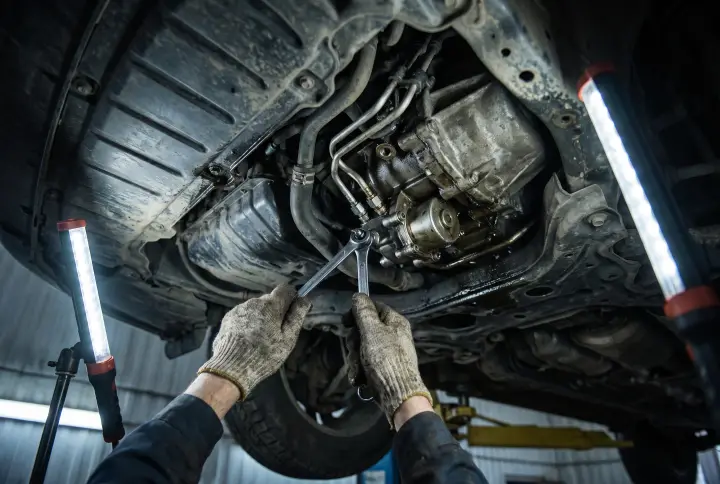
A 2008 Mazda CX-7 pulled into a Polish workshop with a single P0012 fault code, presenting a classic diagnostic trap for the 2.3 DISI Turbo engine. The technician scanned the vehicle and retrieved only this code, which indicates the intake camshaft timing is over-retarded. Our diagnostic platform analyzed this specific L3-VDT engine and identified four distinct causes, all heavily dependent on engine oil temperature.
VVT Actuator Wear and Internal Leaks
The most probable cause, ranked at 82 percent likelihood, is internal wear within the variable valve timing actuator. This specific 2.3 DISI Turbo engine is prone to worn internal vanes, damaged pressure chamber seals, and locking pin degradation, an issue documented in Mazda service bulletins SSP 87 and TSB 01-012/12.
As the engine warms up, oil viscosity drops. The thin, hot oil leaks past the worn internal seals, resulting in a loss of hydraulic pressure. The actuator then lacks the force to overcome valve spring resistance and advance the camshaft. The camshaft remains retarded by more than 5 degrees for over 5 seconds, triggering the P0012 code. We suggest monitoring the VT ACT and VT DES PIDs during warmup. You should also perform an active test of the VVT at idle or remove the valve cover to inspect the angular play of the VVT rotor.
Oil Pressure Loss at Cam Cap Number One
The second most likely fault, ranked at 78 percent, involves oil pressure bleeding off at the first intake camshaft bearing cap. The oil feed for the VVT actuator routes directly through this cap, which also houses the oil control valve. The mechanical load from driving the high pressure fuel pump and the timing chain creates abnormal stress here.
This stress causes microscopic wear, scoring, or warpage. When the engine reaches 90 to 100 degrees Celsius, the pressurized hot oil escapes through the widened clearance back under the valve cover instead of entering the VVT chambers. Testing this requires removing the cap for visual inspection, checking the oil clearance with Plastigauge, and applying compressed air to the feed ports to check for leaks.
Oil Control Valve Thermal Failures
Ranked at 70 percent, the oil control valve itself, part number L3K9-14-420A, can fail under heat stress. The mechanical spool can bind due to the thermal expansion of oil varnish. Alternatively, the electromagnet coil can overheat, which increases electrical resistance and drops the magnetic force.
Additionally, the micro screens on the valve can clog. Cold oil produces enough pressure to force the spool open, but hot oil cannot generate sufficient flow through the restricted screens. Technicians should measure the OCV coil resistance immediately after the code sets on a hot engine. A dynamic 12-volt test on the heated valve and a visual check of the screens will confirm this fault.
Chain Stretch and Tensioner Weakness
The final high severity cause, ranked at 65 percent, is timing chain stretch combined with a weak hydraulic tensioner. The chain drives both camshafts and the high pressure fuel pump. Thick cold oil masks this issue by maintaining high pressure in the tensioner. Once hot, oil pressure drops at idle, and the tensioner weakens. The stretched chain then retards the intake camshaft beyond the powertrain control module adaptation limit.
Diagnostic Priorities for P0012
When addressing a hot engine P0012 on the 2.3 DISI Turbo, always verify if the fault only appears at operating temperature. Start by monitoring the VVT PIDs during the warmup cycle, then measure the OCV resistance while the block is still hot. If electrical tests pass, the diagnosis must move to mechanical clearances, beginning with camshaft cap number one and the timing chain tensioner extension.
Reference pages for the codes in this article
- P0012: what we measure for this code across real diagnostics