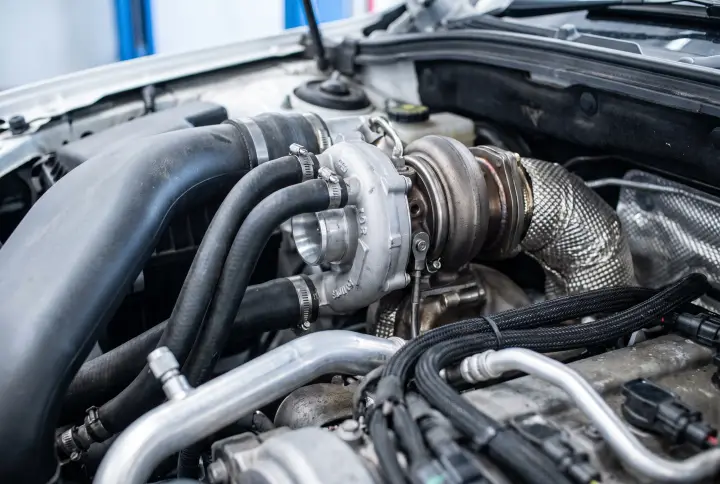
A 2011 Volkswagen Crafter arrived with poor traction and a hard limit of 100 km/h, accompanied by a single P22D100 fault code. The engine control unit, a J623 on the EDC17 system, had detected a voltage on the control line for the turbine inlet valve that exceeded the normal reference range.
Analyzing the circuit high condition
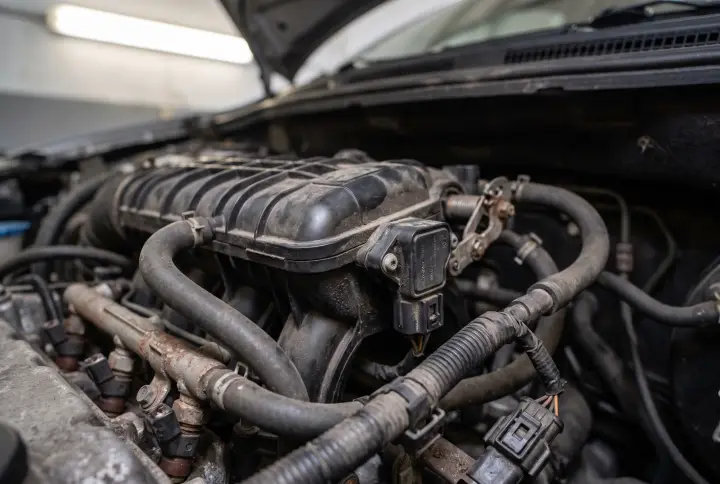
The P22D100 code points directly to a "Control Circuit High" condition for the turbine inlet valve. On the Crafter 2.0 TDI with the CKUC bi-turbo engine, this typically indicates an open circuit where the internal pull-up of the control unit raises the voltage to the supply level. It can also mean a missing ground connection or a direct short to battery voltage. Our platform ranked a wiring break or short circuit as the most likely root cause at 40 percent probability. The wiring harness routed over the engine and near the hot areas of the turbocharger assembly is highly exposed to vibration wear, heat damage, or rodent damage.
Internal coil failure in the actuator
Ranked closely behind at 35 percent probability was a failure of the turbine inlet switch valve itself. The CKUC engine uses a magnetic valve to switch the turbine inlet, routing exhaust gas past the small high-pressure housing and into the low-pressure turbine during higher engine loads. If the internal coil in the actuator burns out, breaks, or develops a faulty resistance value, current draw in the circuit drops to zero. The control unit monitors this electronically and interprets the lack of a voltage drop as a high circuit fault. To rule this out, technicians should perform a direct resistance measurement across the coil pins on the magnetic valve, followed by an actuator test using a diagnostic scanner to listen for mechanical operation.
Corrosion and mechanical binding
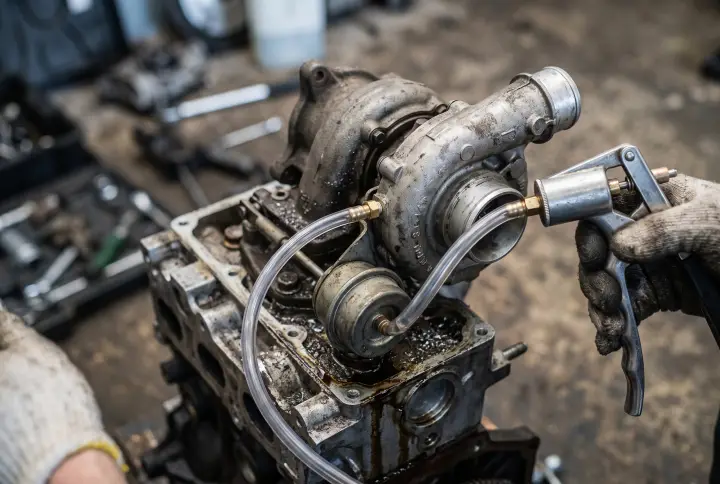
Moisture ingress and periods of standing can cause secondary issues that trigger the same electrical code. Our data assigned a 20 percent probability to corrosion or poor contact in the connector to the turbine switch valve. Condensation can bypass the silicone seal in the connector, leading to oxidation on the terminals or expanded female pins. This creates high contact resistance or intermittent disconnections under heavy vibration. Additionally, there is a 15 percent probability of a mechanically seized switch damper in the turbine housing. Frequent cold starts and short trips allow soot and rust to build up. If the mechanical flap jams, an electrically monitored actuator will fail to reach its end position, prompting the control unit to flag a signal error.
Diagnostic priorities for the CKUC bi-turbo
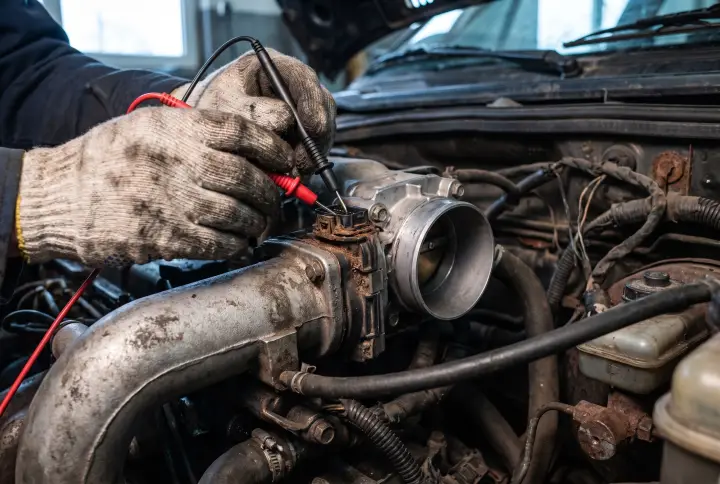
When diagnosing a P22D100 code on this bi-turbo setup, start with the electrical fundamentals before condemning the turbo assembly or actuator. Perform a continuity and resistance check on the control wire between the ECU connector and the valve connector. Measure for shorts to ground and to the 12V supply. If the wiring is intact, visually inspect the connector pins for moisture or mechanical deformation, and conduct a drag test to assess the clamping force on the female terminals. Finally, manually manipulate the actuator rod to ensure the exhaust flap moves freely without binding.