A 2004 Hyundai Tucson with a sudden loss of power and a lone P0016 code usually means a bay tied up for hours of teardown. The technician simply noted “Perdida de potencia” alongside the code. On the 2.0L G4GC Beta II engine, this correlation fault between the crankshaft and camshaft position sensors triggers emergency maps that restrict engine output. The diagnostic platform we build ranked four distinct root causes for this specific vehicle and code combination.
The primary mechanical timing path
Our data ranked a mechanical desynchronisation or a jumped timing belt tooth as the most likely cause at 75 percent. The G4GC engine uses an external timing belt to drive the exhaust camshaft. If the belt stretches or the mechanical tensioner loses force, the belt can slip a tooth on the pulleys. The ECU constantly monitors the pulses from the crankshaft position sensor against the camshaft position sensor. Any physical deviation throws the P0016 code.
The suggested starting point here avoids immediate heavy wrenching. A dual-channel oscilloscope checking the CKP against the CMP will confirm the sync state. If the scope shows a deviation, the next step is a physical verification of the top dead center timing marks and a visual inspection of the belt tension.
Hydraulic control valve restriction
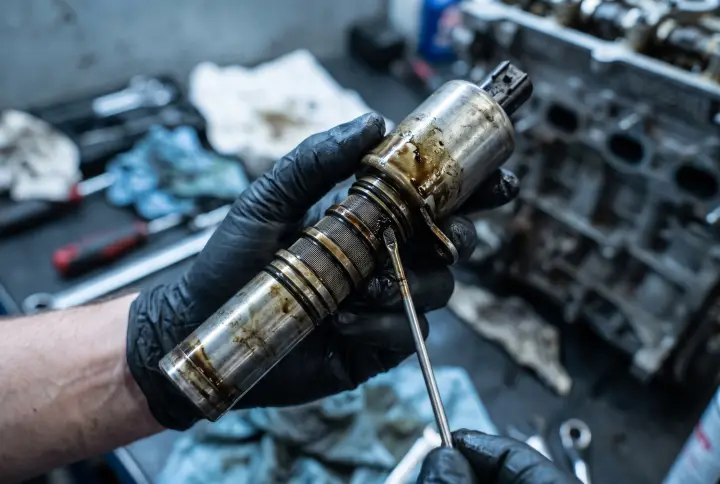
Ranked second at 65 percent was a stuck or defective Oil Control Valve. The CVVT system on this engine relies on the OCV to meter hydraulic flow to the intake camshaft phaser. Carbon build-up, degraded oil varnishes, or microparticles can seize the valve plunger or block its mesh filter. When the valve sticks in the retard position, the intake camshaft cannot reach the angle requested by the engine control module.
Testing this circuit is straightforward. The platform advised measuring the OCV coil resistance, followed by applying a direct 12V feed to check plunger actuation. A visual inspection of the mesh filter in the cylinder head will confirm if oil contamination is the root issue.
Internal secondary chain stretch
The third highly ranked cause highlights the mixed timing design of this engine. While the external belt drives the exhaust cam, a short internal secondary chain under the valve cover transfers movement to the intake cam. Ranked at 58 percent, wear on the links, pins, and guides causes chain elongation. Because the CMP sensor reads off the intake camshaft, slack in this internal chain creates a direct angular phase shift relative to the crankshaft.
Verifying this requires removing the valve cover. The technician must inspect the internal chain for tension and slack, check the alignment of the punch marks between the camshafts, and examine the internal chain tensioner guides for excessive wear.
Actuator internal wear
The platform also flagged the CVVT phaser actuator itself, ranked at 48 percent. The actuator adjusts valve overlap dynamically using internal vanes driven by oil pressure. Internal wear on the vane seals or a jammed return locking pin will lock the mechanism in maximum retard. If the ECU calculates a cumulative phase deviation above its acceptable threshold, it sets the P0016 code.
This can be checked via live data by monitoring the actual intake angle against the requested target. A physical check of the actuator lock pin with the valve cover off confirms the mechanical failure.
Directing the diagnostic order
This diagnostic path demonstrates the value of testing from the outside in. Before pulling the valve cover to inspect the internal chain or the CVVT actuator, a fast check of the OCV circuit and a dual-channel scope reading of the cam and crank sensors will either confirm or rule out the most common causes. Checking the electrical and hydraulic controls first keeps the vehicle moving through the bay efficiently.
Reference pages for the codes in this article
- P0016: what we measure for this code across real diagnostics