A 2024 Nissan Juke (F16) recently rolled into a workshop with intermittent faults in the High Voltage Battery Control Module, specifically logging P1B07-F4 and P1B07-15. Dealing with internal logic errors on hybrid drivetrains can quickly lead a technician toward an expensive module replacement, but the underlying cause is often far simpler.
Decoding the sub-codes
The primary fault code, P1B07, was accompanied by two specific sub-codes. Sub-code F4 indicates an internal logic or algorithm failure during the initial self-test routine. Sub-code 15 points to a circuit short to battery or an open circuit.
Our diagnostic platform ranked a boot logic anomaly or outdated software calibration as the most likely cause at 85 percent. On the E-Tech architecture used in the F16 chassis, excessively restrictive software tolerances during startup monitoring can trigger these codes. The recommended first step is verifying the HBCM software version and checking Nissan technical service bulletins for an available update. Technicians should also analyze the freeze frame parameters captured when the code was generated.
Physical connections and voltage drops
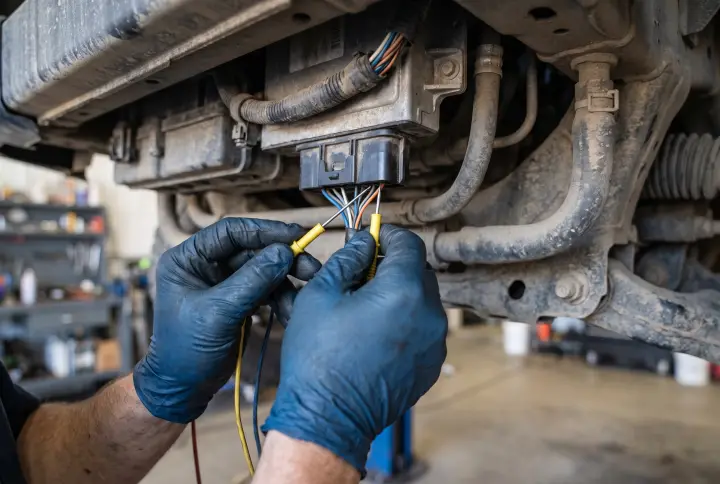
If the software is up to date, the investigation must shift to physical connections. Our data ranked a false contact or defective pin retention on the low-voltage connector at 70 percent. Micro-movements, terminal fretting, or pin back-out can cause micro-interruptions during the wake-up transient at key-on. A visual inspection, a pin drag test on the connector, and a manual wiggle test of the harness while viewing live data are essential.
Close behind this, at 60 percent probability, is a transient voltage drop from the 12V auxiliary battery. Before the DC/DC converter engages to support the network, a dip below 10.5 to 11.0V at key-on disrupts the logic supply to the HBCM microprocessor. Checking the battery state of health and capturing the minimum peak voltage during startup will confirm or eliminate this variable.
When hardware fails
Ranked at 35 percent, an internal hardware failure of the HBCM remains a possibility. This could involve a cold solder joint or a defect in the multi-channel cell monitoring ASIC. However, this requires testing only after ruling out the more likely electrical and software issues.
Diagnostic takeaways
Always check the 12V auxiliary health and confirm the software calibration before condemning a high voltage module for an intermittent logic error. A quick check for software updates can prevent an unnecessary and expensive hardware replacement on this hybrid architecture.