A 2008 SKODA Superb II rolls in with a classic VAG immobilizer symptom: the engine fires up for a second and immediately dies, leaving a B104B31 fault code behind. The technician's notes describe the issue perfectly: the car starts but immediately stalls.
The transponder chip is the prime suspect
Code B104B31 means the immobilizer module received no signal from the key's RFID chip. On the fourth generation immobilizer system used with the 2.0 TDI PD (BMP) engine, the EDC16U34 engine control unit allows the initial crank and ignition. If the authorization token is not received over the CAN bus within one to two seconds, it cuts the injectors. This often happens if the key was dropped, cracking the glass or ceramic transponder casing, or during a DIY key shell replacement where the chip is lost or damaged.
To test this, read the immobilizer measuring blocks in the instrument cluster (address 17) to check key recognition status. You should also attempt a start with a spare key, or physically inspect the chip inside the housing.
Reader coil and wiring faults
The immobilizer reader coil, known as antenna D2, sits around the ignition lock cylinder. Our data ranks this as a highly probable cause for this specific fault code. Microvibrations from the steering column can cause contact resistance on the two-pin connector, and thermal expansion can cause microscopic breaks in the copper winding itself. Without enough magnetic field to excite the transponder, the unit logs B104B31 and stalls the engine.
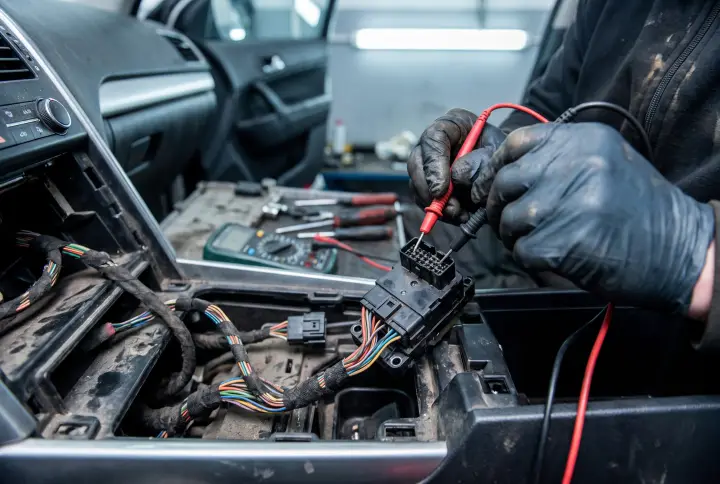
Measure the winding resistance of the D2 coil with a multimeter. Check the pin tension on the connector, and use an oscilloscope to verify signal integrity when switching on the ignition.
Voltage drops during heavy cranking
The 2.0 TDI PD engine requires massive starter and glow plug current. If the battery is sulfated or the starter drags, system voltage can drop below a critical threshold of 9.5 to 10.0 volts. The immobilizer circuitry in the instrument cluster (J285) is extremely sensitive to low voltage. It can reset right in the middle of the key authorization exchange. The engine fires, but the ECU never gets the green light.
Monitor battery voltage with a multimeter on the MIN/MAX setting during cranking. You can also run a conductance test for state of health or try starting with an external booster pack.
Water ingress and CAN bus interference
On the Superb II (3T) platform, the main immobilizer logic lives inside the instrument cluster. Blocked drains under the windshield cowl or sunroof can send water down the A-pillar and into the cabin. This moisture causes connector oxidation, resistance in the power supply, and interference on the CAN bus network.
Run a complete diagnostic scan for CAN communication errors across all modules. Physically inspect the A-pillar connector stations and instrument cluster wiring for signs of moisture.
Where to begin your diagnosis
Start with the easiest variables. Grab the spare key to instantly rule out a damaged transponder chip. If the spare fails, hook up a battery booster pack to eliminate voltage drop during cranking. Only after crossing those off should you tear into the steering column to probe the D2 reader coil or hunt for water damage under the dashboard.