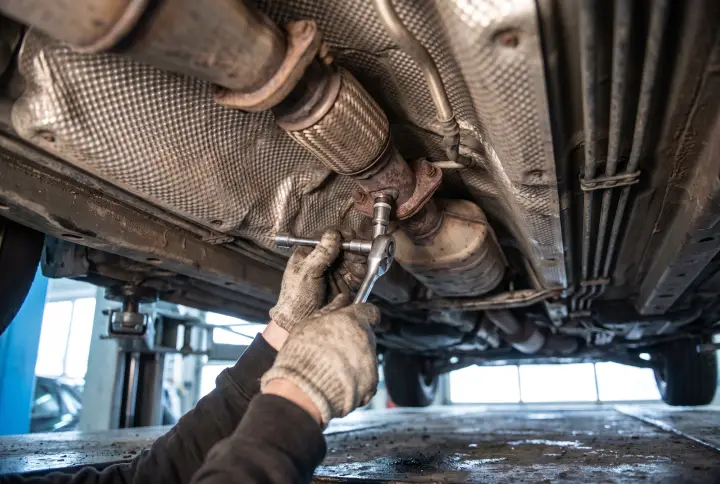
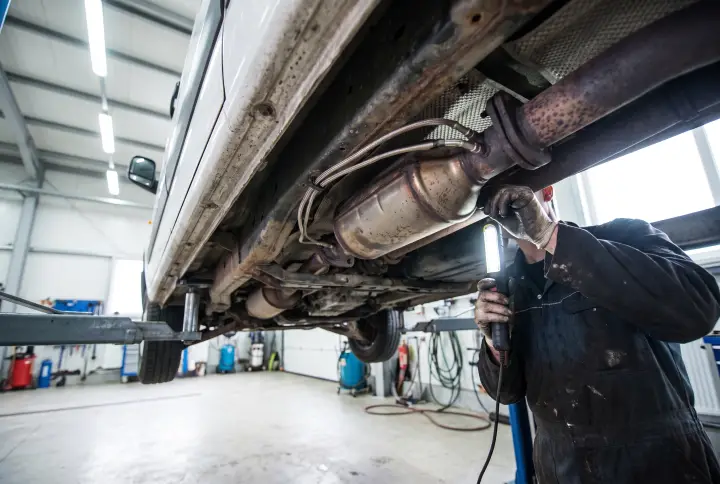
A 2022 Mercedes-Benz V-Class (W447) came into the workshop with a persistent P2002 code that returned exactly 100 kilometres after being cleared. The technician noted that the cycle was entirely predictable, pointing to a monitor that takes a specific drive cycle to fail rather than an immediate hard electrical fault.
Sensor drift and false readings
Our diagnostic platform ranked a faulty or drifting DPF differential pressure sensor as the most likely cause, at 42 percent. On the OM654.920 engine running the Bosch MD1CP control unit, this sensor monitors the pressure gradient across the particulate filter. Thermal stress can cause the piezoresistive membrane to drift, reporting a backpressure lower than reality.
Because the engine control unit constantly compares this reading against a mathematical model of air flow, engine load, and exhaust temperature, it triggers the P2002 code when the filter appears to be retaining too little particulate. The platform advises checking the zero offset with the ignition on and engine off using live data. A linearity test with a calibrated hand pressure pump and a check of the 5V reference circuit at the 3-pin connector will confirm the sensor health.
Structural filter failure
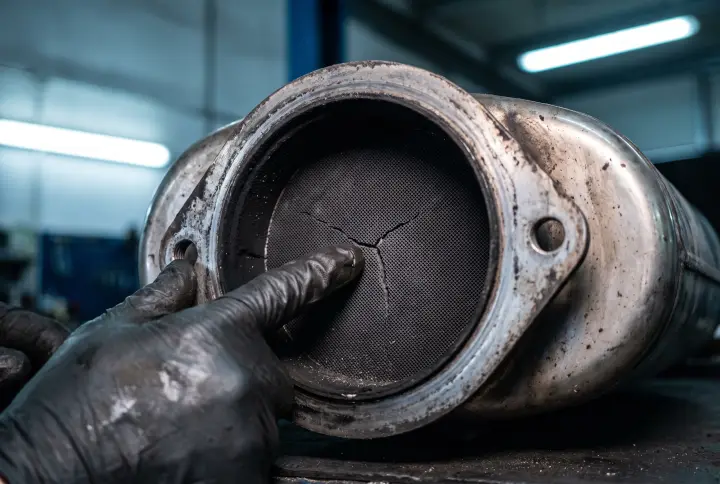
If the sensor data adds up, a cracked or degraded ceramic substrate is the next suspect, ranked at 38 percent. Thermal shock from forced regenerations can cause micro-cracks in the silicon carbide or cordierite monolith. Exhaust gas then bypasses the filter, drastically dropping the hydraulic pressure.
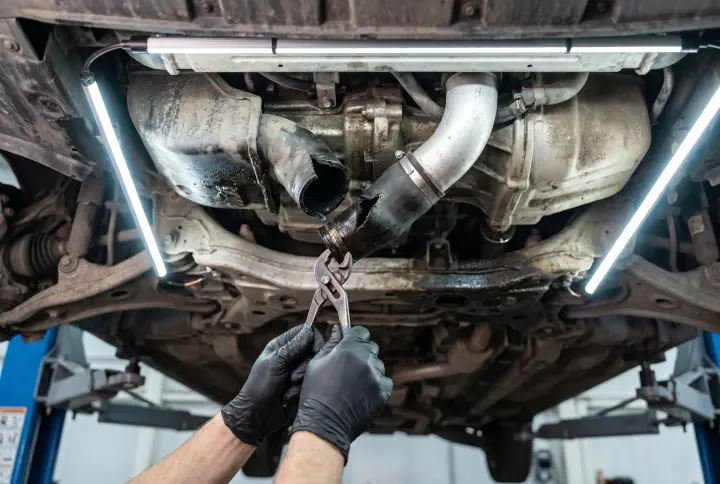
The Bosch MD1CP rationality test needs a continuous drive to catch this, which perfectly explains the 100 kilometre delay reported by the technician. To rule this out, perform a visual swipe test for soot in the tailpipe. You can also monitor dynamic backpressure under full acceleration, or inspect the exit face of the DPF with a borescope.
Leaking pipes and ash saturation
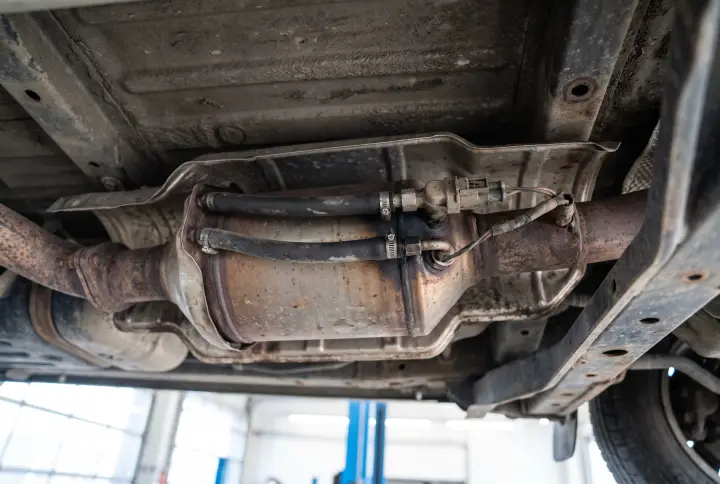
Physical blockages or leaks account for the remaining high-probability causes. The platform gave a 28 percent probability to the differential pressure pipes being cracked, loose, or obstructed. The rigid steel pipes and silicone hoses endure heavy vibration and radiant heat from the turbocharger and DPF assembly. A pneumatic leak test with a vacuum pump, combined with low-pressure blow-through, will identify pressure bleed-off before it reaches the sensor.
Finally, ash loading sits at a 22 percent likelihood. Mineral residues from engine oil additives permanently trap inside the filter cells, shrinking the usable volume and causing rapid pressure spikes during load transients. Checking the estimated ash and soot mass in live data, alongside basal backpressure at idle after a regeneration, will highlight a saturated monolith.
Where to begin your diagnosis
When a P2002 code takes 100 kilometres to return on a W447, start by interrogating the differential pressure sensor. Check the live data zero offset before getting your hands dirty. If the electrical and pneumatic readings are rational, move straight to the tailpipe swipe test and borescope inspection to verify the structural integrity of the DPF itself.
Reference pages for the codes in this article
- P2002: what we measure for this code across real diagnostics