A 2020 MG HS enters the bay with a complaint that sounds more like a slipping transmission than an engine fault: high revs without picking up speed on the motorway. The technician noted that the vehicle drove fine around town, but under heavy load, it struggled. The only fault code present was P0299.
Transmission Symptoms from an Underboost Code
The customer complaint points directly to the gearbox, but the P0299 code tells a different story. On the MG 1.5 T-GDI engine, low load city driving requires very little boost. This masks the problem entirely. When the driver hits the motorway and demands sustained load, the engine cannot meet the target boost. In response, the transmission control module hunts for lower gears to compensate, causing the engine to flare and rev high without actually building speed.
Checking the Charge Air Tract First
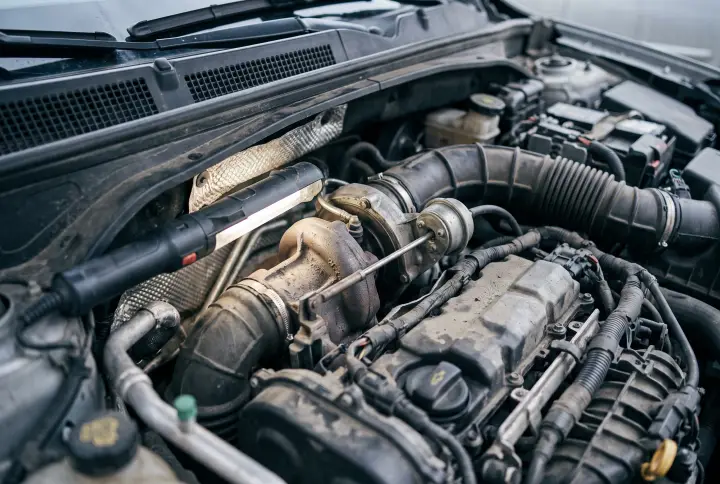
Our platform data ranks a leak in the charge air cooler or boost hose as the most likely cause for this specific scenario at a 45 percent probability, with medium severity. A split hose, degraded coupler, or cracked intercooler end tank will allow pressurized air to bleed off into the atmosphere.
To confirm this, technicians should start with a live data log comparing target boost versus actual boost under load. If there is a clear deficit, smoke test the intake and charge air tract. Alternatively, pressurize the charge air tract to 1.0 to 1.4 bar (15 to 20 psi) and monitor for a pressure drop.
Inspecting the Wastegate and Diverter Valve
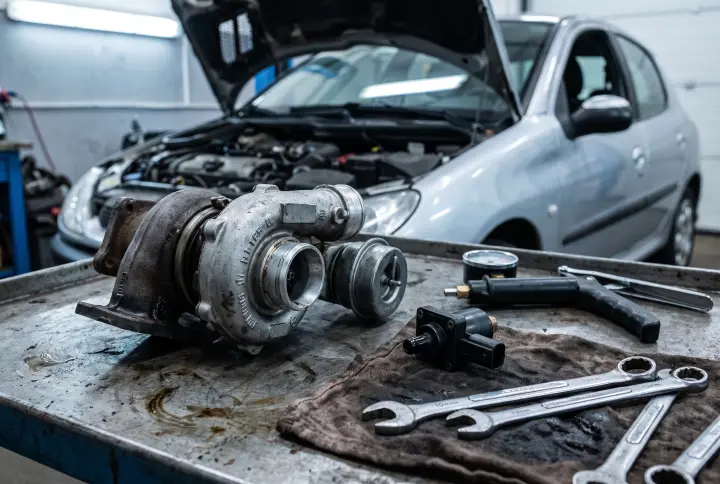
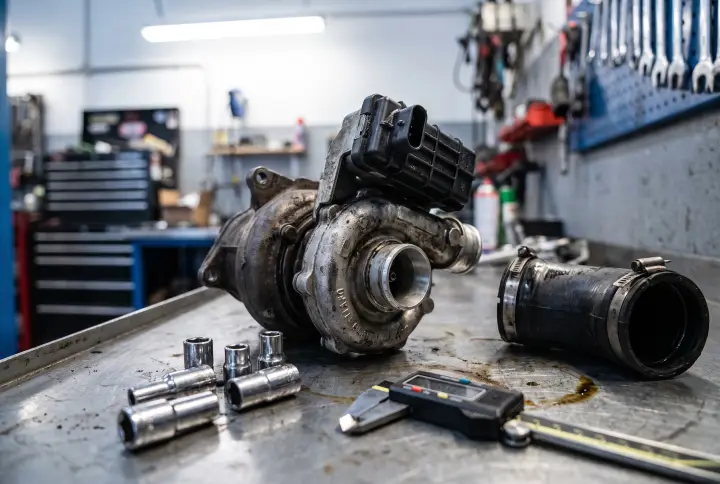
If the system holds pressure, the next logical step is the mechanical control of the turbocharger. Wastegate binding or sticking partially open ranks as a 25 percent probability. On the 15E4E engine, the linkage can bind or the actuator can stick, preventing the wastegate flap from seating tightly. Exhaust gas then bypasses the turbine wheel. A manual physical check of the linkage freedom is required, followed by a scan tool actuator functional test and a vacuum or pressure hand pump test on the actuator.
Following that, a torn turbocharger diverter valve sits at a 15 percent probability. If the internal rubber diaphragm tears or the piston sticks partially open, boost pressure recirculates directly back into the turbo inlet under high load. Technicians must remove the diverter valve, visually inspect the sealing face, and bench test the valve seat with a vacuum or pressure pump.
Verifying Sensor Integrity
At a 10 percent probability, a fouled manifold absolute pressure (MAP) or boost pressure sensor can falsely report low pressure to the ECU. Direct injection engines route crankcase blowby through the intake, coating the sensor in oil and carbon. A simple Key-On Engine-Off pressure comparison between the MAP, boost sensor, and barometric pressure will quickly rule this out.
Diagnostic Priorities for the MG 1.5 T-GDI
Always verify if the high revving symptom occurs only under sustained load before condemning the transmission on these vehicles. Start by logging actual versus target boost, then pressurize the charge air system to 1.4 bar to rule out the most common hardware leaks before pulling components off the engine.
Reference pages for the codes in this article
- P0299: what we measure for this code across real diagnostics