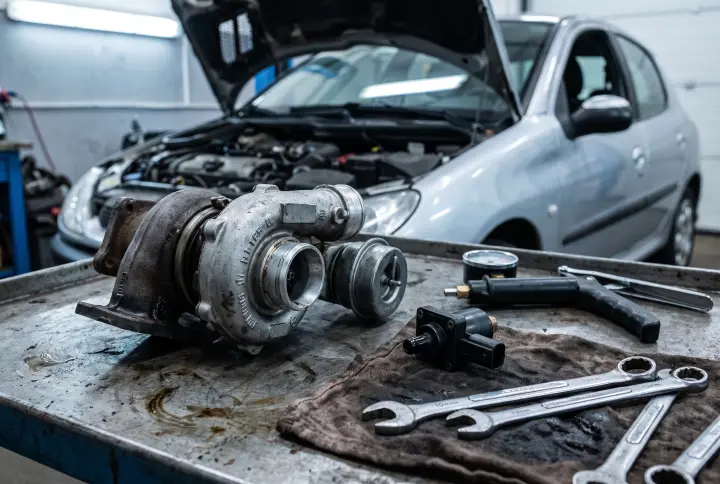
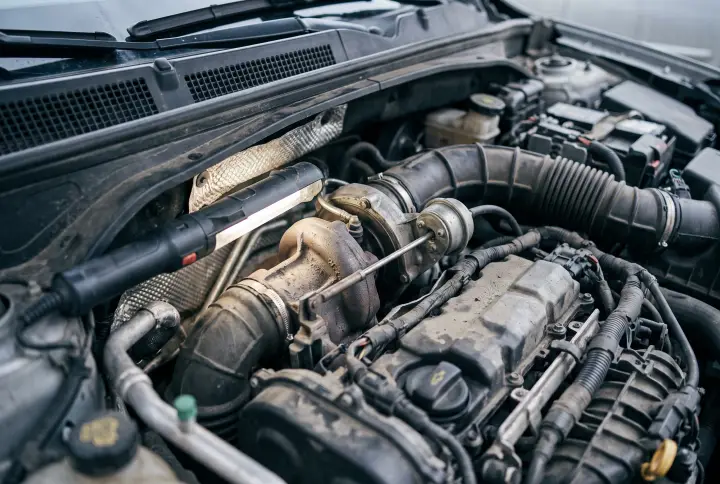
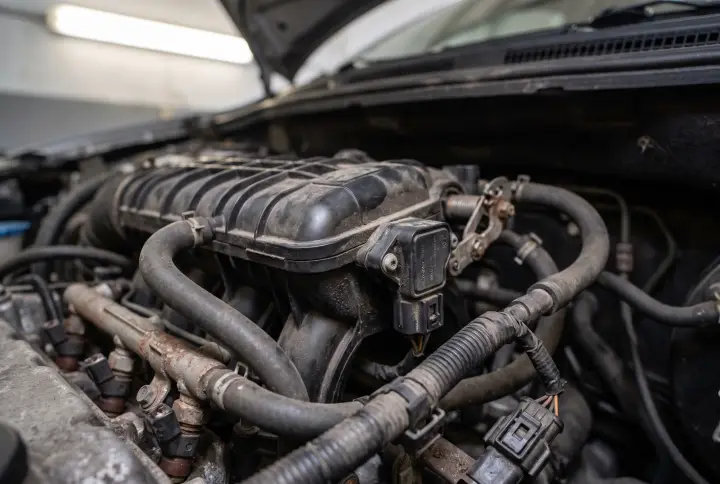
A 2008 Citroen C4 Picasso rolled into the bay with a single P0299 fault code and a technician's note simply reading "Brak doładowania" (no boost). This specific vehicle, a B58 chassis equipped with the 1.6 HDi (DV6TED4) engine, presents a very common scenario for independent workshops. The engine control unit is commanding a target boost pressure, but the manifold absolute pressure sensor is reporting a value significantly below that target. While the instinct might be to condemn the turbocharger immediately, the diagnostic platform we build ranks several external factors higher in probability.
Our platform data highlights four distinct failure paths for this engine and fault code combination. Working through them in order of probability prevents unnecessary parts replacement and focuses the technician on the actual root cause.
Vacuum System and Actuator Leaks
Ranked at a 40 percent probability with a medium severity, a failure in the vacuum control system is the most frequent cause for a P0299 on the DV6TED4. The turbocharger on this 1.6 HDi utilizes a variable nozzle turbine (VNT) that relies on vacuum to operate. If the system cannot maintain proper vacuum, the actuator cannot pull the vanes into the maximum boost position.
There are three primary failure points within this subsystem. The vacuum lines themselves can crack or lose elasticity, the actuator diaphragm can tear, or the vacuum control solenoid can fail. On this engine, the control solenoid is located at the back of the engine block, making it susceptible to heat and vibration.
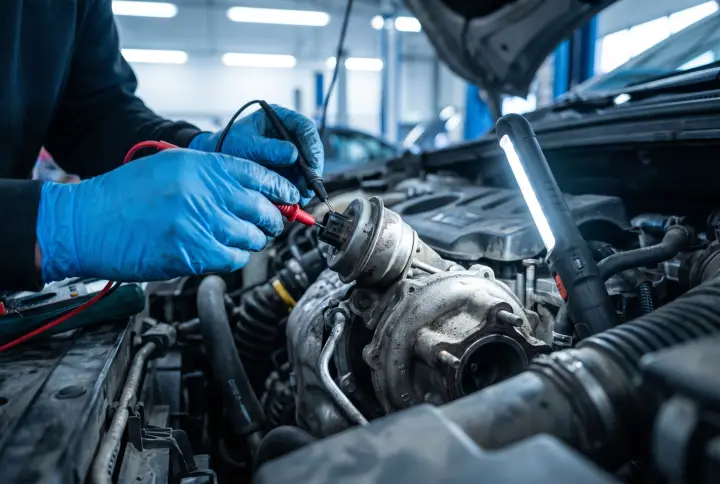
Diagnosis requires isolating the vacuum circuit. A technician should first use a hand vacuum pump, such as a Mityvac, directly on the turbo actuator to verify that the diaphragm holds vacuum and that the rod moves smoothly. Next, measure the baseline vacuum generated by the engine's vacuum pump, followed by measuring the vacuum present at the output side of the control solenoid. Finally, a physical inspection of all vacuum lines for continuity and flexibility is required to rule out simple chafing or age-related splitting.
Charge Air System Integrity
If the vacuum system is intact, the next most likely culprit is a leak in the charge air system. Ranked at 25 percent in our data, this medium-severity issue occurs when the turbocharger is producing the requested boost, but that compressed air escapes before reaching the intake manifold. This results in the pressure sensor reading lower than the ECU expects.
The most common escape routes are cracked flexible intercooler hoses, a leaking intercooler core, or loose hose clamps. The diagnostic approach here relies on pressurizing the system. A smoke test or pressure test applied to the intake tract at 0.5 to 1.0 bar will quickly reveal the exit point of the compressed air. Additionally, a visual inspection of all charge air pipes is highly effective. Because the crankcase ventilation system routes oily vapors into the intake, an air leak will almost always present as an oily residue weeping from a hose joint or a hairline crack in the plastic piping.
VNT Mechanism Seizure
Internal blockages within the turbocharger account for 18 percent of the root causes in our data. This is classified as a high-severity issue. The DV6TED4 engine is prone to accumulating soot in the hot side of the turbocharger over time. This carbon buildup binds the variable geometry vanes, often jamming them in the open position. When the vanes are stuck open, the exhaust gases bypass the turbine wheel without generating enough shaft speed to create the required boost pressure.
Testing for a seized VNT mechanism requires mechanical isolation. The technician must disconnect the actuator rod from the VNT lever. Once disconnected, the lever should be moved by hand to verify its full sweep. The movement must be completely smooth from stop to stop. If there is any gritty feeling or hard binding, carbon accumulation is the cause. At this stage, it is also necessary to verify the exhaust gas smoke levels and check the DPF (FAP) for heavy restrictions, as excessive exhaust backpressure accelerates soot accumulation in the turbocharger.
Core Mechanical Wear
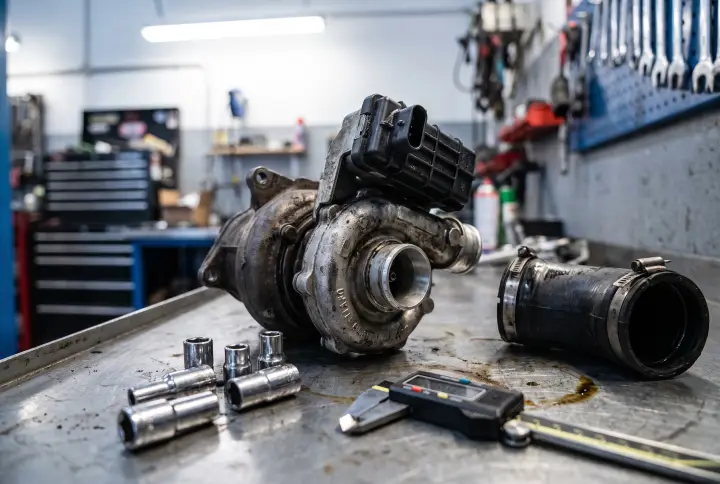
Ranked lowest at 10 percent probability, but carrying a high severity, is physical wear or damage to the turbocharger center housing rotating assembly (CHRA). The hydrodynamic bearings that support the turbine shaft can wear out, leading to excessive radial and axial play. This wear allows the compressor or turbine wheels to scrape against their housings, significantly reducing the rotational efficiency of the unit and preventing it from reaching target boost speeds.
To verify mechanical wear, the intake pipe must be removed to gain direct access to the compressor wheel. The technician should manually check the shaft for excessive play in both the up-and-down (radial) and in-and-out (axial) directions. While accessing the shaft, a close visual inspection of the compressor wheel blades is necessary to look for chipping, pitting, or signs of the wheel rubbing against the cold side housing.
Diagnostic Path Summary
When faced with a P0299 on the 1.6 HDi DV6TED4, always begin by testing the vacuum control circuit and the actuator with a manual gauge. The data clearly shows that control issues and external air leaks account for the vast majority of these underboost faults. Tearing into the turbocharger itself or condemning the CHRA should only occur after the vacuum supply, the control solenoid at the rear of the block, and the pressurized intake tract have been proven completely leak-free.
Reference pages for the codes in this article
- P0299: what we measure for this code across real diagnostics