A 2019 Chevrolet Trax rolled into the bay with an illuminated check engine light and a single stored code for P2097. While a post-catalyst fuel trim fault often points directly to a sensor, the 1.4L LUV engine presents a broader range of mechanical and evaporative failure points.
Sensor Bias and False Rich Signals
The diagnostic platform we build ranked a downstream heated oxygen sensor failure as the most likely root cause, assigning it a 75 percent probability. Code P2097 triggers when the engine control module calculates that the post-catalyst fuel trim adjustment has maxed out its negative authority. The system is attempting to correct a perceived rich condition.
If the zirconia element inside Bank 1 Sensor 2 degrades, suffers silica or sulfur poisoning, or develops a harness bias, it produces an artificially sustained high voltage signal between 0.75V and 0.90V. The ECM interprets this chronic high voltage as unburned hydrocarbons leaving the catalytic converter. To verify sensor integrity, technicians should monitor live scan data of the downstream sensor voltage during deceleration fuel cut-off. Following up with a heater circuit electrical resistance measurement and an induced lean mixture response check will confirm if the sensor is actually biased.
Exhaust System Leaks and the Venturi Effect
Ranked second at 70 percent probability was an exhaust system leak at the pre-catalyst flange, turbo outlet, or flex pipe. GM Technical Service Bulletin 10219266 specifically links DTC P2097 to exhaust leaks upstream of or near the oxygen sensors.
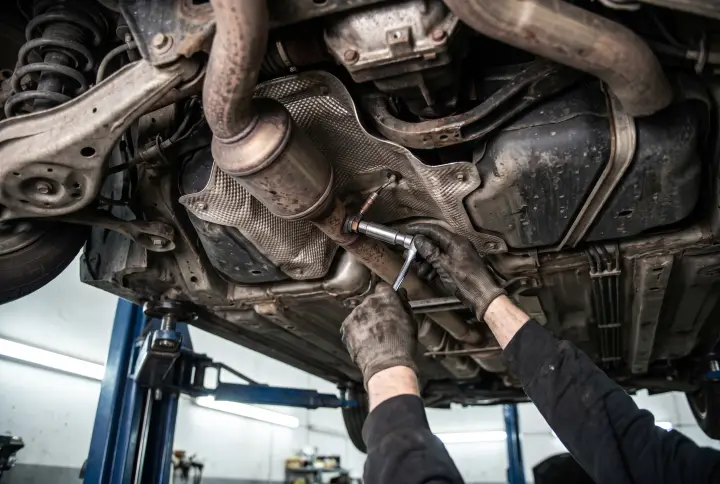
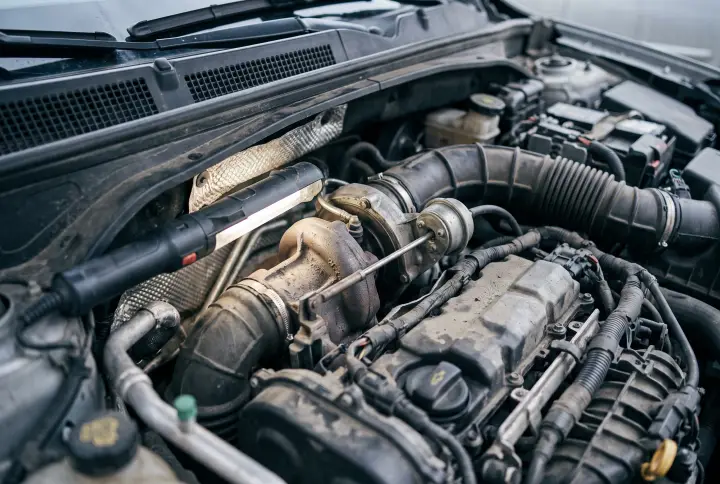
On the 1.4L LUV Turbo platform, thermal cycling and engine movement frequently cause cracking at the exhaust flex pipe. Fractured welds at the catalytic converter flanges or a loose downstream O2 sensor bung are also common. During operation, pulsating exhaust flow creates localized negative pressure pulses that draw ambient air into the exhaust stream. This outside air disrupts the post-catalyst oxygen equilibrium, skewing the fuel trim calculation. A low-pressure smoke test using a tool like the GE-52250, combined with visual inspections for carbon soot tracking, will pinpoint these leaks.
Unmetered Fuel Vapor from the EVAP System
A stuck or leaking EVAP canister purge solenoid valve ranked at 60 percent probability. Mounted on the intake manifold, this valve is a documented failure point on the 1.4L LUV engine. The internal valve seal degrades over time from fuel vapor exposure, preventing complete sealing when de-energized.
Under intake manifold vacuum, this leaking valve continuously draws raw fuel vapors from the charcoal canister directly into the intake tract. This creates a chronically rich mixture that forces the ECM to command maximum negative fuel trim. An off-vehicle vacuum hold test on the unpowered purge solenoid and monitoring fuel trims during purge line physical isolation will confirm this fault.
Mechanical Fuel Injector Wear
Ranked at 50 percent but flagged with high severity, a leaking or mechanically sticking fuel injector can also force a P2097 code. Mechanical pintle wear, spring fatigue, or fuel deposit varnish can cause a multiport fuel injector to fail to seat shut. A dripping injector discharges pressurized fuel into the intake runner, creating a rich cylinder charge that cannot be completely burned.
GM Technical Service Bulletin PIP4964F targets fuel injector leakage as a primary mechanical root cause for this code. Technicians should run a fuel rail static residual pressure leakdown test and visually inspect the spark plugs for rich carbon fouling.
Approaching the P2097 Diagnostic
This case teaches that a post-catalyst fuel trim code requires a structured verification process rather than an immediate sensor replacement. Check the live data from Bank 1 Sensor 2 during deceleration fuel cut-off first to see if the sensor is physically capable of reading a lean condition. If the sensor responds correctly, move directly to testing the exhaust system for leaks and isolating the EVAP purge solenoid. Identifying the true source of the unmetered fuel or oxygen will permanently resolve the fault.