A 2021 Volkswagen Caddy recently arrived at a workshop with an engine that stalled at idle and logged a P0087 low fuel pressure code. The technician had already verified a steady 499.5 kPa from the low-pressure pump, leaving the high-pressure side under suspicion.
The diagnostic log showed two related faults. Along with P0087 for low rail pressure, the engine control unit had logged P00E00, indicating the fuel volume regulator learning limits were exceeded. Live data confirmed that the fuel pressure tracked the target value perfectly right up until the moment the engine stalled. The technician thoroughly checked the fuel filter for metal shavings and traces of AdBlue. The fuel was clean, and a visual inspection of the high-pressure pump through the access hatch revealed no obvious mechanical destruction.
Analyzing the Fuel Metering Valve Limits
Our diagnostic platform ranked a defective or sticking fuel metering valve, known as the N290 solenoid, as the highest probability at 85 percent. The P00E00 code specifically points to the Bosch MD1CS engine control unit exceeding its adaptation window for this valve.
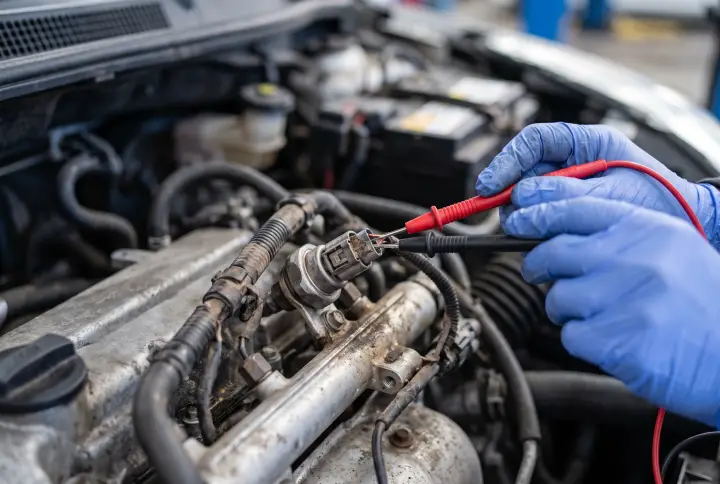
On this system, the N290 regulates the volume of fuel drawn into the high-pressure pump elements. If the internal slide sticks mechanically or the magnetic coil suffers from altered impedance at operating temperature, the control unit drives the pulse width modulation duty cycle outside normal parameters. The system tries to maintain rail pressure until the valve eventually locks or fails to react fast enough. Rail pressure then drops momentarily, stalling the engine and setting P0087 as a secondary fault. The recommended next step is measuring the N290 coil resistance on both a cold and a fully warmed engine.
Alternative Causes in the High-Pressure Circuit
The platform also identified a leaking fuel pressure regulating valve, N276, as a 65 percent probability. Mounted at the end of the rail, this valve drains excess fuel to the return line. If it sticks partially open or the valve seat wears out, continuous internal leakage occurs. The engine control unit compensates by commanding maximum fuel delivery from the N290. At idle, the pump output is lowest and cannot overcome the return leak, causing a sudden pressure drop. A graded return flow measurement from the N276 at idle confirms this issue.
Similarly, excessive internal injector back-leakage ranked at 55 percent. Internal wear in the injector control valves forces the high-pressure fuel directly back into the return system. This creates the exact same compensation loop, driving the N290 to its learning limit before the engine starves and stalls.
What to Check First on Bosch MD1CS Systems
When encountering a P0087 paired with a P00E00 on this system, the low-pressure supply and fuel quality are always the first checks. Once you confirm solid low-pressure delivery and clean fuel, focus entirely on the adaptation limits. The P0087 is often a symptom of the N290 metering valve maxing out its duty cycle. Testing the N290 coil resistance and checking its wiring harness for voltage drops under load will often pinpoint the fault before you need to perform time-consuming hydraulic leak-off tests.
Reference pages for the codes in this article
- P0087: what we measure for this code across real diagnostics