P00BE
Not individually documented
P00BE is a standardised code, but it is not one of the codes with a single agreed description. Rather than guess at a meaning, this page gives what its structure genuinely tells you and what we see when it turns up in real work.
What the code tells you on its own
- System
- Powertrain
- Functional group
- Turbo and boost control
- Subsystem
- Fuel and air metering
- Failure type byte, when the tool sends one
- 00 (No sub-type information)
Engine, fuel, air, ignition, emissions and transmission. The overwhelming majority of what workshops bring to the AI.
Scan tools report the same fault as P00BE and as P00BExx, where xx is a sub-type. They are one fault, and whether the sub-type appears at all depends on the tool and the protocol rather than on the car.
Diagnostics
What we see when P00BE turns up
Measured across the diagnostics run through Wrenchlane, not taken from a reference table. Figures as of 2026-10-06.
- Diagnostics
- 2
- Separate workshops
- 1
- Arrived code only
- 0%
- Most common marque
- Volvo
July 2026 to August 2026
Seen at a single shop so far
No symptom description entered at all
Where we have seen it most
These are counts from our own work, not a claim about how common the fault is across all vehicles. They describe what independent workshops brought to us, which is a narrower and more specific thing.
Real cases
Real cases with P00BE
Diagnoses of P00BE on real cars, written up: the car, the codes it came in with, the causes ranked and what to check first.
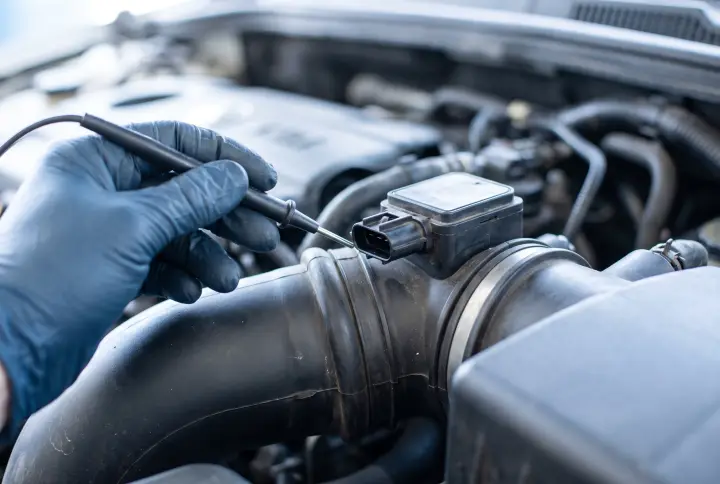
Turbo and boost control
Other turbo and boost control codes
- P0299 Turbocharger underboost condition
- P2563 Turbocharger boost control position sensor circuit range/performance
- P0234 Turbocharger overboost condition
- P2279 Intake air system leak
- P2263 Turbocharger boost system performance
- P0236 Turbocharger boost sensor A circuit range/performance
- P00BD Mass air flow sensor A circuit range/performance, air flow too high
- P0245 Turbocharger wastegate solenoid A low
FAQ
Frequently asked questions
How do I run a diagnosis?
Select the vehicle on Start, click the Diagnostic card and choose New diagnostic. Fill in the description, the error codes and the mileage, then click Analyze.
Do I have to type the codes from my scan tool?
No. Click the camera button next to Error codes and take or choose a photo of the scan tool's screen; WrenchLane reads the codes and their descriptions into the form. You can also speak them with the microphone.
Are the public fault code pages built from my diagnostics?
They use diagnostics run in WrenchLane, with no workshop, customer, registration number or VIN shown. Each fault code page shows how often the code was seen and in how many workshops.
Run P00BE against the car in front of you
Enter the code and the symptoms and get ranked probable causes for that specific vehicle, with the checks in the order worth doing them. Free account, no card.