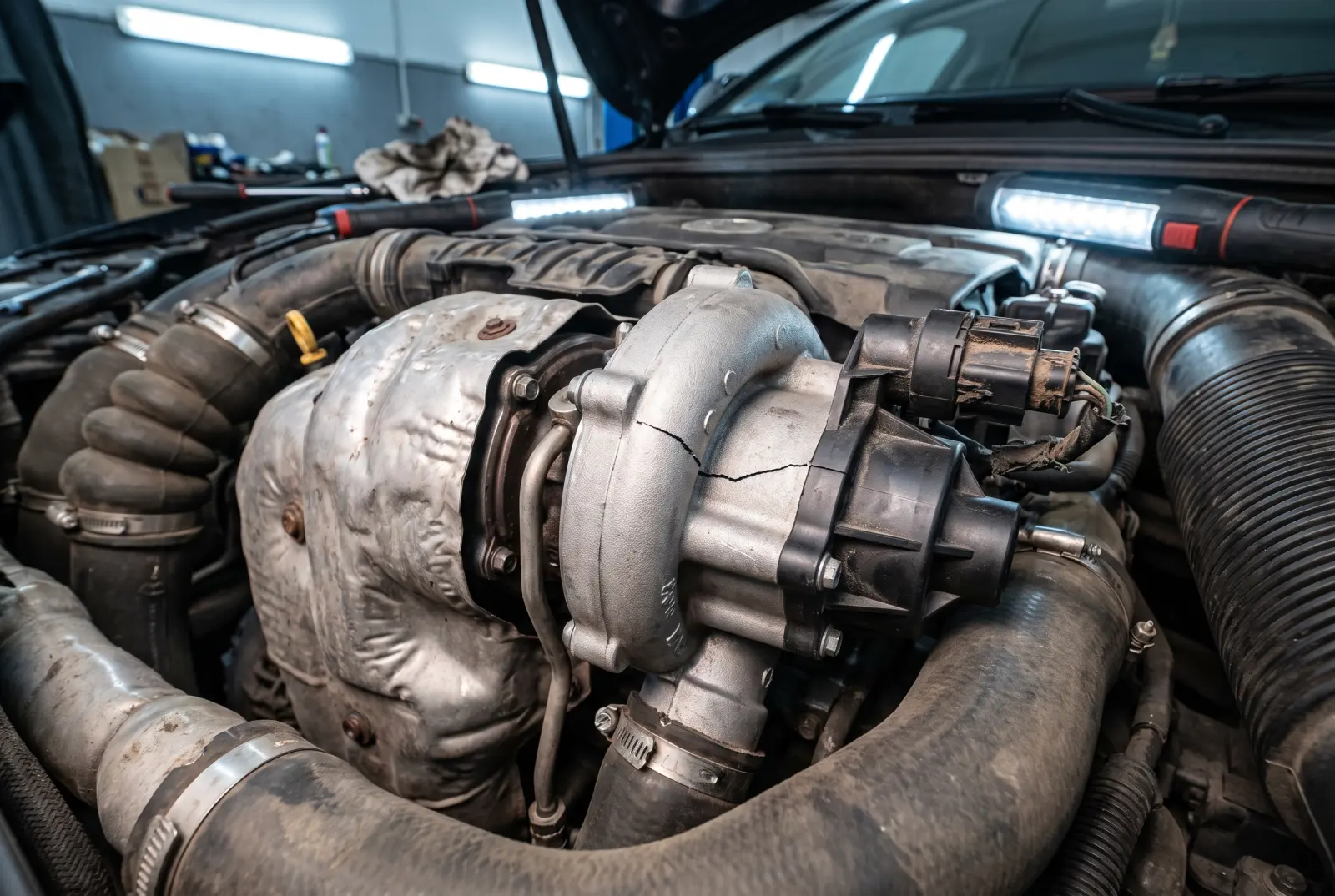
A 2009 DS DS3 rolled into a Swedish workshop recently with a constant check engine light, a cooling fan stuck on high, and a lone P2279 fault code. The technician noted that the check engine light was constantly illuminated and the cooling fan ran continuously, a combination that often points to a complex mechanical failure masquerading as an electrical issue.
The cooling fan as a defensive strategy
When a vehicle presents with a P2279 code for an intake air system leak, the engine control module detects that unmetered air is entering the engine. On the EP6DT engine found in this vehicle, this triggers a protective response. The ECM enters a degraded limp mode and activates the cooling fan continuously. This is a deliberate precaution to protect the turbocharger and catalytic converter from overheating due to the resulting incorrect air and fuel mixture. The fan is not the fault, but a symptom of the engine attempting to save itself.
PCV membranes hidden in the valve cover
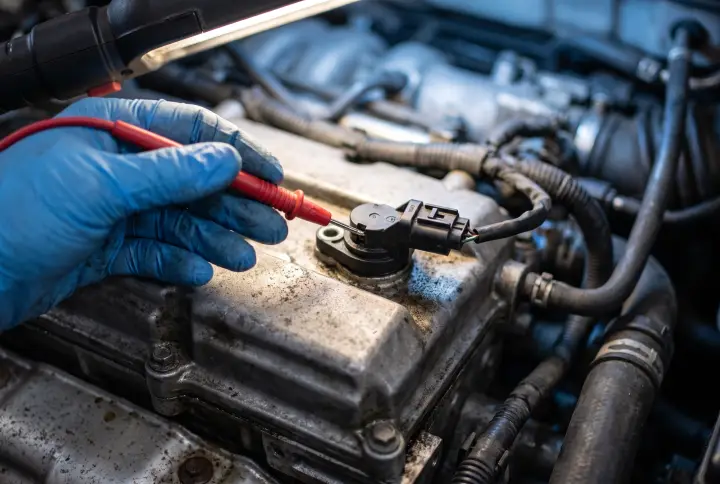
The diagnostic platform we build ranked a PCV system failure as the most likely culprit at 90 percent, with a medium severity. On the EP6DT engine, the PCV system membrane is often integrated directly into the valve cover. If this membrane cracks or sticks in an open position, it creates an unwanted vacuum leak directly into the crankcase. This allows a massive amount of unmetered air into the engine, which the ECM interprets as the P2279 intake leak.
To confirm this, technicians need to perform a visual inspection of the PCV system, conduct an oil filler cap test to check for excessive vacuum, and follow up with a smoke test of the intake system.
Pressurized charge air and diverter valves
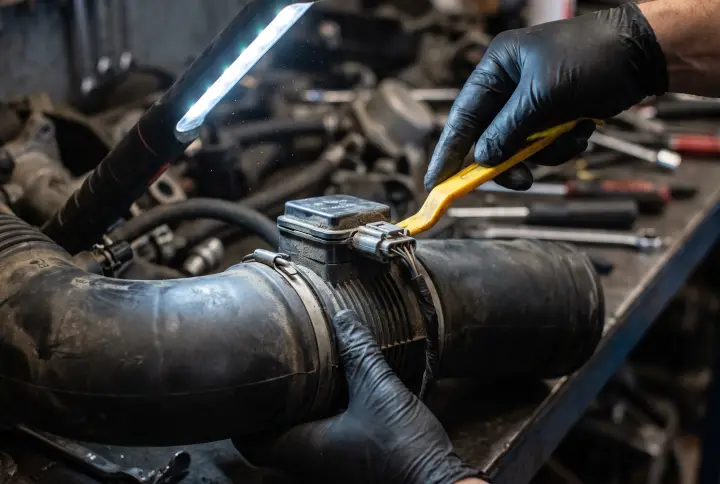
The second most likely cause, ranked at 85 percent, involves leaks in the charge air system pressure pipes or hoses. The EP6DT is a turbocharged engine, meaning the section from the turbo to the throttle body operates under high pressure and is highly sensitive to leaks. The hard plastic pipes and rubber couplings can crack or suffer loose clamps due to heat and vibration. A visual inspection and a smoke test of the charge air system are the standard verification steps here.
Closely related is the electronic diverter valve mounted on the turbocharger, which ranked at 75 percent. Designed to release excess pressure during acceleration to prevent turbo lag, this valve contains a rubber membrane known to crack on these engines. A torn membrane causes a continuous boost leak or prevents the valve from sealing properly. The resulting airflow mismatch triggers the same P2279 code. Finding this requires a visual inspection of the valve itself and a functional check.
The often overlooked brake booster line
Ranked at 60 percent is a leaking vacuum line to the brake servo. The brake booster relies on engine vacuum for braking assist. A split in the large vacuum hose or a failure in the check valve leading to the booster introduces a significant unmetered air leak into the intake system. Beyond triggering the P2279 code and the cooling fan behavior, this specific failure path might also cause the brake pedal to feel noticeably harder to press. Checking this involves a visual inspection of the vacuum line and a propane test to locate the exact leak point.
Looking past the primary code
When a vehicle attempts to protect its own components, the resulting secondary symptoms often obscure the underlying mechanical failure. Do you find that a continuous cooling fan operation misleads diagnostics in your own workshop bays, or do your technicians immediately look for intake leaks when they hear the fan running high?