A 2015 Volkswagen Passat came in with a single P0341 code and a customer complaining of a hard start. The technician noted the vehicle as "trögstartad", meaning it cranked heavily but struggled to fire up. When a modern diesel behaves this way, the diagnostic path can easily derail if you look at the fault code description rather than the system logic.
The relationship between the code and the symptom
The scanner shows P0341. This points to the camshaft position sensor, specifically the G40 component on Volkswagen engines. The code description usually reads as a range or performance issue with the circuit.
It is very tempting to order a replacement G40 sensor right away. After all, the diagnostic tool points directly at it. But a range or performance code means the engine control module is receiving a signal, it just does not make logical sense compared to the rest of the data.
On a 2.0 TDI engine, specifically the DDAA variant found in this Passat, the engine control module constantly compares the camshaft position signal from the G40 sensor with the crankshaft position signal from the G28 sensor. During the starting phase, the engine computer needs to know the exact top dead center position of cylinder one to schedule the high-pressure fuel injection. The starter motor engages and the high-pressure fuel pump begins building rail pressure. The injectors are ready, but the engine control module holds them closed. It is waiting for synchronization.
It watches the G28 crankshaft sensor count teeth while simultaneously watching the G40 camshaft sensor. The engine computer needs the camshaft signal to know whether cylinder one is on the compression stroke or the exhaust stroke. If the camshaft signal arrives slightly earlier or later than the crankshaft signal predicts, the computer hesitates. It cannot safely time the fuel delivery. This exact hesitation is the hard start symptom the customer complains about.
Why mechanical timing ranks highest
When we run jobs like this through our own data, looking at confirmed repair outcomes across the platform, the highest probability cause for a P0341 on a DDAA engine is not electrical at all. Ranked at a 90 percent probability, with high severity, the root cause is a mechanical timing issue.
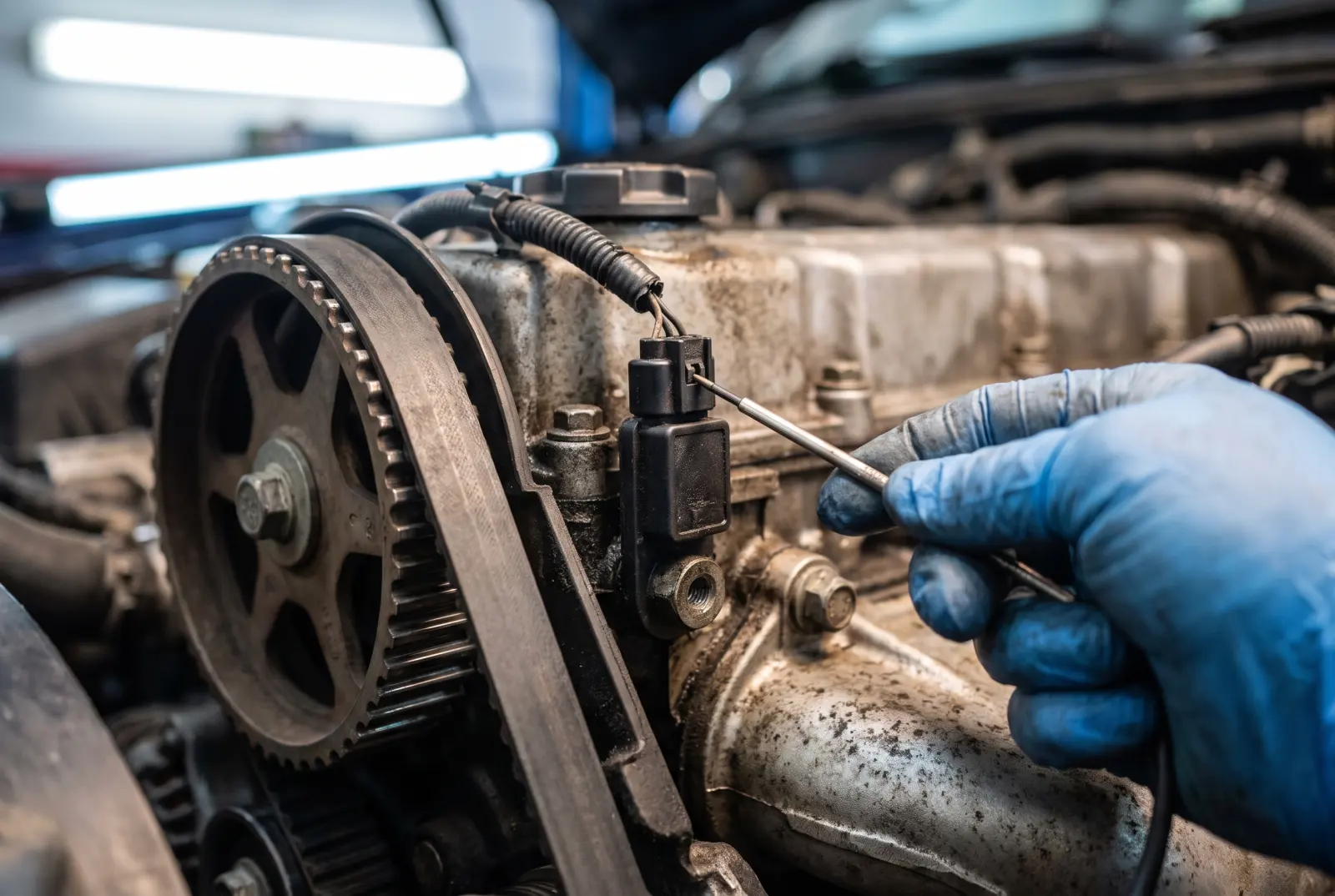
The DDAA engine uses a timing belt to keep the crankshaft and camshaft in perfect mechanical harmony. Over time, belts stretch and tensioners wear out. The tensioner is a dynamic component designed to maintain constant pressure on the belt. When a vehicle ages, the tensioner can lose its ability to hold the belt perfectly tight. When the belt goes slack, the camshaft lags slightly behind the crankshaft.
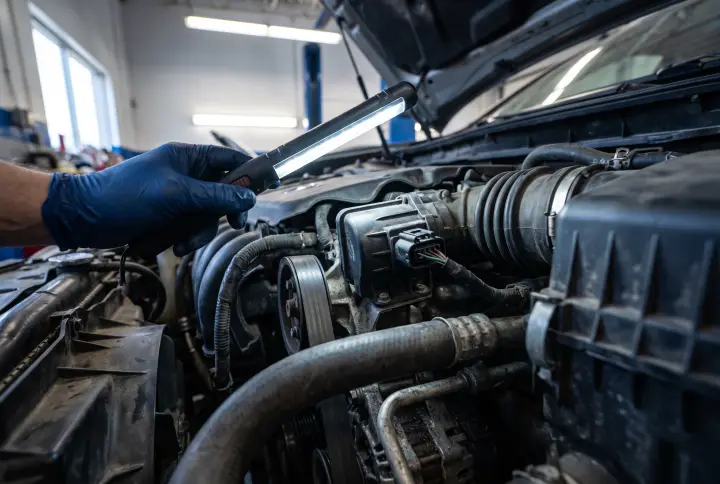
The G40 sensor reads the camshaft position exactly as it is, but because the mechanical link is loose, the position is wrong relative to the crankshaft. The engine computer sees this discrepancy and flags the range and performance error. The correct diagnostic step here is to verify the mechanical timing. This means getting the specific OEM locking tools, pinning the engine, and confirming the timing marks align perfectly. A visual inspection of the timing belt and the tensioner mechanism is mandatory. If the belt is loose, replacing the sensor will achieve nothing.
Testing the sensor and the signal
If the mechanical timing is flawless and locked down, the diagnostic path moves to the sensor itself. Our platform ranks a defective G40 camshaft position sensor as an 80 percent probability for this specific code and symptom combination, carrying a medium severity rating.
The G40 is a Hall-effect sensor. It uses a semiconductor chip and a permanent magnet. As the steel teeth of the reluctor ring pass the sensor face, they distort the magnetic field and the chip switches a reference voltage on and off. These sensors can fail internally over thousands of heat cycles. When they do, they often do not die completely. They produce an intermittent or degraded square wave that the engine control module cannot interpret cleanly.
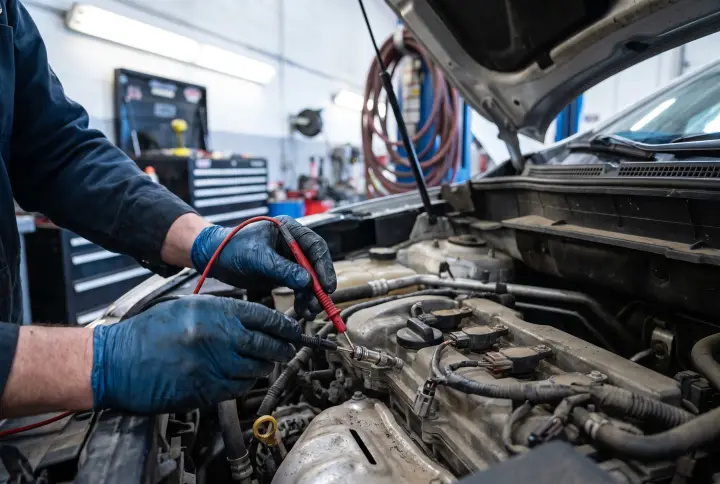
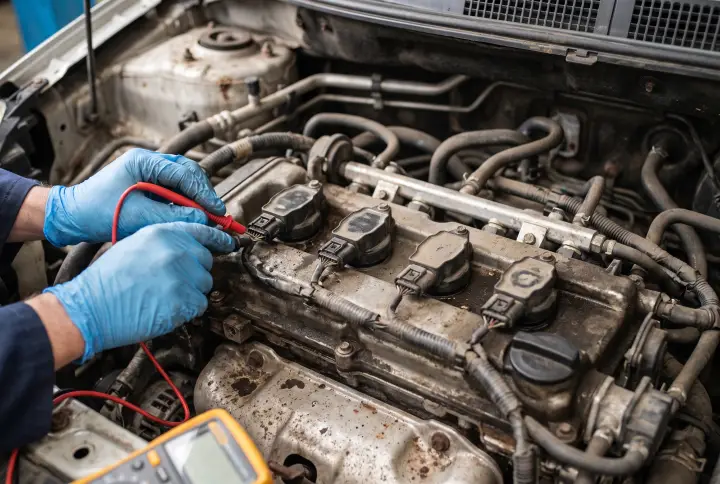
To test this properly, you must measure the supply voltage and the resistance at the sensor plug. Then, you need to connect an oscilloscope to the signal wire. Cranking the engine will show you exactly what the engine control module sees. A healthy sensor will show a crisp square wave. A failing sensor will show rounded corners or voltage that does not pull all the way down to ground.
The harsh environment of the wiring harness
If the sensor produces a bad signal on the scope, the fault might lie further up the chain. Wiring harness or connection problems sit at a 70 percent probability for this fault, ranked as a medium severity issue.
The EA288 engine family places its wiring in a harsh environment. Heat cycles from the engine block, constant diesel vibration, and occasional oil weeping take a toll on the plastic connectors. Capillary action can even draw engine oil up through the wire strands into the connector shell. This alters the resistance of the circuit.
Because the engine control module relies on crisp voltage changes from the Hall-effect sensor, any added resistance dulls the signal and introduces electrical noise. The diagnostic test requires a thorough visual inspection of the wiring harness routing. You must perform resistance and continuity measurements from the sensor plug all the way back to the engine control module pins.
The often ignored reluctor ring
There is one final physical component in this circuit. Ranked at a 60 percent probability with a high severity is a damaged reluctor ring on the camshaft.
The reluctor ring is the toothed metal disc attached to the camshaft. The G40 sensor reads the gaps between these teeth to determine the shaft speed and position. If this ring suffers physical damage, the entire system fails.
Damage can occur if the ring gets bent during previous internal engine work, or if it simply becomes covered in metallic debris from other engine wear. This distorts the magnetic field the sensor relies on. Diagnosing a bad reluctor ring requires a direct visual inspection of the ring itself, which often means removing covers to get a clear line of sight.
Following the evidence
The difference between a profitable repair and a frustrating comeback often comes down to sequence. A P0341 code on a Volkswagen diesel looks electrical on a scanner but is heavily tied to mechanical integrity. By testing the physical timing before ordering electrical parts, a workshop protects its margin and resolves the starting hesitation properly.