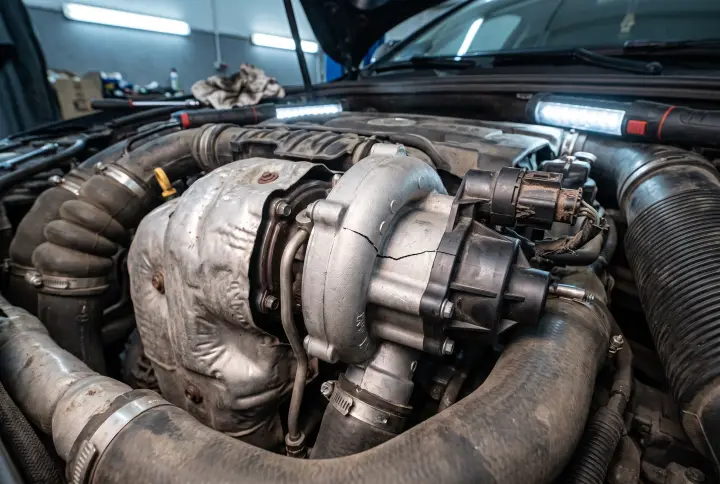
A 2010 Citroen Jumper III limps into the bay with a severe lack of power, surging, and heavy black smoke pouring out the back. The technician notes the surging coincides directly with the smoke, and the scanner pulls a single fault code: P0103. When a vehicle presents with these specific symptoms alongside a MAF sensor circuit high input code, the diagnostic path requires looking at exactly how the engine control module interprets airflow data on the 2.2 HDi diesel.
The Over-Fueling Condition
Our diagnostic engine ranked an internal failure of the mass air flow sensor as the most likely culprit at 90 percent. The normal operating voltage range for this MAF sensor is 1 to 5V, with a P0103 code typically triggering when the signal crosses above 4.5V.
When the sensor element or its internal electronics fail, the unit can send an abnormally high voltage signal to the ECM. The engine computer incorrectly assumes a massive volume of air is entering the intake and commands a corresponding increase in fuel. This excess fuel burns incompletely, creating the heavy black smoke, the reduced power, and the surging behavior during acceleration. The diagnostic data for this specific job showed an airmass of 31 kg/h at idle and 495 kg/h when revved. The ECM threshold is exceeded by the voltage signal associated with these specific readings. The most direct way to prove this is through live data monitoring or a simple MAF sensor disconnection test.
Contamination and Circuit Faults
Before condemning the sensor itself, two other causes rank highly. Contamination of the MAF sensor element sits at an 85 percent probability. Dust, dirt, or oil residue from PCV blow-by coats the delicate hot wire. This contamination insulates the element, forcing it to draw more current to maintain its operating temperature. The ECM reads this increased current as higher airflow, leading straight back to the over-fueling condition.
Wiring harness issues rank closely behind at 80 percent. A short to a positive voltage source on the signal wire, damaged insulation, corrosion in the connector pins, or a high-resistance ground path will all cause the ECM to receive an abnormally high voltage signal. A visual inspection followed by voltage and continuity checks is required to rule out the harness.
The Mechanical Variable
While P0103 is an electrical circuit code, mechanical failures can exacerbate the exact symptoms the technician recorded. A boost leak or intake system restriction post-MAF ranks at 70 percent.
If boost hoses are cracked or the intercooler is faulty, the air measured by the MAF sensor never actually reaches the cylinders. If the MAF sensor is already reading high due to contamination, or if the ECU attempts to compensate for perceived low boost by requesting more fuel, the rich condition becomes severe. Less air reaching the engine combined with fuel injected based on a falsely high MAF reading results in the significant power loss and surging under acceleration.
Testing the mechanical side requires a visual inspection of the intake tract and a smoke test to locate any post-MAF leaks.
Next Steps in the Bay
When faced with a P0103 and heavy black smoke, start with live data monitoring to catch the high voltage signal in action, then check the wiring harness before replacing the sensor. Do you see similar over-fueling symptoms when this specific code appears in your own workshop?