A 2009 Volkswagen Golf came into a Swedish workshop after losing all power at highway speeds, throwing a single P010100 code and refusing to idle. The technician noted the car suddenly dropped all acceleration on the E18 highway, and while the engine cranked and fired, it ran exceptionally rough before stalling out a few seconds later. When we look at the data flowing through the diagnostic platform we build, this specific combination of symptoms and the P010100 fault code creates a perfect trap for a technician who takes the scanner at face value.
Why a sensor code is rarely a sensor failure
The P010100 code specifically flags an implausible signal from the mass air flow sensor. The immediate temptation is to pull the MAF sensor, inspect the wire, spray it with cleaner, or simply order a replacement. But the physical symptoms tell a different story. A contaminated or failing MAF sensor will certainly cause hesitation, poor fuel economy, and rough running. It will almost never cause a catastrophic loss of power at highway speeds followed by an absolute inability to hold an idle.
Our data ranked a defective MAF sensor at only 70 percent probability with medium severity for this specific fault pattern. Yes, the sensor is reporting an error, but it is likely reporting a genuine physical condition that the engine control unit cannot reconcile. The ECU expects a specific volume of air at a specific engine speed and throttle position. When the actual measured air deviates massively from this map, the ECU blames the sensor. But the sensor is usually just the messenger.
The reality of major intake leaks
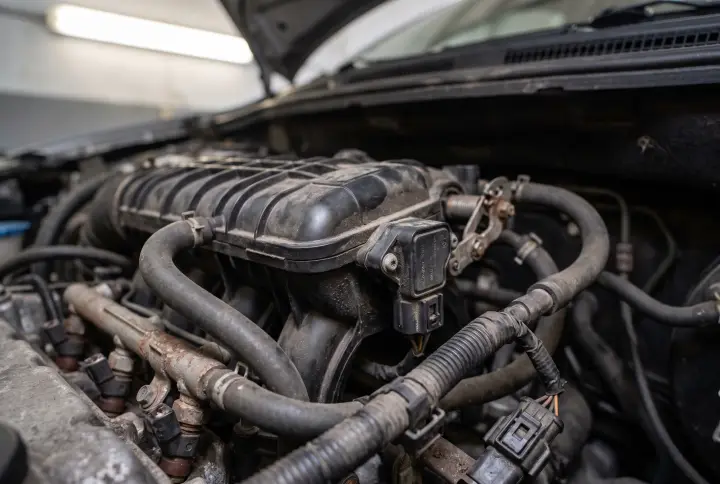
The highest probability cause, ranked at 90 percent with high severity, was a major leak in the intake system. This means a severe pressure or vacuum leak. The sudden loss of acceleration on the highway followed by stalling indicates a massive volume of unmetered air entering the engine, or pressurized metered air escaping the system.
When a boost hose blows off or splits under load on the highway, the engine loses manifold pressure instantly. The MAF has already measured the air entering the system, and the ECU has commanded fuel delivery based on that measurement. When that air escapes into the atmosphere instead of entering the combustion chamber, the mixture goes incredibly rich. The engine chokes, loses power, and the driver pulls over.
For the CAYC engines often found in this application, cracked pancake pipes or blown intercooler hoses are notorious failure points that lead to sudden power loss. When you attempt to restart the car, the open leak allows unmetered air to bypass the MAF sensor completely. The ECU cannot calculate a viable fuel mixture to keep the engine running, resulting in the violent rough idle and stall a few seconds after cranking.
Exhaust gas displacement
Another critical factor our platform ranked at 80 percent probability was a stuck open exhaust gas recirculation valve.
An EGR valve that jams in the open position allows exhaust gases to flow continuously into the intake manifold, even at idle and low engine speeds where it should be completely closed. Exhaust gas is inert and does not support combustion. When the cylinder fills with exhaust gas instead of fresh oxygen, the incoming air charge is heavily diluted.
Because the exhaust gas is displacing fresh air, the MAF sensor measures a significantly lower volume of incoming air than the ECU expects. This triggers the P010100 code. The resulting fuel mixture is wildly incorrect, causing the engine to misfire heavily, struggle to start, and inevitably die shortly after firing. A sudden mechanical failure of the EGR valve mechanism or severe soot binding while driving on the highway perfectly matches the sudden loss of acceleration.
Mechanical blockages and engine suffocation
We also saw a 70 percent probability for a physical intake blockage, with high severity.
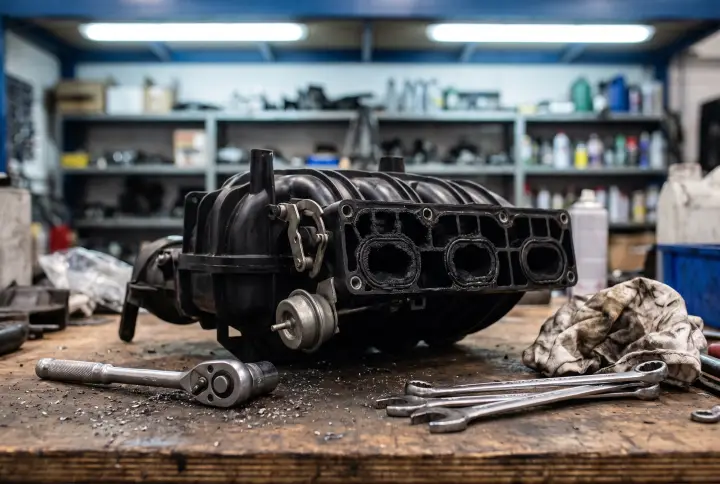
A primary suspect in this category is the anti-shudder valve, also known as the intake manifold flap. This flap is designed to close briefly when the engine is turned off to prevent dieseling and ensure a smooth shutdown. If the actuator fails or carbon buildup jams the flap in a closed or partially closed position, the engine is physically choked off from its air supply.
The engine will fire on the air already in the manifold, consume it, and immediately stall. Because the flap is blocking flow, the MAF sensor registers zero or highly restricted air movement while the engine is cranking and running for those brief seconds. The ECU flags the MAF signal as implausible. Other physical blockages like a collapsed intake hose or a totally obstructed air filter can cause similar starvation.
Following the physical evidence
Do not start by ordering a sensor. The repair path requires proving out the physical airflow path first.
The fastest way to confirm the 90 percent probability cause is a pressure test of the intake system. Sealing the intake and applying low pressure air will immediately reveal a split intercooler hose, a cracked pancake pipe, or a blown seal. A thorough visual inspection of the charge pipes, especially the lower sections exposed to road debris and constant thermal stress, is mandatory.
If the charge system is sealed, visually inspect the EGR valve for heavy soot buildup and binding. You can use a diagnostic tool to run an actuation test on the EGR valve, listening for the physical movement and verifying the position sensor feedback. If it hangs open, the manifold will need to be cleaned and the valve replaced.
Next, check the movement of the anti-shudder valve. Ensure the flap rests in the fully open position and moves freely without binding. Finally, inspect the air filter and the entire intake tract for physical debris or collapsed sections.
Only after you have completely ruled out pressure leaks, exhaust gas flooding, and mechanical blockages should you suspect the MAF sensor itself.
Are you seeing this pattern of CAYC pipe failures in your bay this month?
Reference pages for the codes in this article
- P0101, what we measure for this code across real diagnostics