A 2020 Volvo V90 II rolled into a Swedish workshop recently with a glowing check engine light, a single P00BD00 fault code, and absolutely no drivability symptoms. The technician noted the complaint simply as "motorlampa tänd utan symptom" (check engine light on without symptoms).
When a vehicle sets a code for mass air flow being too high but drives perfectly fine, it is easy to assume the sensor itself is failing. However, our diagnostic platform analyzed this specific code on the V90 II and ranked a failing sensor at the bottom of the suspect list. Here is how we break down the root causes for this fault.
The Charge Air System
Our engine ranked a leak in the charge air or intake system as the most likely cause, assigning it a 90% probability with a high severity. When pressurized boost leaks out of the system after the mass air flow (MAF) sensor, the turbocharger attempts to compensate by working harder. This pulls a higher volume of air past the MAF than the engine control module (ECM) expects for the current load.
To confirm this, the technician needs to perform a visual inspection of all hoses and connections, followed by a pressure or smoke test of the intake system. Monitoring MAF and boost pressure live data during a test drive will also reveal the discrepancy.
Air Displacement Faults
If the intake tract is completely sealed, the ECM might be reading high fresh air flow because another gas source is missing. Our data ranked a stuck-closed EGR valve at an 80% likelihood for this code. The EGR system displaces a calculated amount of fresh air with exhaust gases to reduce emissions. If the valve sticks closed, the engine pulls in pure fresh air instead, causing the MAF reading to spike above the expected threshold.
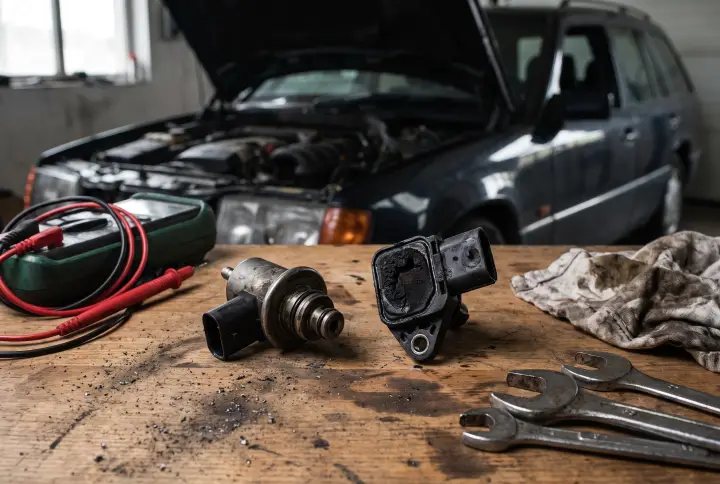
Testing this requires a bi-directional scan tool to command the EGR valve while watching MAF live data. A visual inspection of the valve for heavy soot buildup is also a necessary diagnostic step.
Turbo Control and Sensor Logic
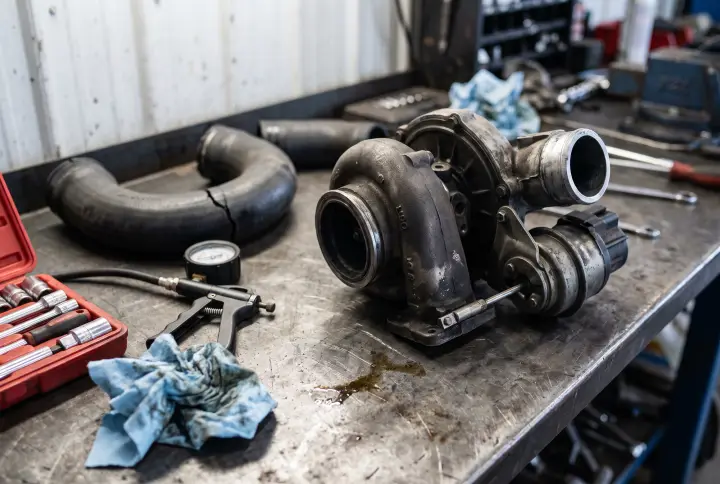
Further down the probability list, at 70%, sits a problem with the variable geometry turbo (VNT) control. If the VNT mechanism or its actuator sticks in an overboost position, the engine will ingest more air than requested. The workshop should command the VNT actuator with their tool, inspect the physical linkage, and monitor boost data.
Only after ruling out air leaks, EGR flow, and turbo control should the technician condemn the MAF sensor itself, which ranked at 60%. A degraded sensor element or oil contamination can skew the reading upwards. Diagnosing the sensor requires comparing live data against known good idle and RPM reference values, or checking the signal frequency with an oscilloscope.
Moving the Diagnosis Forward
Finding the root cause of P00BD00 requires looking past the sensor reporting the fault. We are interested to hear if other shops are seeing this exact pattern on the D4204T14 engine, or if EGR issues are overtaking charge pipe leaks in your bays.