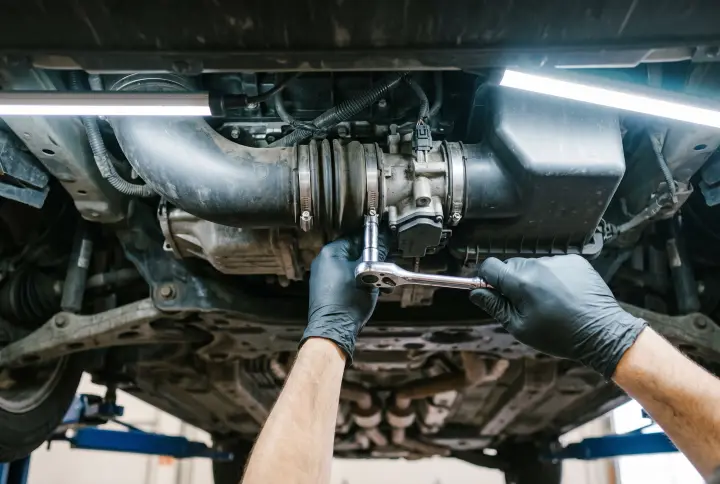
A 2024 Volkswagen Golf VIII rolled into the shop with a returning check engine light and a P006800 code, yet the driver reported absolutely no drivability issues. The technician's own notes stated they noticed nothing unusual while driving, but the light stubbornly refused to stay clear. This specific code points to a deviation between the intake manifold pressure, mass air flow, and throttle valve position. When the engine control module sees a mismatch in these values, it flags a correlation error.
We see these correlation faults regularly in the diagnostic platform we build. The challenge in the bay is knowing whether you are chasing a bad sensor, a dirty component, or an unmetered air leak somewhere in the system.
The prime suspect is the PCV valve
Our diagnostic engine ranked a defective Positive Crankcase Ventilation valve as the most likely root cause, assigning it a 90 percent probability with a medium severity rating. On the EA888 Gen 4 engine found in this vehicle, the PCV valve (often referred to as the oil separator) is a known weak point.
The failure mechanism is usually physical. The internal rubber membrane inside the valve tears. Once that membrane is breached, the engine begins pulling unmetered air directly into the intake system, effectively creating a large vacuum leak.
This unmetered air is exactly what triggers the P006800 code. The engine control module reads the throttle position and calculates how much air should be entering the intake manifold. It then checks the manifold absolute pressure and mass air flow sensors to verify that volume. Because the torn PCV membrane allows extra air in bypassing the normal metering channels, the numbers no longer match. The system logs the deviation, even if the engine management adjusts fueling enough to prevent rough idling or misfires.
The suggested diagnostic tests for this specific failure start with a careful visual inspection of the PCV valve itself and the oil filler cap. If a physical inspection does not reveal the problem, the next step is running a smoke test on the entire intake system to expose the leak.
Throttle body carbon buildup
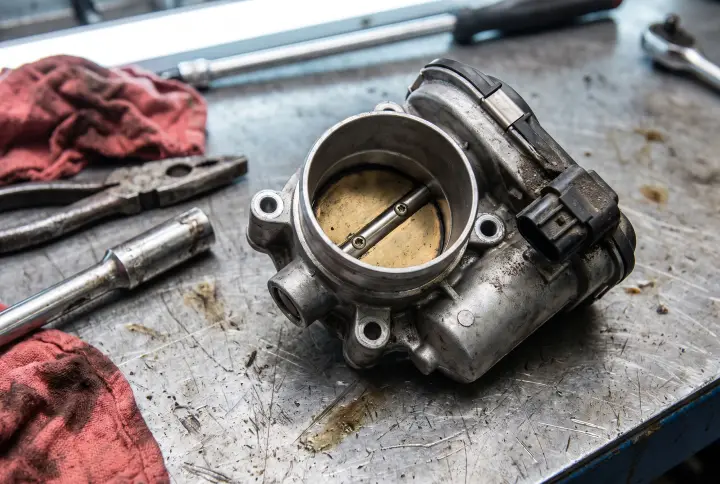
Ranked closely behind the PCV valve at an 80 percent probability was a dirty throttle body. Carbon deposits naturally accumulate around the butterfly valve inside the throttle body over time.
As these deposits build up, they begin to restrict the physical movement of the valve or alter the specific airflow characteristics when the valve is open. The engine control module commands a certain throttle angle and expects a corresponding change in manifold pressure. When carbon alters the actual airflow, the expected values and the measured values drift apart. The computer attempts to compensate for this restriction, but once the deviation exceeds a programmed threshold, it triggers the P006800 fault.
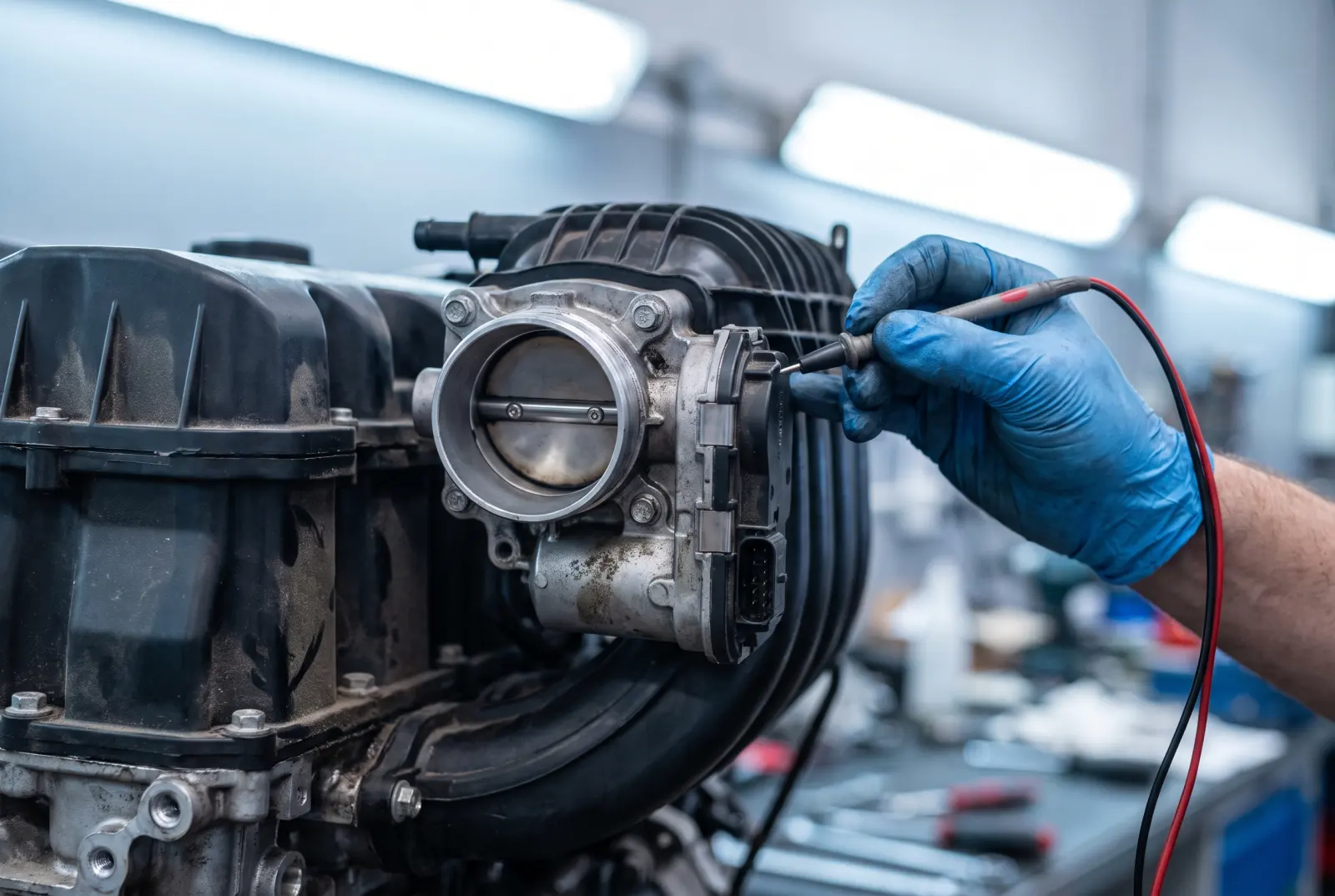
If the PCV valve checks out fine, the bay procedure shifts to the throttle body. The recommended tests here are a direct visual inspection and a thorough cleaning of the throttle body bore and plate. Following any cleaning, the technician must perform a throttle adaptation to reset the basic settings in the control module.
Chasing other intake vacuum leaks
If both the crankcase ventilation and the throttle body are functioning correctly, the diagnostic path moves to general intake system integrity. Our data ranked other intake vacuum leaks as the third most likely cause at a 70 percent probability.
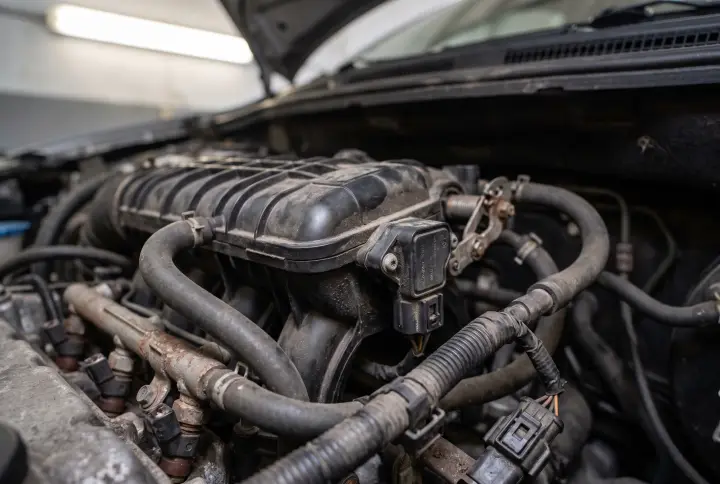
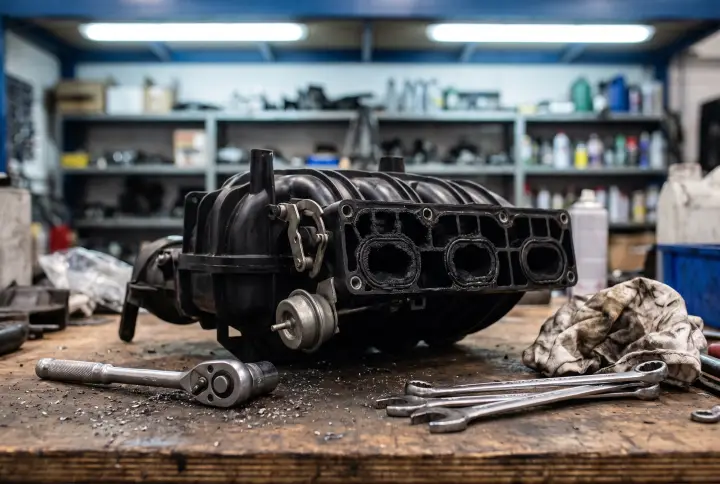
A torn PCV membrane is not the only way unmetered air can enter this system. Cracked or split vacuum hoses, loose retaining clamps, degraded intake manifold gaskets, or even a poorly seated oil cap can introduce enough unmetered air to upset the correlation logic. Just like the PCV failure, these leaks create a discrepancy between the measured air volume and the expected values based on throttle position.
The tricky part about these general vacuum leaks is that they can be very small. A minor leak might not cause a noticeable rough idle or a hesitation on acceleration, which perfectly matches the technician's note about the car driving normally. It is just enough to fail the background self-test and bring the engine light back on.
The diagnostic steps here mirror the PCV checks. Technicians should perform a comprehensive visual inspection of all intake hoses and clamps. If nothing is visibly loose or broken, a full intake system smoke test is the most efficient way to pinpoint the source of the unmetered air.
Verifying the MAP sensor directly
Only after ruling out unmetered air and carbon restrictions do we look at the sensors themselves. A defective Manifold Absolute Pressure sensor ranked fourth on this diagnostic path with a 50 percent probability.
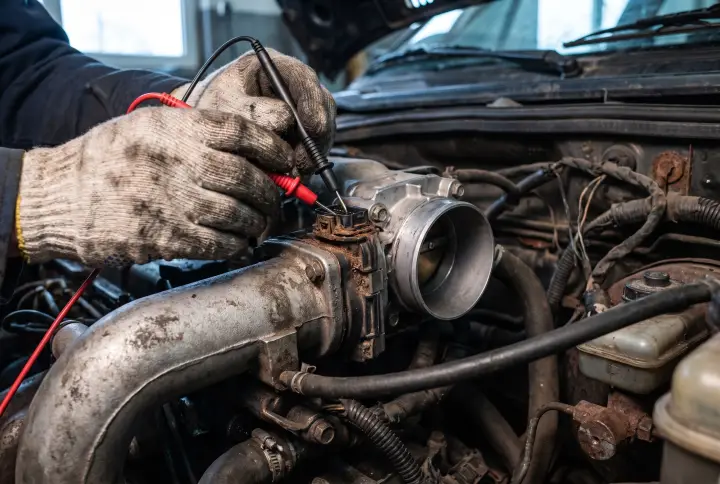
The MAP sensor is responsible for measuring the absolute pressure inside the intake manifold. If the internal electronics of the sensor begin to fail, it can send skewed or entirely incorrect voltage signals back to the engine control module. The computer relies on this signal to verify the throttle position. If the MAP sensor is lying, the correlation fails, and the P006800 code is set.
While a failed sensor is a direct component in this fault logic, it is statistically less common on the EA888 Gen 4 engine than physical vacuum leaks or a fouled throttle body. It remains a medium severity possibility that must be checked if the mechanical integrity of the intake is sound.
Testing the sensor involves monitoring the live MAP data stream on a scan tool while the engine is running and comparing it to expected atmospheric and manifold pressures. Technicians should also physically inspect the sensor's wiring harness and connector for corrosion, chafing, or poor pin tension.
Next steps in the bay
When a correlation code appears without any driving symptoms, following a structured path from mechanical leaks to sensor data prevents replacing parts that are only reporting the truth.