A 2006 Volkswagen Crafter (2E, 2F) rolls into the bay with a B1219 code and a glowing brake warning light, and the clock starts ticking. The technician's note on the job sheet was brief but clear: "Brake warning light on".
When a van like this occupies a lift, every minute spent chasing the wrong schematic eats into the workshop's daily throughput. As shop owners, we know that generic brake warnings can stem from anything from basic wear to complex network failures. In the diagnostic platform we build, we analyzed this exact combination of code and symptom to rank the most probable causes. Structuring the diagnostic path prevents a mechanic from tearing into the wiring harness before checking the physical fundamentals.
The immediate physical checks
The most probable culprit, ranked at 90 percent with a high severity, is a low brake fluid level or a fault in the master cylinder level sensor and its wiring. The primary function of the brake warning light is to alert the driver to a critically low fluid level.
The diagnostic path requires starting with the basics. The technician must inspect the brake fluid level directly. If the fluid is low, the next step is checking for hydraulic leaks across the entire system. A constant illumination of the brake warning light, especially without an accompanying ABS light, points heavily to fluid displacement.
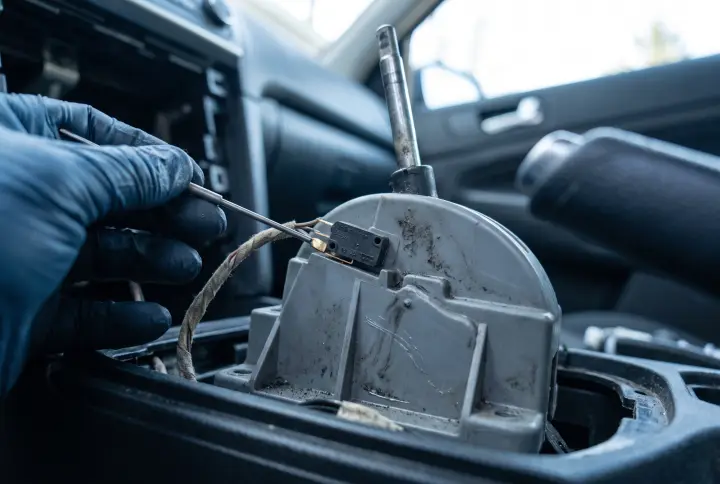
If the fluid level is adequate, the attention shifts to the sensor itself. A malfunction of the integrated float-type level sensor or damage to its electrical wiring will keep the warning light on. We have seen instances where a chewed wire at the sensor triggers this exact condition.
The delayed effect of pad wear
Ranked closely behind at 70 percent is a simpler mechanical reality: worn brake pads. As brake pads wear down, the brake calipers must extend further to engage the rotors. This requires more brake fluid to fill the expanded volume inside the caliper piston bore, naturally lowering the fluid level in the master cylinder reservoir.
Once the fluid drops below a critical threshold, it activates the low fluid warning sensor. While this Crafter might have separate pad wear sensors, the consequential drop in fluid is a highly common trigger for the general brake warning.
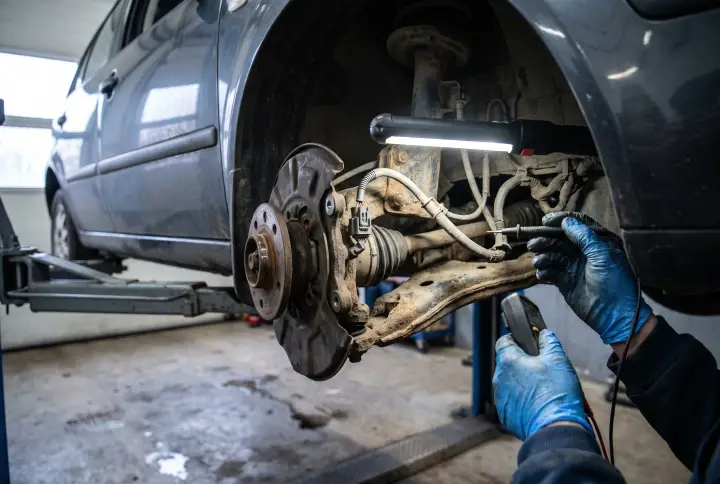
The required test here is a thorough visual inspection of the brake pads. A mechanic might note no immediate change in braking performance, but pad wear is a gradual process that eventually trips the system. Catching this early prevents unnecessary electrical troubleshooting.
Moving to the control modules
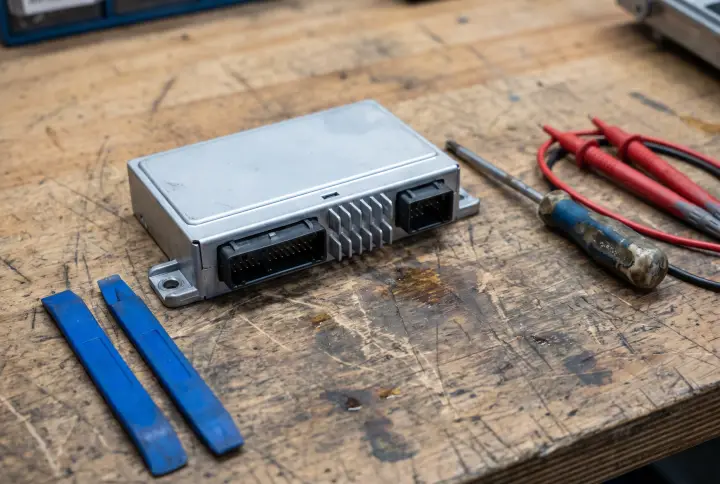
If the fluid is full and the pads are thick, the diagnostic path shifts from mechanical to electronic. Ranked at 60 percent probability with a high severity is an internal fault or communication issue within the ABS Control Module (J104).
The J104 module is integral to the braking safety system. Failures within this module, or communication issues over the Controller Area Network (CAN) data bus, will cause various braking system warning lights to illuminate. An internal B1219 code often suggests a fault within a body or chassis system. Our data frequently links VAG codes like U0121 (ABS Control Module - No Communication) and P1851 (CAN Data Bus, ABS - Incorrect Signal) to ABS problems that manifest as warning lights. Even if the dedicated ABS light is not explicitly on, a critical fault in the system can trigger the general brake warning.
The required tests move to the scan tool. The technician must scan other modules for communication faults, check the power and ground feeds directly to the ABS module, and monitor ABS and ESP live data to ensure the module is actively broadcasting on the network.
Chasing the electrical gremlins
Finally, at a 50 percent probability, we look at damaged wiring harnesses or connectors. Wiring integrity is paramount, and a break here can mimic a failed sensor or a dead module. Corrosion, chafing, rodent damage, or loose connections within the wiring harnesses can easily interrupt sensor signals or data bus communication.
This is a common root cause for electrical issues affecting the master cylinder level sensor, wheel speed sensors, or the main power and communication lines to the ABS unit. The reference data repeatedly identifies wiring and connectors as a possible cause for multiple VAG-specific and generic fault codes.
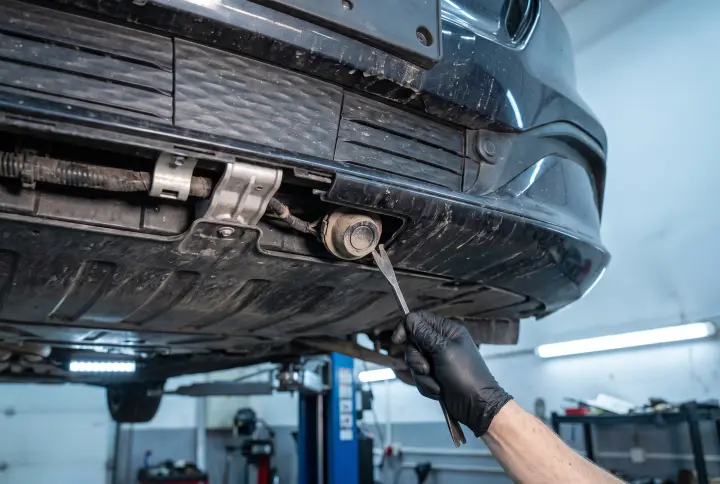
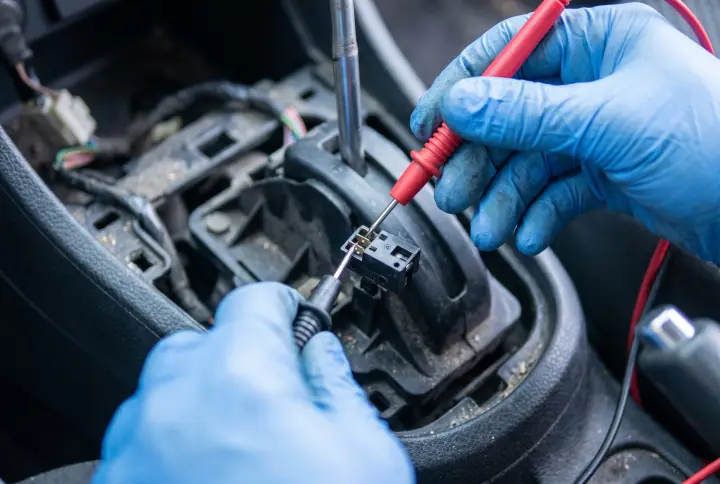
Testing this requires a meticulous visual inspection of the wiring harnesses, followed by targeted continuity and resistance tests to isolate the break or high-resistance joint.
Handling a B1219 on a commercial vehicle requires a disciplined approach to keep the bay moving. Have you seen this specific symptom pattern on the 2E or 2F chassis in your own workshop?