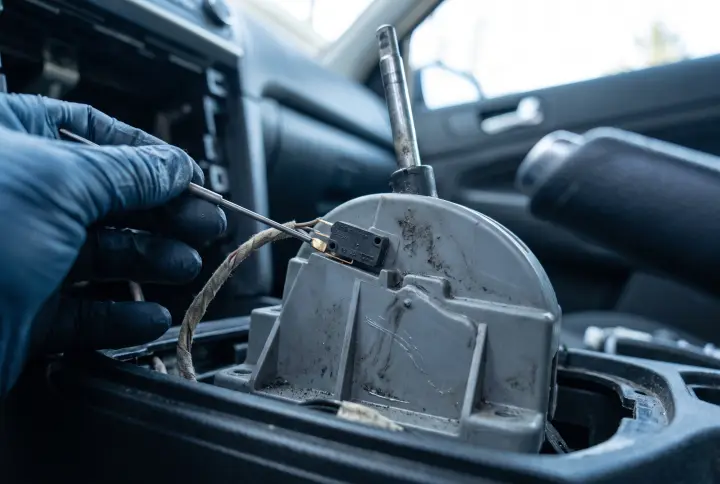
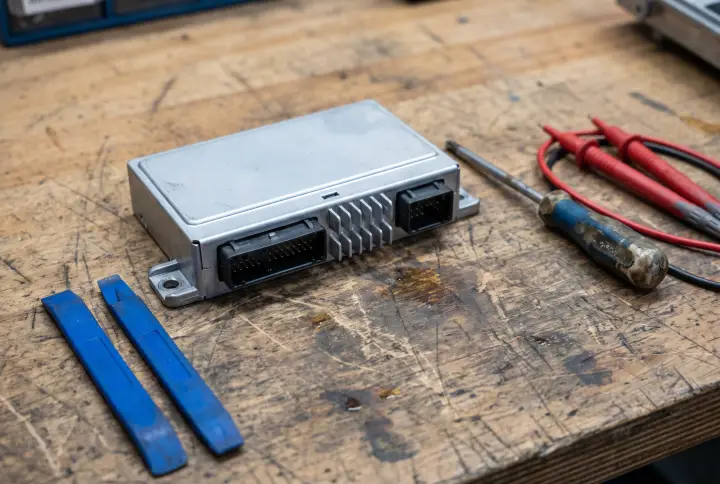
A 2019 Volkswagen Passat (3G) arrived with a completely dead trailer socket and two fault codes pointing at different systems. The combination of C10E713 and C10EA01 tells a specific story about how modern towing modules protect themselves from mechanical failures.
The technician noted that power to the tow hitch was not working. Our diagnostic platform analyzed the codes and identified the complex interaction between the physical hitch and the trailer control module, known as J345.
How the trailer module protects the circuit
On the Passat B8 with a factory-fitted swivel hitch, a microswitch called F355 monitors the mechanical locking pin. The J345 trailer control module requires positive confirmation that the tow ball is mechanically locked in its end position before it allows power to the trailer.
If the module does not see this confirmation, it executes a safety cutoff. It immediately blocks the Terminal 30 feed to the 13-pin socket. This protective shutdown registers as C10EA01, an electrical fault on Terminal 30. The entire trailer goes dark, but the root cause is actually the lack of mechanical lock confirmation, which logs code C10E713.
Wiring failures at the swivel joint
Our platform ranked a broken wire or contact fault at the F355 switch wiring as the most likely cause, at an 85 percent probability with high severity. The wiring for this microswitch routes directly through the mechanical swivel joint of the tow hitch. It undergoes constant bending every time the hitch is folded in or out.
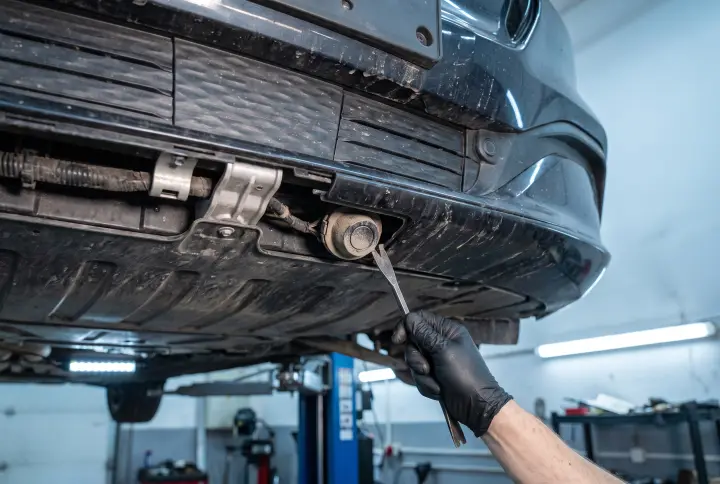
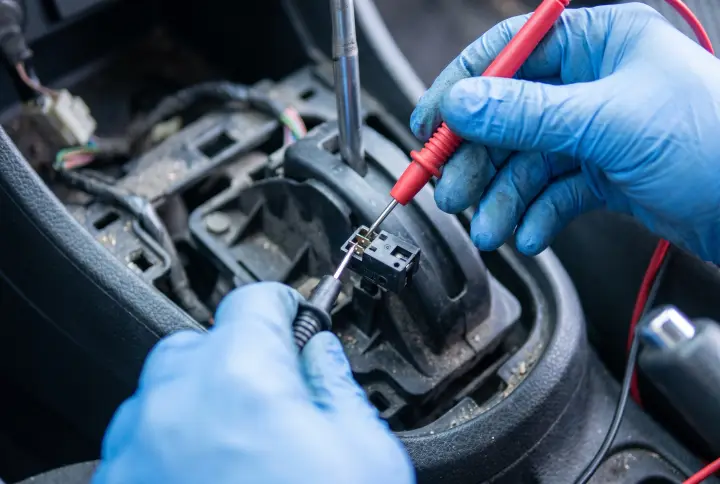
Because the harness sits under the vehicle, it is constantly exposed to road salt and moisture. A wire break or a corroded connection on the signal line triggers the open circuit code. To confirm this, technicians should read the measuring blocks for the locking pin switch in Module 69 (Trailer). A resistance test of the signal wires between J345 and the switch connector will isolate the break, followed by a visual inspection of the harness around the swivel joint.
Alternate paths to a dead socket
If the wiring is intact, our data ranks a blown Terminal 30 supply fuse at an 80 percent probability. The J345 module receives permanent positive feeds via fuse holder C under the dashboard, specifically through fuses SC28, SC38, and SC44. A shorted trailer can blow one of these, prompting a voltage check at the input connector of J345.
Corrosion inside the 13-pin socket itself is the third most likely cause at 70 percent. Water intrusion causes copper oxide build-up, creating a short between Pin 9 (constant Terminal 30) and the adjacent ground at Pin 13. Finally, mechanical binding in the locking pin mechanism sits at a 65 percent probability. Dirt and surface rust can prevent the spring-loaded steel pin from extending fully. The hitch might look locked, but the pin stops millimeters short of activating the F355 switch.
Where to start your diagnosis
Start by reading the measuring values in Trailer Module 69 to see if the J345 controller recognizes the mechanical lock. If the switch registers as open, inspect the exposed wiring harness at the swivel joint before spending time testing fuses under the dashboard. A dead trailer socket on this platform is often a mechanical safety lockout rather than a simple electrical short.