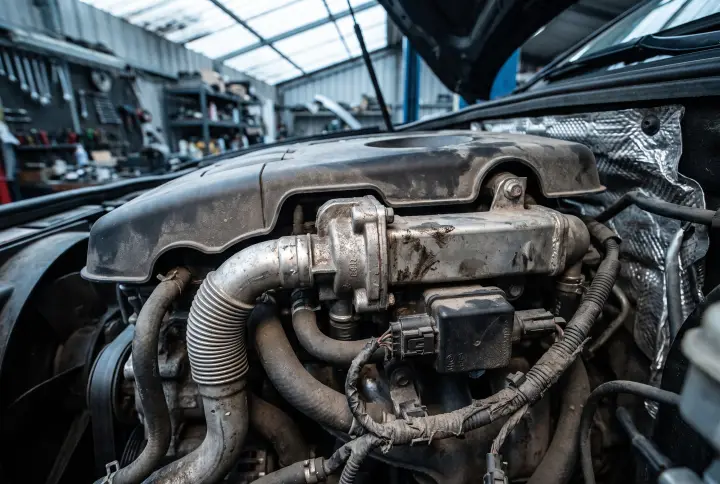
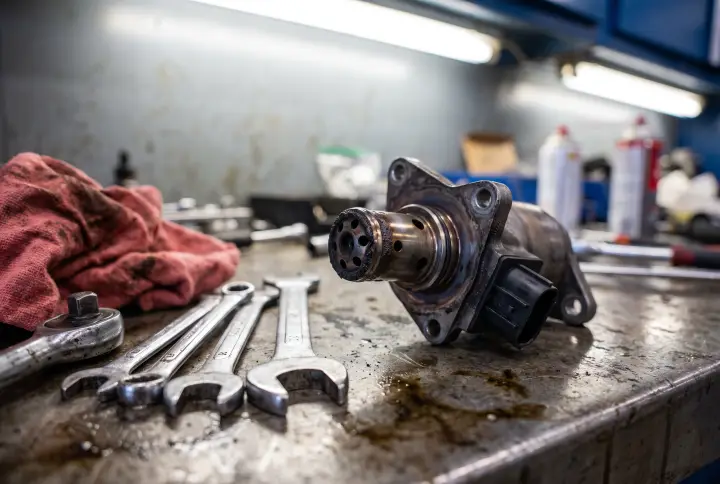
A flashing check engine light and a pair of seemingly unrelated codes on a 2013 Volvo V70 II can send a diagnosis in circles. The technician noted the engine lamp was flashing during driving, alongside fault codes P2009 and P04D900. Our platform analyzed this specific combination on the D4204T5 VEA diesel engine to map out the mechanical and electrical relationship between the faults.
Actuator Failure and Code P2009
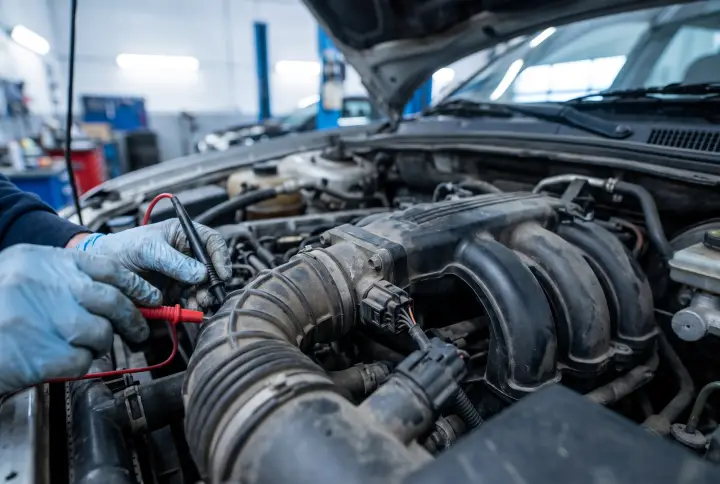
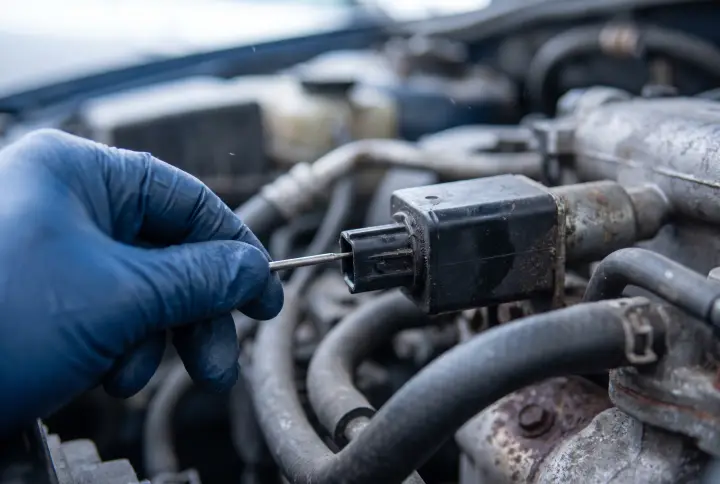
The most probable cause, ranked at 85 percent, is an internal electrical fault or short to ground in the swirl flap actuator. Code P2009 indicates the engine control module is seeing a voltage near zero on the control circuit for bank 1. On the D4204T5 engine, this actuator is subjected to heavy thermal cycling and vibration. This exposure degrades the coil insulation over time. When it shorts internally, the ECM logs the low circuit voltage and enters a fail-safe mode. The immediate diagnostic steps include measuring the internal resistance of the actuator and checking the voltage supply at the connector with the ignition on.
The EGR Connection to Code P04D900
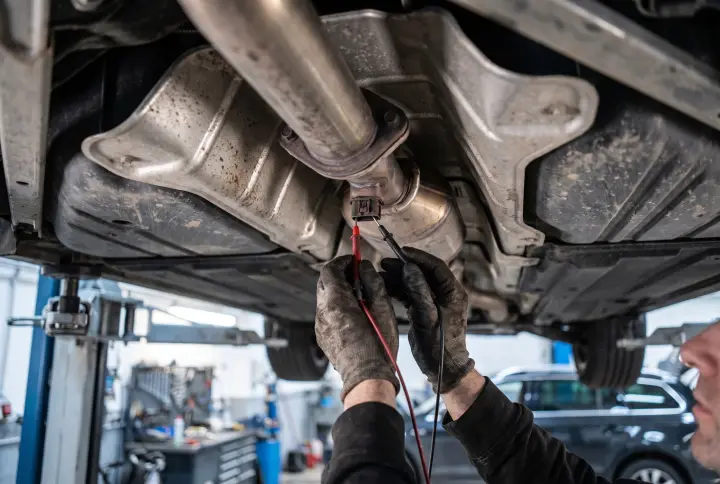
The technician also pulled code P04D900, which points to EGR flow being too low. Ranked at 80 percent, soot and carbon buildup in the EGR cooler and valve is a known issue for this engine family. Oil vapor from the crankcase ventilation mixes with soot to form hard carbon in the EGR cooler, severely restricting exhaust flow. Because the ECM monitors EGR flow via the mass airflow sensor, an open valve that does not drop the MAF reading triggers this code. The combination of restricted EGR flow and a failed swirl flap actuator creates a severe combustion imbalance, which explains the flashing check engine light.
Mechanical Binding in the Swirl Flaps
Another factor ranked at 70 percent is mechanical binding of the swirl flaps inside the intake manifold. Carbon deposits can cause the flaps to seize. If the actuator tries to move flaps that are stuck, the resulting extreme friction can overload the actuator electronics. This physical resistance is often misinterpreted by the ECM as a circuit fault, logging P2009. A manual check of the disconnected flap shaft is necessary to confirm if the flaps move freely by hand.
Where to Start the Diagnosis
This case teaches the importance of verifying mechanical movement before replacing electrical components. The first step is to manually check the swirl flap linkage for free movement. If the flaps are seized, replacing the actuator will only result in another burnt component. After confirming mechanical operation, check the actuator for internal resistance and inspect the EGR cooler for carbon blockages using a borescope.