A 2020 KIA Ceed came in with a dead blind spot assistance system and a single C1818 fault code stored. Blind spot radar units live in the most hostile environment on any modern vehicle, directly in the firing line of rear tire spray. The technician noted a simple blind spot assistance warning on the dashboard. Code C1818 is a CAN time-out error, meaning the gateway or instrument cluster is no longer receiving the cyclic status messages from the Lane Change Assist (LCA) module.
Corrosion at the bumper connector
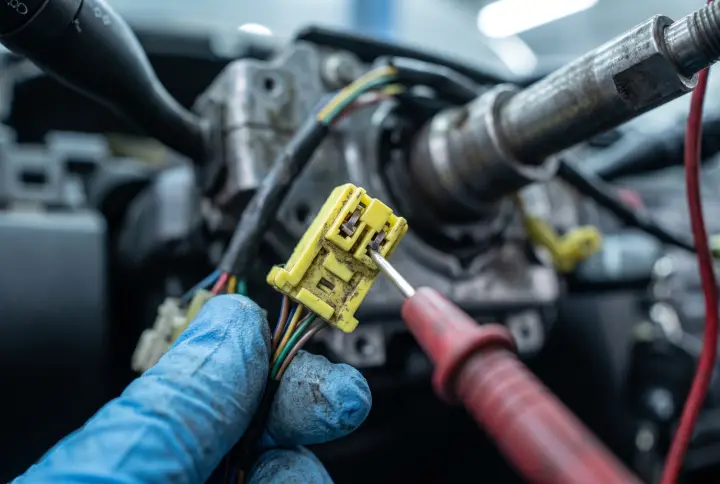
Our diagnostic platform ranked corrosion or a contact fault in the rear bumper harness at 45 percent likelihood. The radar sensors for the blind spot system mount inside the rear bumper corners. The wiring harness and multi-pin connectors are extremely vulnerable to water ingress, road salt, and dirt thrown up by the rear wheels. Green corrosion on the contact pins, water pushing past the connector seals, or pins pushed backwards will create high resistance or an open circuit on the CAN-High and CAN-Low lines. Mechanics should start with a visual inspection of the connector and pins at the rear radar for moisture. This should be followed by measuring voltage levels on the CAN lines with the ignition on, and conducting a wiggle test of the bumper harness while measuring resistance.
Internal hardware failure
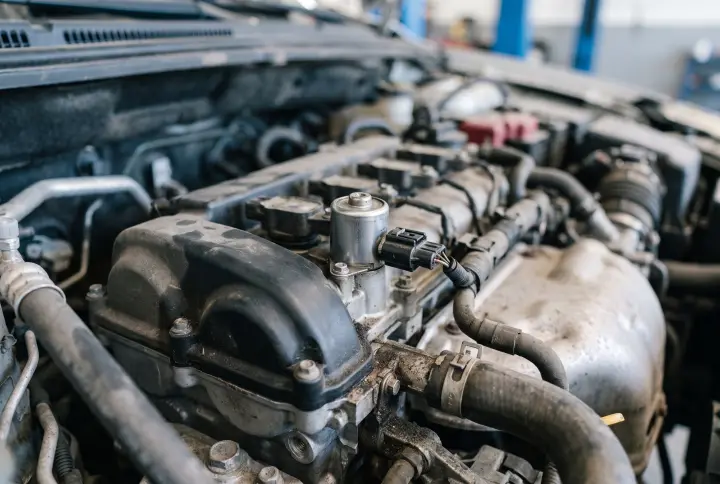
If the connector is clean, the radar module itself is the next suspect, ranked at 30 percent likelihood. The LCA system consists of radar units with integrated microcontrollers and CAN transceivers inside a plastic chassis. Micro-cracks in the housing seams or stone chip damage can let condensation reach the internal circuit board. This knocks out the internal CAN transceiver or processor, stopping all data transmission over the network. Testing involves inspecting the radar housing for cracks, checking the CAN bus signal waveform with an oscilloscope directly at the module, and measuring internal circuit board resistance on the CAN pins while powered down.
Power supply and ground faults
A radar module cannot transmit if it has no power, putting a 12V supply or ground failure at a 15 percent probability. The radar units receive low-voltage power from the vehicle auxiliary battery system via a fuse in the smart junction box, grounding to a chassis point in the rear luggage compartment. A blown fuse, a chafed supply line, or a loose chassis ground leaves the radar completely dead. Technicians need to measure supply voltage with a multimeter and a test light at the sensor connector, then check the voltage drop and resistance on the ground wire against the chassis.
Harness damage inside the body
Body CAN bus wiring faults to the rear section account for 10 percent of these cases. On the estate body style, CAN cables route from the front harness through the sill to the rear inner wing, passing through a rubber grommet in the rear panel out to the bumper. Pinch damage from luggage compartment trim or chafing against the sheet metal edges at the grommet can sever the signal path. A continuity test of the CAN cables from the trunk connector to the bumper will isolate the break, alongside a resistance measurement to chassis ground to rule out a short circuit.
Where to start the diagnosis
Always begin diagnosing a C1818 code on this vehicle by physically inspecting the connector behind the rear bumper cover. Since the module sits in a high-splash zone, water intrusion and pin corrosion cause almost half of all communication failures. A quick visual check and a wiggle test on the harness can save hours of unnecessary interior trim removal or module testing.