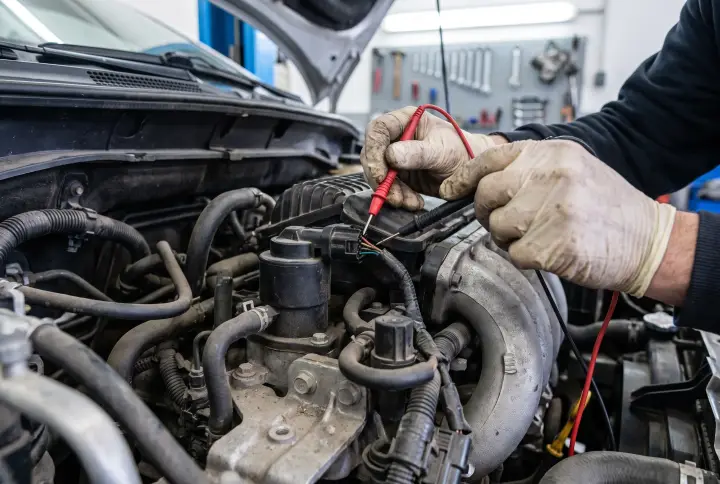
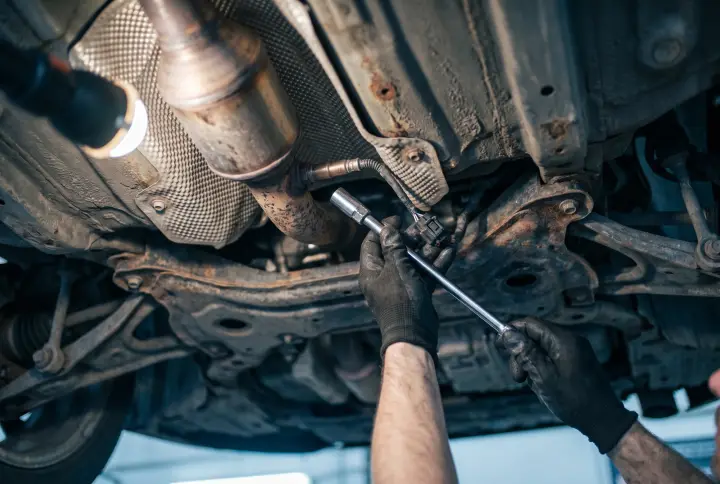
Three warning lights on the dash and a P245800 code point directly to a DPF regeneration timeout on a 2010 Volkswagen Caddy III. The technician noted the engine light, glow plug light, and particulate filter light were all illuminated simultaneously. The code indicates that the active regeneration cycle exceeded its maximum allowed duration without successfully reducing the soot mass.
The G450 Differential Pressure Sensor
Our diagnostic platform ranked a defective or drifting G450 sensor as the most likely cause at 35 percent probability. The 1.6 TDI (CAYD) engine relies on this sensor to measure the pressure drop across the filter. Internal wear, diaphragm cracks, or voltage drift are common failure points.
If the sensor gets stuck at 0 hPa or reports constant high backpressure, the Simos PCR2.1 engine control unit never sees the soot mass drop below the 6 gram threshold. The regeneration cycle keeps running until it hits a hard time limit, typically 20 to 30 minutes, triggering the code. Verification requires checking real-time differential pressure data with the key on and engine off, at idle, and at 2500 rpm.
Heat Damage to Pressure Hoses
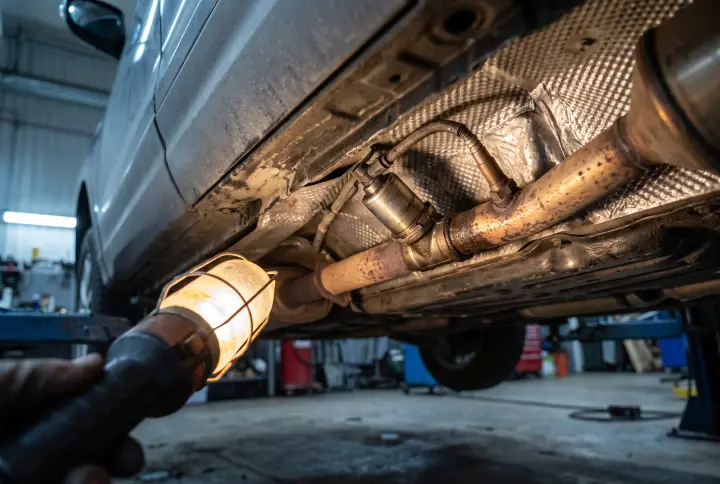
Ranked at 25 percent probability, the physical lines to the sensor are just as critical. The metal pipes from the DPF transition into rubber hoses up to the sensor on the bulkhead. These handle extreme heat, vibration, and pulsating exhaust gases.
They frequently crack, melt, kink, or clog with soot. A cracked hose sends atmospheric pressure to the sensor, convincing the control unit that the pressure drop is not changing. A visual and tactile inspection of the lines is necessary. A smoke test or low pressure flow check will find blockages in the metal pipes.
Exhaust Temperature and Coolant Thresholds
Two distinct temperature issues account for the remaining likelihood. At 18 percent probability, a drifting exhaust gas temperature sensor (G506, G495, or G527) prevents the system from maintaining the required 550 to 650 degrees Celsius. The control unit keeps extending the heating phase until the timer runs out.
Alternatively, ranked at 12 percent, a failing coolant thermostat drops engine temperature below the 75 to 80 degree minimum during highway driving. This aborts and restarts the cycle repeatedly. Logging coolant temperature during a 70 to 100 km/h drive catches a sticking thermostat. The oil level must also be checked, as repeated aborted regenerations cause diesel dilution.
Where to Start the Diagnosis
Begin with the simplest verification. Look at the G450 sensor values in real time before pulling out tools. If the sensor reads correctly, move to the physical hoses before suspecting the DPF itself. The presence of all three warning lights is the control unit confirming a timeout, not necessarily a completely failed filter.
Reference pages for the codes in this article
- P2458: what we measure for this code across real diagnostics