A 2006 Toyota Avensis II arrived with a check engine light on, but the technician noted the car was running perfectly normal. The only fault code present was P2008, pointing to an issue with the intake manifold runner control circuit.
The Hidden Vacuum Switch Valve Fault
The diagnostic platform we build ranked an internal break in the vacuum switch valve (VSV) magnetic coil as the most likely cause, at 75 percent probability. On this specific engine, the swirl flaps are pneumatically controlled by vacuum via an electrical VSV. The engine control module detects an open circuit in the solenoid valve circuit for at least 0.5 seconds, triggering the P2008 code. Thermal cycling and age cause the copper wire inside the magnetic valve's internal coil to break, resulting in infinite resistance.
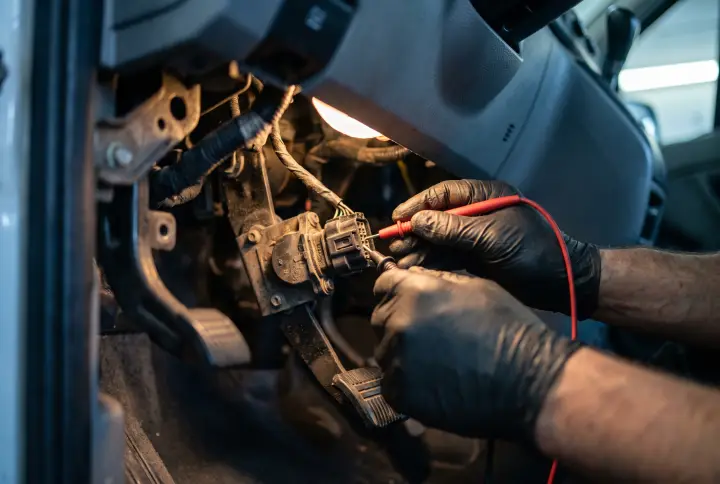
Because the swirl flaps are spring-loaded to their open normal position when unpowered, the fault is rarely noticed during everyday driving. This explains exactly why the car ran perfectly despite the check engine light. To test this, measure the resistance of the magnetic coil winding with a multimeter and perform a component activation click test.
Connector Oxidation Under the Manifold
Ranked at 45 percent probability, the second area to investigate is oxidation or a loose connection in the VSV connector. The valve is mounted under the intake manifold, an environment exposed to significant heat, dirt, and vibration. If the contact sleeves in the two-pin connector oxidize, lose their spring tension, or if a locking tab has released and pushed a pin back, the electrical circuit breaks. A visual inspection of the connector pins and a mechanical drag test of the terminal tension will confirm if this is the culprit.
Wiring Harness and Supply Circuit Issues
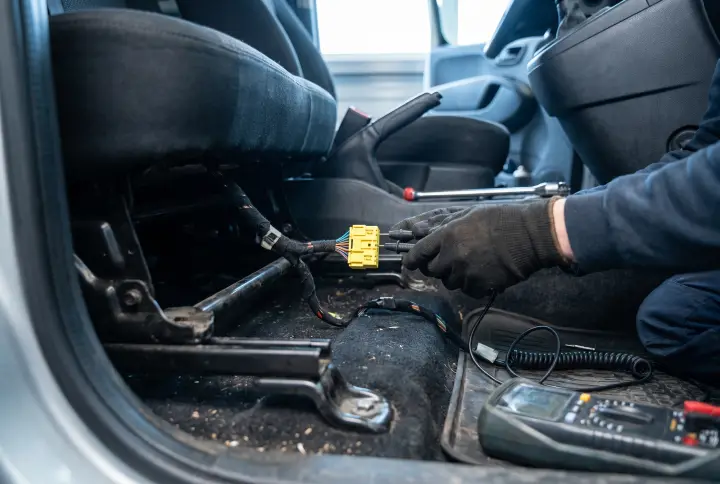
If the valve and connector test fine, the issue could be a wire break in the engine harness between the ECM and the VSV, ranked at 35 percent probability. Aging insulation can crack, or the wiring might chafe against engine brackets. The circuit consists of a 12V supply line and a switched ground wire. Checking the 12V supply at the connector with the ignition on, followed by a continuity measurement of the control wire, will isolate a harness fault.
Less likely, at 15 percent, is a voltage drop in the EFI supply circuit caused by oxidation in a fuse holder or relay contact. Load testing the supply with a test light will reveal if the circuit is failing under load.
What to Check First
For a P2008 code on this vehicle with no drivability symptoms, start directly at the vacuum switch valve. Measure the resistance of the coil winding before spending time inspecting the wiring harness or ECM connections. Confirming the internal integrity of the VSV coil will quickly rule out the most common failure point.
Reference pages for the codes in this article
- P2008: what we measure for this code across real diagnostics